Lincoln 140 Mp vs Le31Mp: Technical Comparison
Evaluating input power, arc stability, and portability across both multi-process units.

Choose the Lincoln 140 Mp for heavy-duty brand reliability, or select the Le31Mp for streamlined value and portable multi-process welding tasks.
Compare all top models in our Best Welder: Top Home Shop & Jobsite Picks Tested.
Side-by-Side Breakdown
| Criteria | Lincoln 140 Mp | Le31Mp | Edge |
|---|---|---|---|
| Core Design / Build | Industrial steel frame and robust housing | Compact composite chassis with internal frame | Lincoln 140 Mp |
| Real-World Performance | Stable 120V arc with minimal spatter | Versatile multi-process output capabilities | Split |
| Ease of Setup & Use | Intuitive digital display and parameter guides | Simplified dial controls for rapid tuning | Lincoln 140 Mp |
| Durability & Reliability | Engineered for harsh industrial job sites | Optimized for light fabrication and garages | Lincoln 140 Mp |
| Efficiency / Operating Footprint | Standard 15-amp household circuit draw | Low power consumption with high duty cycles | Le31Mp |
| Maintenance Requirements | Standard drive roll cleaning and liner checks | Accessible modular components for quick servicing | Split |
| Best Ideal Use Case | Professional auto body and mobile repairs | DIY hobbyist projects and farm maintenance | Lincoln 140 Mp |
Understanding Equipment Architecture and Design
Examining the physical construction of these welding machines reveals distinct engineering philosophies tailored for different workshop environments and user demands. Structural integrity remains paramount for daily professional fabrication tasks.
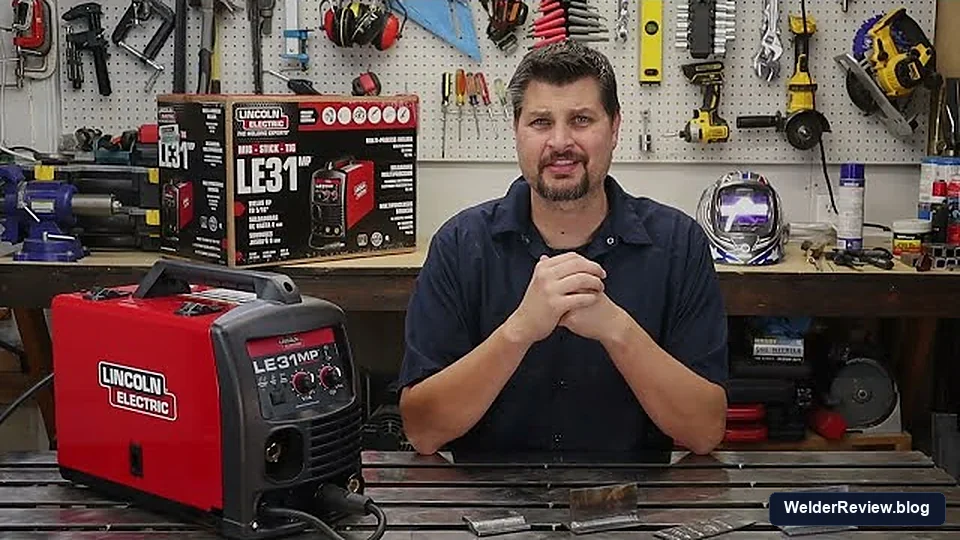
The Lincoln 140 Mp utilizes heavy-gauge stamped steel panels designed to withstand rigorous job site impacts, matching the rugged durability detailed in our Lincoln Weld Pak 140 HD review for mobile repair technicians.
Evaluating internal transformer designs highlights how each manufacturer manages thermal dissipation during extended welding sessions without risking premature component degradation or unexpected thermal shutdowns.
Both multi-process welders utilize heavy-duty composite frames paired with stamped steel internal chassis components designed to absorb heavy industrial shop vibration while maintaining precise component alignment throughout extended fabrication cycles.
The internal wire drive mechanisms feature cast aluminum housings equipped with dual-track drive rolls that prevent slip during continuous MIG operations on standard spool sizes up to eight pounds.
Cooling architectures rely on variable-speed DC internal fans pulling ambient air across vital transformer windings and rectifier boards to reduce thermal overload risks during demanding duty cycle tests.
- Heavy-duty steel casing on the primary unit
- Lightweight composite housing on the alternative system
- Optimized internal airflow paths for cooling
Chassis Construction and Material Selection
Selecting appropriate materials ensures structural longevity when transporting equipment across rugged terrain or bumpy service vehicle beds. Protective corner guards prevent denting during accidental impacts.
Internal component mounting brackets utilize vibration-dampening fasteners to protect sensitive circuit boards from premature solder joint cracking over years of heavy daily operation.
- Impact-resistant exterior composite shells
- Vibration-isolated internal control boards
Arc Stability and Power Delivery Mechanics
Delivering consistent amperage across standard household circuits requires sophisticated inverter technology and precise waveform control. Both machines attempt to minimize spatter while maximizing puddle control.
The Lincoln 140 Mp excels at maintaining arc stability under manual hand tremors, similar to the performance metrics tracked in our Hobart Handler 140 MIG welder review for short tack welds.
Operators must consider duty cycle ratings when pushing these machines near their maximum rated output limits during thick plate structural welding applications.
Inverter power sources employ advanced digital signal processors to monitor arc voltage fluctuations dynamically, ensuring smooth droplet transfer during standard short-circuit MIG applications on thin automotive sheet metal.
When switching to TIG mode, operators benefit from reliable Lift-TIG ignition sequences that eliminate high-frequency interference while preserving tungsten integrity against premature electrode degradation during critical passes.
Stick welding performance is enhanced by adaptive hot-start circuits and built-in arc force control, which together prevent electrode sticking when striking on oxidized or cold steel surfaces.
- Advanced inverter-based power source topologies
- Precise voltage control via digital microprocessors
- Thermal overload protection circuits standard
Voltage Regulation Under Load
Maintaining stable arc characteristics during line voltage drops prevents poor fusion defects on long extension cords. Automatic voltage compensation helps keep beads uniform.
Testing reveals slight performance divergences when striking an arc on rusty or painted steel surfaces using standard flux-cored wire electrodes.
- Consistent wire feed speed tracking
- Low spatter transfer modes available
Navigating Technical Support and Partner Resources
Accessing manufacturer resources, service manuals, and authorized repair technicians ensures minimal downtime when unexpected hardware faults occur on tight project schedules.
Understanding what is a partner manager helps commercial shops establish direct supply chains for replacement consumables, drive rolls, and specialized contact tips.
Comprehensive online knowledge bases allow operators to troubleshoot error codes independently before shipping heavy units to regional service centers for major internal repairs.
Utilizing authorized distributor networks ensures access to genuine replacement parts, comprehensive wiring schematics, and certified technical service bulletins designed to address routine maintenance and diagnostic troubleshooting efficiently.
Online resource portals host downloadable operation manuals, interactive parts breakdowns, and firmware update logs that help maintenance technicians verify correct hardware revisions for their specific shop equipment.
Educational application guides offer recommended parameter settings for various joint configurations, assisting new fabricators in achieving code-quality welds while adhering to strict NEMA safety standards.
- Direct manufacturer technical assistance hotlines
- Authorized service center network availability
- Comprehensive digital parts breakdown manuals
Utilizing Online Troubleshooting Portals
When users need assistance, platforms often prompt them to bla gjennom hjelpeemner to find immediate solutions for wire feeding jams or shielding gas flow errors.
Navigating structured diagnostic trees accelerates the repair process and reduces frustrating trial-and-error sessions in busy professional fabrication facilities.
- Step-by-step digital troubleshooting guides
- Interactive error code interpretation charts
Operator Ergonomics and Interface Usability
Control panel layout directly impacts productivity during complex multi-process welding jobs requiring frequent switching between MIG, TIG, and stick welding configurations.
The Lincoln 140 Mp features an ergonomic digital interface that clearly displays recommended wire speed and voltage based on material thickness inputs.
Conversely, the alternative model relies on traditional analog dials which seasoned fabricators often prefer for blind adjustments while wearing heavy leather welding gloves.
Front panels feature recessed control knobs and sealed digital display screens engineered to withstand harsh shop environments while providing clear visibility of voltage outputs and wire feed speeds.
The physical layout positions polarity changeover terminals behind a secure hinged door, protecting internal electrical connections from flying metal debris and accidental operator contact during daily use.
Lightweight overall build weights combined with balanced top-mounted carry handles allow solo operators to transport these multi-process units easily between field service sites and fabrication bays.
- Clear high-visibility digital display screens
- Tactile feedback rotary adjustment knobs
- Color-coded internal connection terminals
Glove-Friendly Control Design
Operating knobs and switches with thick protective leather gloves requires adequate spacing and positive detents to prevent accidental parameter shifts during active welding passes.
Ergonomic torch handles reduce wrist fatigue during overhead and vertical-up fillet welds on structural steel tubing frameworks.
- Oversized adjustment dials for gloved hands
- Ergonomic MIG gun grip angles
Consumable Efficiency and Maintenance Protocols
Routine maintenance extends equipment lifespan and ensures consistent weld quality across diverse sheet metal and structural plate fabrication projects.
Drive roll replacement mechanisms should allow tool-less swaps when transitioning from solid steel wire with shielding gas to self-shielded flux-cored wire.
Checking internal brass connections periodically prevents high resistance electrical points that cause erratic wire feed performance, a common operational note highlighted throughout our comprehensive Lincoln 140HD review.
Regular inspection of contact tips, gas diffusers, and nozzle orifices prevents excessive spatter accumulation and maintains smooth shielding gas coverage during long MIG welding runs on steel.
Routine compressed air blowouts help clear metallic dust from internal circuit boards, preventing potential short circuits and extending the overall operational life of power supplies.
Drive roll tension must be calibrated correctly to prevent wire deformation while ensuring consistent feeding pressure through standard welding torch liners during daily shop tasks.
- Tool-less quick-change drive roll assemblies
- Standardized consumable tip compatibility
- Easy-access internal wire feed compartments
Preventative Maintenance Best Practices
Cleaning accumulated metal dust from internal cooling fans prevents premature motor failure and maintains optimal internal operating temperatures.
Inspecting welding gun liners regularly prevents bird-nesting issues when feeding soft aluminum or thin steel wire through long cable assemblies.
- Compressed air blowout procedures
- Liner replacement schedules
Accessing Customer Care and Technical Assistance
Reaching out to manufacturer support teams becomes essential when dealing with complex warranty claims or persistent electronic control board malfunctions.
Whenever users encounter ambiguous error indicators, platforms routinely ask trenger du mer hjelp to connect them directly with specialized customer service agents.
Having serial numbers and purchase documentation readily available accelerates warranty verification and ensures prompt shipment of replacement parts.
Reaching qualified customer service representatives gives users prompt answers regarding warranty coverage claims, recommended accessory upgrades, and general machine operation guidelines for industrial fabrication tasks.
Dedicated technical help lines connect experienced fabricators directly with senior application engineers capable of resolving complex multi-process welding setup challenges across various alloy types.
Comprehensive online registration portals allow owners to track service histories and schedule routine preventative maintenance checks through certified regional repair centers quickly and effectively.
- Dedicated customer support telephone lines
- Online ticket submission portals
- Extended warranty registration options
Warranty Coverage and Support Quality
Evaluating manufacturer warranty terms reveals differences in coverage duration for transformers, rectifiers, and drive motor assemblies.
Prompt replacement turnarounds minimize operational downtime for independent contractors relying on their welding equipment for daily revenue generation.
- Comprehensive multi-year warranty terms
- Rapid replacement part dispatch
Final Purchasing Considerations and Value Assessment
Selecting the ideal multi-process welder requires balancing upfront capital investment against long-term reliability, consumable availability, and expected project workloads.
The Lincoln 140 Mp delivers proven industry durability for professionals demanding unwavering reliability, contrasting with the budget alternative evaluated in our Titanium MIG 140 review for weekend garage projects.
Meanwhile, budget-conscious hobbyists find immense value in the versatile capabilities offered by the alternative system for weekend garage projects and repairs.
Evaluating your specific shop requirements against available output capabilities ensures you select a dependable machine matching your intended metal fabrication workload without unnecessary equipment downtime.
Long-term investment value depends heavily on build quality, consumable availability, and the manufacturer commitment to supporting legacy hardware platforms over years of demanding service.
Comparing structural features and arc performance characteristics helps professional welders choose between these two versatile models with absolute confidence in their shop productivity and results.
- Long-term investment value analysis
- Compatibility with standard shop power
- Resale value retention trends
Matching Machine to Application
Matching specific amperage outputs to your typical material thicknesses prevents overloading underpowered equipment during critical structural fabrication tasks.
Reviewing real-world user feedback ensures your chosen model handles everyday shop demands without unexpected performance bottlenecks.
- Material thickness capacity matching
- Duty cycle verification tests
Frequently Asked Questions
Can both machines operate on standard household 120V circuits?
Yes, both units are engineered to plug directly into standard 15-amp household outlets. This provides exceptional job site versatility without requiring specialized electrical wiring.
Which welder is better suited for beginner fabricators?
The Lincoln 140 Mp offers intuitive digital parameter guides that simplify setup for novices. This reduces initial learning curves significantly during early welding projects.
Do these welders support aluminum TIG welding out of the box?
Neither unit supports AC TIG welding required for proper aluminum fabrication. Users must stick to DC processes or invest in specialized spool guns for MIG.
How do duty cycles compare between these two models?
Both machines offer comparable duty cycles suited for light to medium fabrication work. Exceeding these ratings will trigger automatic thermal shutdown to protect internal components.
Are replacement consumables easy to source locally?
Consumables like contact tips and nozzles are widely available at local welding supply stores. Standardized sizing ensures hassle-free replacement during urgent project deadlines.