Inverter Welder vs MIG: Technical Trade-Offs
Choosing between solid-state power systems and continuous wire-feed technology demands a clear understanding of your shop workflow, material thicknesses, and electrical infrastructure limits.

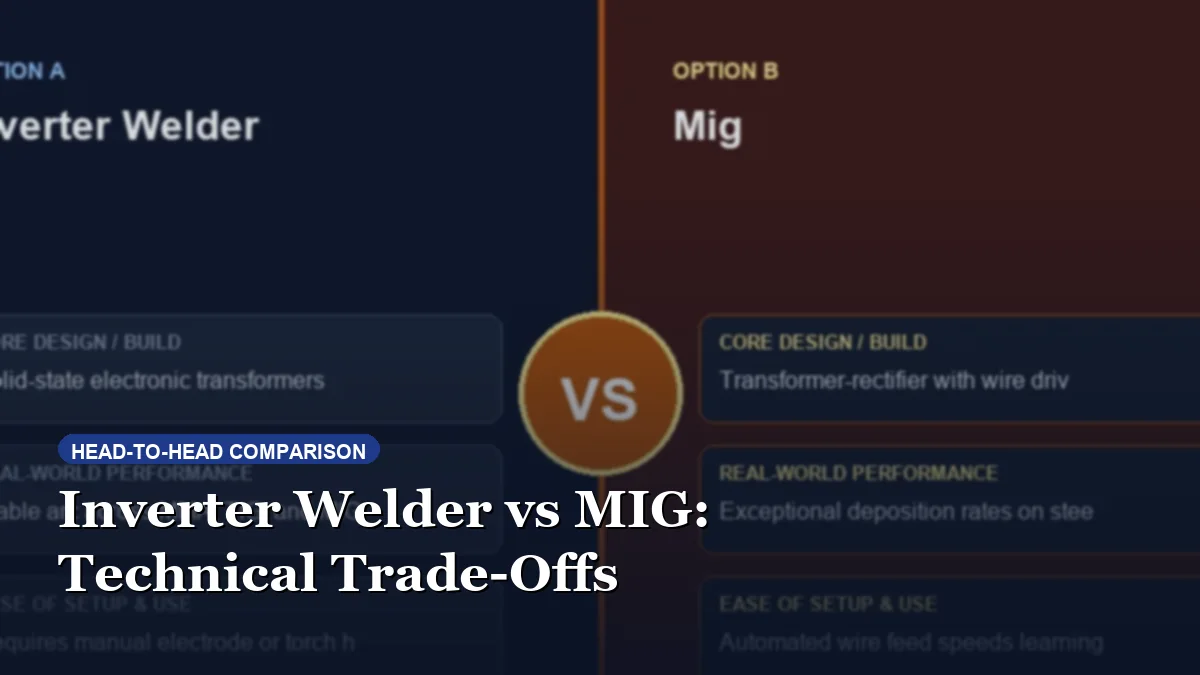
Choose an inverter welder for multi-process versatility and portability, or select a MIG setup for high-speed production and simplified sheet metal fabrication.
Compare all top models in our Best Welder: Top Home Shop & Jobsite Picks Tested.
Side-by-Side Breakdown
| Criteria | Inverter Welder | Mig | Edge |
|---|---|---|---|
| Core Design / Build | Solid-state electronic transformers | Transformer-rectifier with wire drive | Inverter Welder |
| Real-World Performance | Stable arc across MMA, TIG, and MIG | Exceptional deposition rates on steel | Mig |
| Ease of Setup & Use | Requires manual electrode or torch handling | Automated wire feed speeds learning curves | Mig |
| Durability & Reliability | Sensitive to dust and moisture ingress | Heavy-duty copper windings resist harsh shop floors | Mig |
| Efficiency / Operating Footprint | High electrical efficiency with lightweight chassis | Heavier chassis with substantial transformer draw | Inverter Welder |
| Maintenance Requirements | PCB board checks and cooling fan cleaning | Drive roll tensioning and liner replacement | Inverter Welder |
| Best Ideal Use Case | Field repairs and multi-process fabrication | Automotive body panels and structural frames | Split |
Power Conversion Architecture and Electrical Efficiency
Modern solid-state power systems utilize high-frequency switching to transform incoming line voltage into stable welding output. This electronic architecture drastically reduces internal transformer size while improving overall electrical efficiency across standard circuits.
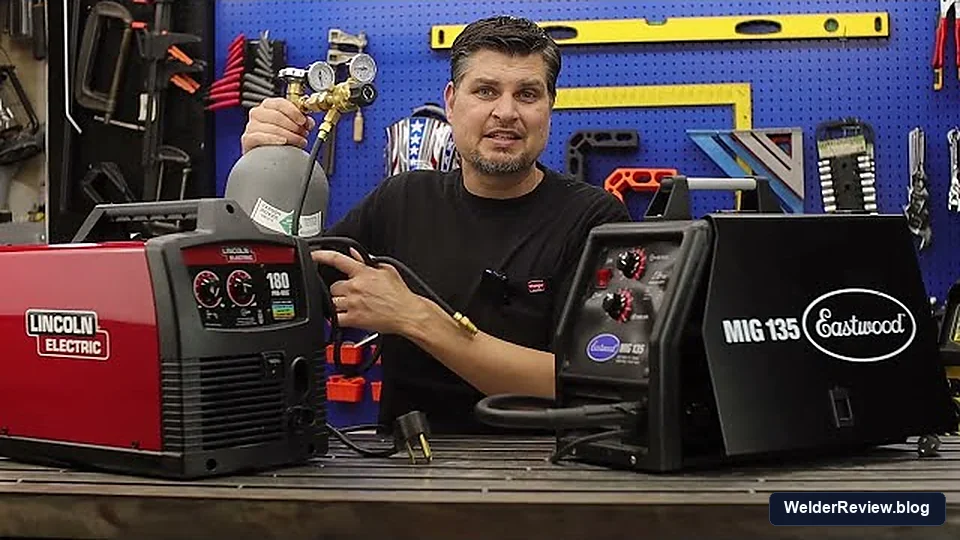
Traditional wire-feed systems rely on heavy transformers to step down voltage. While these units generate robust arcs, their massive footprint limits portability, much like older models covered in our best mig welder for home use roundup.
- Inverters operate at frequencies exceeding 20 kilohertz.
- Traditional units run on standard 60-hertz line power.
- Solid-state design significantly lowers total equipment weight.
Input Voltage Flexibility
Advanced solid-state machines frequently feature dual-voltage capability, allowing seamless switching between domestic circuits and industrial power drops. This adaptability ensures reliable performance on remote job sites without tripping breakers.
Standard wire-feed equipment often demands dedicated high-amperage breakers to deliver consistent arc stability under heavy production loads.
- Dual-voltage sensing auto-adjusts to available power.
- Dedicated lines prevent unexpected voltage drops.
Duty Cycle Management
Thermal management inside compact chassis requires aggressive cooling fans and precise thermal overload protection. Operators must monitor duty cycle limits closely during extended fabrication runs to prevent premature board failure.
Heavy transformer units naturally dissipate heat better, sustaining higher duty cycles during continuous production welding tasks.
- Forced-air cooling protects sensitive internal semiconductors.
- Massive copper coils absorb high thermal loads safely.
Operational Workflow and User Learning Curves
Mastering arc control with multi-process units demands patience, steady coordination, and precise electrode manipulation. Beginners can achieve stable results by examining tested machines like the one in our hobart 190 mig welder review.
Continuous wire-feed systems simplify the deposition process by automating filler metal delivery through a motorized drive roll. Operators simply pull the trigger and focus exclusively on travel speed and gun angle.
- Wire feed automation drastically shortens initial training times.
- Manual processes require strict adherence to proper angle techniques.
Integration of Auxiliary Controls
A seamless LMS integration with advanced benefits allows digital readout systems to store custom parameter profiles. Welders can recall precise amperage and voltage settings instantly for recurring production runs.
Analog dials on traditional transformer units require manual tracking and physical adjustment between varying joint configurations.
- Digital memory presets eliminate guesswork on repeat jobs.
- Analog gauges demand constant visual calibration checks.
Shielding Gas and Consumable Management
Process adaptability means managing multiple gas cylinders, regulators, and torch configurations depending on the chosen welding method. Switching from flux-core to gas-shielded operations requires careful hose and polarity checks.
Dedicated wire machines streamline consumable swaps with standardized contact tips, nozzles, and pre-set gas solenoids.
- Multi-process units require diverse gas mix inventories.
- Dedicated guns utilize uniform consumable sizes.
Fabrication Precision Across Material Thicknesses
Thin sheet metal fabrication demands absolute control over heat input to prevent burn-through and severe workpiece distortion. Solid-state equipment equipped with pulse capabilities excels at managing low-amperage arcs cleanly.
Heavy structural steel fabrication requires deep weld penetration and high deposition rates that favor high-amperage wire-feed systems. These machines lay down continuous beads quickly to maximize workshop throughput.
- Pulsed arcs minimize heat affected zones on thin aluminum.
- High deposition rates accelerate heavy plate assembly.
Positional Welding Versatility
Performing overhead or vertical-up joints requires precise puddle manipulation that benefits greatly from portable, lightweight power sources. Operators can carry the primary unit closer to the work area.
Bulkier wire-feed setups require extended gun leads or crane assistance to reach elevated or awkward joint geometries safely.
- Lightweight chassis improve mobility around complex assemblies.
- Long gun leads introduce wire feed friction issues.
Joint Fit-Up Tolerances
Tight fitting joints with minimal gap spacing accept automated wire deposition flawlessly without requiring complex weaving techniques. Poor fit-up demands skilled manual manipulation to bridge gaps effectively.
Solid-state stick setups handle rusty, contaminated, or poorly prepped steel plates far better than gas-shielded wire processes.
- Stick electrodes cut through mill scale and surface rust.
- Wire processes demand clean joint preparation.
Chassis Durability and Environmental Resilience
Compact electronic hardware inside modern power sources remains susceptible to conductive grinding dust, moisture, and metal shavings. Shops must implement regular cleaning schedules using compressed air to protect internal circuit boards.
Traditional transformer cabinets feature rugged steel enclosures and heavily insulated copper windings that shrug off harsh industrial environments and rough transport conditions without missing a beat.
- Dust accumulation causes electrical short circuits on PCbs.
- Rugged steel housings withstand heavy impact on job sites.
Secure and Reliable Mechanical Assemblies
A secure and reliable mechanical assembly ensures drive mechanisms maintain consistent wire tension without slipping. High-end drive rolls feature dual-groove knurled designs for optimal wire feeding performance.
Internal terminal connections must withstand high vibrational forces generated during transport across unpaved construction sites.
- Cast aluminum drive housings prevent premature mechanical wear.
- Secure internal wiring harnesses resist vibration fatigue.
Thermal Overload Protection
Smart thermal sensors automatically shut down the output circuit if internal temperatures exceed safe operating parameters. This prevents catastrophic semiconductor failure during intensive industrial welding tasks.
Traditional units rely on robust thermal breakers that trip reliably when subjected to prolonged over-amperage draws.
- Digital sensors monitor transformer and diode temperatures.
- Manual reset breakers provide clear fault indication.
Operational Economics and Shop Footprint
Minimizing floor space is critical for mobile repair trucks and small fabrication shops. Choosing compact equipment, such as a machine featured in our best 110v mig welder review, frees up workbench space.
Dedicated wire-feed systems demand dedicated floor space for large shielding gas cylinders, heavy wire spools, and bulky power cabinets that cannot be easily moved once positioned.
- Small footprints maximize cramped workshop layouts.
- Bulky chassis require dedicated cart storage solutions.
Transformative Tools, Free of Charge
Utilizing transformative tools, free of charge like digital arc simulation software helps technicians optimize parameters before striking an arc. These resources accelerate skill development without wasting costly metal.
Comprehensive manufacturer manuals provide essential troubleshooting flowcharts and maintenance schedules to minimize unexpected equipment downtime in production environments.
- Simulation software improves joint parameter planning.
- Technical manuals guide routine maintenance checks.
Consumable Inventory Costs
Balancing consumable expenses requires tracking electrode stub loss, contact tip wear rates, and shielding gas consumption. Multi-process inverters reduce single-process equipment redundancy.
High-volume wire operations require bulk spool purchases to secure favorable per-pound pricing on steel or aluminum wire.
- Bulk wire spools lower long-term fabrication expenses.
- Multi-process versatility reduces total machine counts.
Maintenance Protocols and Long-Term Serviceability
Routine servicing of solid-state equipment focuses primarily on inspecting cooling fans, cleaning dust from circuit boards, and verifying internal wiring connections. Board-level repairs require specialized diagnostic equipment and trained technicians.
Maintaining wire-feed systems involves cleaning drive rolls, replacing gun liners, and checking contact tips. These mechanical tasks are essential whether you use an entry-level unit or options from our best budget mig welder guide.
- Circuit board diagnostics require specialized electronic tools.
- Mechanical drive components demand regular cleaning.
Google Workspace for Education
Leveraging platforms like Google Workspace for Education allows vocational training programs to distribute equipment manuals, safety protocols, and maintenance logs efficiently. Students access technical reference materials directly from their mobile devices.
Centralized digital record keeping ensures all shop safety inspections and preventative maintenance intervals are tracked accurately across multiple training stations.
- Cloud-based document sharing streamlines shop administration.
- Digital logs track preventative maintenance schedules.
Component Replacement Longevity
Solid-state switches and microprocessors offer exceptional operational precision but remain vulnerable to power surges. Installing external surge protectors safeguards sensitive internal electronics from dirty grid power.
Traditional copper-wound transformers boast legendary longevity, often operating reliably for decades with minimal electronic degradation.
- Surge protectors defend sensitive electronics from spikes.
- Copper windings provide exceptional multi-decade durability.
Frequently Asked Questions
Can an inverter welder run on standard household electrical circuits?
Many compact inverter models feature dual-voltage plugs that operate on standard household power. Always verify circuit amperage limits before attempting heavy welding tasks.
Why is wire-feed welding faster than stick welding?
Continuous wire delivery eliminates the need to constantly replace burned-out electrodes. This automation significantly increases overall deposition rates during production runs.
What maintenance do solid-state welders require most often?
Regularly clearing accumulated metal dust from internal cooling fans and circuit boards prevents overheating. Proper dust management extends internal component lifespan.
Are wire-feed machines suitable for outdoor fabrication work?
Wind disrupts shielding gas coverage, making standard setups difficult to use outdoors. Welders typically switch to self-shielded flux-core wire for windy conditions.
How do I choose the right machine for my workshop?
Evaluate your primary material thickness, available electrical power, and required joint types. Selecting the correct welding process ensures long-term operational success.