Inverter vs Transformer Welding Machine: Concise Verdict
Modern inverter units prioritize efficiency and portability, whereas traditional transformer welders deliver rugged, time-tested power. Choosing between them depends directly on your shop requirements and electrical infrastructure.

Choose an inverter welder for portable field repairs and precise digital controls. Select a transformer machine if you need an indestructible, low-maintenance workhorse for heavy industrial fabrication.
Compare all top models in our Best Welder: Top Home Shop & Jobsite Picks Tested.
Side-by-Side Breakdown
| Criteria | Inverter | Transformer Welding Machine | Edge |
|---|---|---|---|
| Core Design / Build | High-frequency solid-state electronics | Heavy copper or aluminum core windings | Inverter |
| Real-World Performance | Smooth arc with adjustable arc force | Robust output unaffected by dirty power | Transformer |
| Ease of Setup & Use | Digital menus and simple interface | Manual dial adjustments and tap settings | Inverter |
| Durability & Reliability | Sensitive circuit boards susceptible to dust | Indestructible mechanical transformer design | Transformer |
| Efficiency / Operating Footprint | High electrical efficiency and lightweight | High idle draw and massive physical footprint | Inverter |
| Maintenance Requirements | Requires clean environment and fan upkeep | Minimal maintenance beyond basic terminal checks | Transformer |
| Best Ideal Use Case | Mobile fabrication and precision TIG work | Heavy structural stick welding in fixed shops | Inverter |
Core Architecture and Power Conversion
Inverter welders utilize complex solid-state microprocessors to step up incoming electrical frequencies. This advanced electronic conversion allows the internal transformer to shrink dramatically in physical size and overall weight.
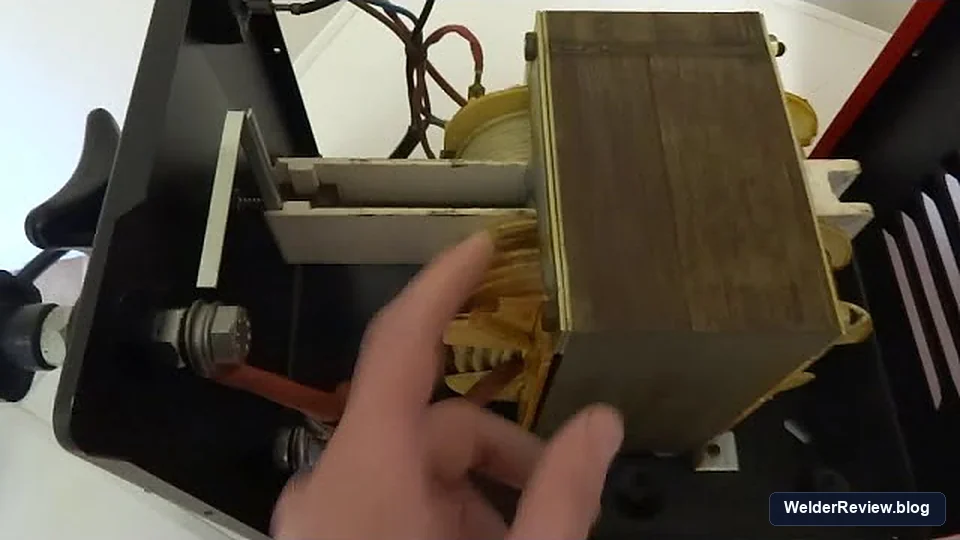
Transformer machines rely on massive copper or aluminum coil windings to step down standard line voltage directly at line frequency. This straightforward electromagnetic approach eliminates delicate computer chips entirely from the power path.
Understanding this fundamental electrical distinction explains why modern electronic units offer advanced features while legacy machines remain stubbornly simple. Every welder must weigh digital capability against mechanical resilience.
Traditional transformer machines utilize heavy copper or aluminum windings to step down line voltage directly at the mains frequency of 60 Hz. This direct approach creates substantial core mass.
Inverter welders rectify incoming alternating current into direct current before utilizing solid-state electronic switches to boost operating frequencies up to 100 kHz. High frequency allows much smaller internal transformers.
Magnetic flux leakage is inherently higher in low-frequency laminated steel cores, whereas high-frequency ferrite cores used in inverters minimize electromagnetic losses and improve overall power conversion efficiency significantly.
- Solid-state microprocessors operate at high frequencies
- Legacy units utilize heavy copper or aluminum coils
- Electronic conversion reduces internal component mass
- Electromagnetic reduction avoids delicate circuit boards
Semiconductor Technology vs Copper Coils
Modern semiconductor switches rapidly cycle electricity to optimize power delivery during active arcs. This high-speed switching provides exceptional control over puddle dynamics and voltage drops.
Traditional copper coils absorb line fluctuations mechanically without relying on fragile microprocessors. This mechanical buffering makes legacy units immune to certain types of electrical noise.
- Semiconductor switches cycle current rapidly
- Copper coils buffer electrical spikes naturally
Electrical Efficiency and Power Consumption
Power efficiency stands as a major operational differentiator between these machine categories. When consulting our best starter welding machine guide, you will see that inverter systems typically boast high power factor ratings.
Legacy transformer units suffer from significant idle power draw and lower operational efficiency ratings. Running older heavy-duty equipment continuously can noticeably inflate monthly utility expenses in busy production environments.
Evaluating your facility electrical supply helps determine whether high-efficiency electronics or rugged coils suit your operational overhead.
Transformer systems frequently exhibit lower idle power consumption because they lack active control boards, yet their active electrical efficiency often hovers around 50 to 60 percent during heavy welding.
Modern inverter power sources achieve operational electrical efficiencies exceeding 85 percent due to advanced semiconductor topologies that drastically reduce resistive thermal losses during continuous arc ignition phases.
Facility managers must calculate primary input current demands, as traditional transformer units often require higher breaker ratings to handle severe inrush current surges upon initial machine startup.
- Inverters feature high power factor ratings
- Transformer units exhibit higher idle power draw
- Efficient electronics reduce monthly utility expenses
- Facility electrical capacity dictates equipment choice
Utility Draw and Power Factor
Energy-conscious shops prefer solid-state electronics because they draw fewer amps from standard wall breakers. Lower amp draws prevent nuisance tripping on shared 240-volt circuits.
Older coil designs demand robust dedicated breakers to handle their substantial startup surges and idle currents.
- Solid-state designs prevent breaker trips
- Coil designs demand robust dedicated circuits
Portability, Weight, and Shop Ergonomics
Weight differences between machine types drastically impact daily shop workflow and mobile service trucks. As noted in our best welding machine for beginners selection, modern electronic units weigh under thirty pounds.
Traditional copper-wound systems frequently tip the scales past one hundred pounds, requiring dedicated carts or fixed shop placement. Moving heavy iron equipment demands mechanical hoists or multiple workers.
Ergonomic workspace planning must account for whether your welding operations require frequent mobility or remain stationed in one permanent fabrication bay.
Heavy copper windings and thick steel casings push conventional transformer welders past one hundred pounds, making them stationary shop fixtures that require dedicated lifting equipment or wheeled carts.
Inverter technology strips away dead weight, frequently compressing total system mass down to fifteen to thirty pounds for standard 200-ampere units designed for effortless single-hand field transport.
Ergonomic workspace design favors lightweight inverters when technicians must navigate cramped scaffolding or elevated industrial platforms where bulky equipment severely compromises basic occupational safety and daily mobility.
- Electronic units weigh under thirty pounds
- Traditional coil systems exceed one hundred pounds
- Mobile service work favors lightweight inverters
- Fixed fabrication bays accommodate heavy iron
Mobile Field Repairs vs Fixed Benches
Field service technicians rely exclusively on compact electronics that fit easily behind truck seats. Hauling heavy equipment to remote job sites is completely impractical.
Stationary structural shops benefit from heavy iron machines that withstand accidental impacts from dropped steel plates.
- Field technicians require compact truck-friendly units
- Structural shops utilize impact-resistant heavy iron
Arc Stability and Welding Performance
Advanced processors inside modern electronics actively monitor arc conditions thousands of times per second. Selecting a model featured in our best 3 in 1 welding machine roundup guarantees superior arc stability and smoother puddle control.
Transformer machines provide a raw, aggressive arc that burns through rust and mill scale effortlessly. While less mathematically precise, this steady brute-force arc excels at heavy structural stick welding.
Choosing the right performance profile depends entirely on your preferred welding processes and required finish quality.
Transformer machines deliver a naturally soft, forgiving arc with alternating current outputs, though voltage zero-crossings can cause occasional arc stutter when welding thinner gauge structural metals.
Advanced microprocessors inside modern inverters monitor arc voltage thousands of times per second, dynamically adjusting current to maintain consistent arc length regardless of operator hand tremor.
Digital waveform control allows specialized inverter functions like pulse welding, giving fabricators precise heat input management that prevents burn-through on critical stainless steel and aluminum pipe joints.
- Processors monitor arc conditions rapidly
- Rapid feedback delivers superior puddle control
- Raw AC output burns through heavy mill scale
- Brute-force arcs excel at structural stick
Digital Control vs Brute-Force Output
Digital interfaces allow precise adjustments for hot start, arc force, and pulse frequencies. These exact parameters improve aluminum TIG welding and thin-gauge steel fabrication.
Mechanical tap switches offer fewer incremental steps, relying on operator technique to bridge gaps and control heat input.
- Digital interfaces allow precise parameter tuning
- Mechanical tap switches rely on operator skill
Maintenance, Reliability, and Lifespan
Legacy transformer welders are legendary for lasting multiple decades with virtually zero internal maintenance required. Their simple copper windings and mechanical switches rarely suffer catastrophic electronic failures.
Solid-state electronics contain sensitive circuit boards that are vulnerable to conductive metal dust and moisture. Regular compressed air cleaning is mandatory to prevent premature component failure.
Balancing long-term durability against advanced feature sets remains a crucial consideration for budget-conscious shop owners.
Heavy-duty transformer welders feature remarkably simple mechanical designs containing minimal sensitive microchips, resulting in exceptional ruggedness that withstands harsh, dusty outdoor construction environments for decades.
Inverter systems rely on dense printed circuit boards that remain vulnerable to conductive metal dust accumulation, necessitating regular internal compressed air cleaning to prevent catastrophic electrical short circuits.
Component-level repairs on transformers often involve straightforward rewinding or simple diode replacement, whereas malfunctioning inverters typically require complete circuit board swaps managed by authorized service technicians.
- Legacy machines last decades with zero maintenance
- Simple copper windings resist electronic failure
- Solid-state boards are vulnerable to metal dust
- Regular cleaning prevents premature board failure
Dust Sensitivity and Repair Costs
Grinding dust pulled through cooling fans can easily short-circuit exposed printed circuit boards. Replacing these delicate components, as detailed in our best engine driven welding machine overview, often approaches the total cost of a new machine.
Heavy copper coils shrug off conductive dust accumulation far better than complex surface-mount electronics.
- Grinding dust risks short-circuiting circuit boards
- Heavy copper coils shrug off dust accumulation
Duty Cycles and Thermal Management
Thermal management dictates how long you can weld continuously before triggering thermal overload protections. Modern units use internal cooling fans and aluminum heatsinks to maximize duty cycles.
Traditional coil machines leverage massive thermal mass to absorb heat naturally during heavy industrial usage. This natural heat dissipation allows legacy units to run at high amperages for extended periods.
Reviewing manufacturer duty cycle charts ensures your selected equipment matches your production speed and material thickness.
Massive copper coils inside traditional transformers possess large thermal mass, absorbing considerable heat before reaching critical internal operating limits during sustained high-amperage structural steel fabrication processes.
Inverters rely heavily on forced-air cooling fans and sensitive thermal overload sensors to protect compact electronic components from rapid overheating during extended periods of continuous welding operations.
Evaluating a machine's rated duty cycle percentage at maximum output amperage remains essential for matching equipment capabilities accurately to heavy industrial fabrication demands without premature thermal tripping.
- Internal cooling fans maximize electronic duty cycles
- Aluminum heatsinks dissipate operational heat quickly
- Massive thermal mass absorbs heat naturally
- Legacy units sustain high amperages longer
Thermal Overload and Cooling Systems
Smart thermal sensors shut down electronic units safely before delicate semiconductors overheat. This automated protection prevents catastrophic internal melting during heavy fabrication runs.
Heavy-duty coil units simply radiate heat outward through vented steel housings without automated shutdowns.
- Smart sensors prevent semiconductor overheating
- Vented steel housings radiate thermal energy
Frequently Asked Questions
Why are inverter welders much lighter than traditional transformer models?
Inverter welders operate at much higher electrical frequencies, allowing internal transformers to shrink dramatically in size. This high-frequency design reduces the overall physical mass significantly.
Which welding machine type is better for dirty outdoor job sites?
Traditional transformer machines handle harsh outdoor environments and conductive dust much better than sensitive electronics. Their rugged mechanical components withstand job site abuse effortlessly.
Do inverter welders consume less electricity than older transformer units?
Yes, electronic power sources feature high power factor ratings and draw fewer amps from wall circuits. This superior electrical efficiency reduces monthly utility operating expenses noticeably.
Can transformer welders perform delicate TIG welding tasks?
Transformer machines can weld thick metals cleanly, but they lack precise digital controls for delicate TIG work. Modern electronics offer superior arc stability for thin materials.
What is the primary maintenance requirement for solid-state welders?
Solid-state welders require periodic cleaning with compressed air to remove conductive metal dust. Keeping internal circuit boards clean prevents premature thermal overload and component failure.