IGBT vs Transformer Welder: Technical Comparison
Modern inverter technology competes directly with heavy copper coils. Understanding internal electronics clarifies everyday workshop choices.

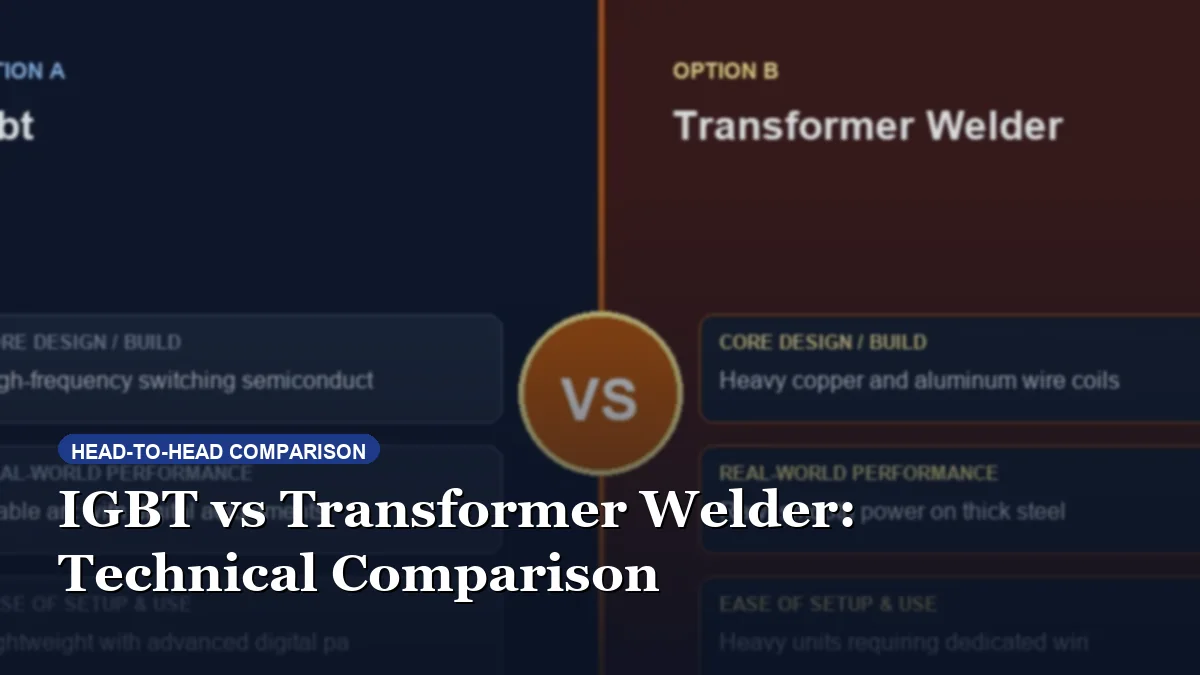
Choose IGBT inverters for lightweight portability and precise digital control. Select heavy transformers for indestructible durability in harsh industrial environments.
Compare all top models in our Best Welder: Top Home Shop & Jobsite Picks Tested.
Side-by-Side Breakdown
| Criteria | Igbt | Transformer Welder | Edge |
|---|---|---|---|
| Core Design / Build | High-frequency switching semiconductors | Heavy copper and aluminum wire coils | Igbt |
| Real-World Performance | Stable arc with digital adjustments | Raw, smooth power on thick steel | Transformer Welder |
| Ease of Setup & Use | Lightweight with advanced digital panels | Heavy units requiring dedicated wiring | Igbt |
| Durability & Reliability | Sensitive circuit boards susceptible to dust | Rugged, simple construction lasting decades | Transformer Welder |
| Efficiency / Operating Footprint | High electrical efficiency over eighty percent | Lower efficiency with high idle draw | Igbt |
| Maintenance Requirements | Requires clean cooling fans and dust-free boards | Minimal maintenance beyond basic terminal checks | Transformer Welder |
| Best Ideal Use Case | Mobile repair trucks and field fabrication | Fixed heavy industrial structural fabrication | Igbt |
Core Architectural Differences in Power Conversion
Modern welding machines rely on completely different methods to step down incoming utility voltage. Inverter technology utilizes high-speed electronic switching transistors to manage electrical currents rapidly.
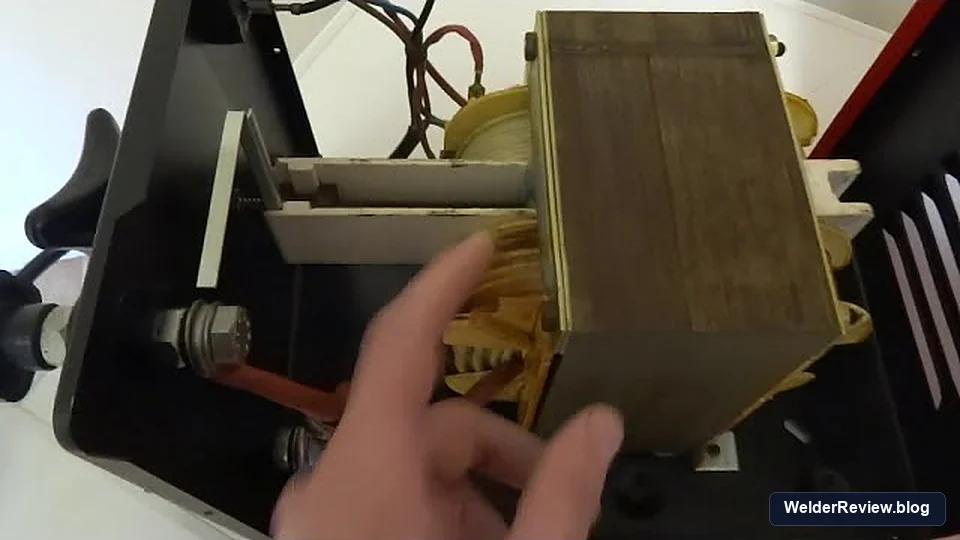
Traditional machines depend on massive iron cores wrapped in heavy copper windings. This brute-force electromagnetic approach drops high wall voltages directly down to usable welding levels without complex circuit boards.
Engineering choices dictate how these two rival categories handle internal heat generation. While inverters force cooling air through compact chassis, legacy units dissipate thermal loads passively across massive metal surfaces.
- Semiconductor switching operates at frequencies exceeding twenty kilohertz.
- Copper and iron coils operate at standard line frequency of sixty hertz.
- Solid-state microprocessors monitor voltage fluctuations continuously in modern units.
Semiconductor Switching Mechanics
Insulated-gate bipolar transistors combine high efficiency with fast switching speeds. These solid-state components allow engineers to shrink transformer sizes dramatically by stepping up operating frequencies.
Rapid voltage chopping requires sophisticated pulse-width modulation control circuitry. Such advanced electronic management delivers exceptional arc characteristics while minimizing overall machine weight.
- Transistors switch current thousands of times per second.
- Smaller internal transformers become possible due to high frequencies.
Electromagnetic Coil Construction
Traditional machines utilize heavy laminated silicon steel cores wrapped in copper wire. These rugged electromagnetic assemblies rely on sheer mass to handle continuous thermal and electrical stress.
Simple magnetic induction requires no microcontrollers or sensitive logic boards. This mechanical simplicity makes legacy machines immune to digital glitches or firmware corruption.
- Laminated silicon steel reduces core eddy current losses.
- Heavy copper windings provide natural thermal mass and stability.
Real-World Arc Stability and Welding Performance
Arc initiation and stability define the daily experience for professional fabricators. Advanced inverter algorithms react instantly to short circuits, adjusting amperage dynamically to prevent electrode sticking.
Legacy power sources deliver a softer, more forgiving arc response on heavy carbon steel. Their inherent inductance smooths out current drops naturally without relying on digital feedback loops.
Operators welding thin sheet metal often prefer solid-state machines for precise heat input control. Conversely, structural steel workers appreciate the raw, unyielding penetration of large copper coils.
- Digital controls allow micro-adjustments in arc force and hot start.
- Natural inductive drop smooths out erratic manual hand movements.
- High-frequency starts eliminate tungsten contamination in tig applications.
Dynamic Arc Response in Inverters
Microprocessors sample arc conditions thousands of times during a single weld pass. This lightning-fast feedback loop maintains strict arc length consistency across varied joint fit-ups.
Digital waveforms prevent spatter by predicting metal transfer moments accurately. Fabricators benefit from cleaner welds and reduced post-fabrication cleanup time.
- Constant current monitoring prevents annoying electrode stubbing.
- Optimized waveform software reduces overall spatter generation.
Inductive Smoothing in Legacy Units
Massive copper windings create natural electrical inductance that resists sudden current changes. This physical property stabilizes the welding puddle during manual stick electrode manipulation.
Operators striking an arc on dirty metal experience fewer disruptions. The forgiving nature of heavy iron cores accommodates minor technique inconsistencies easily.
- Physical inductance dampens sudden voltage spikes smoothly.
- Forgiving output accommodates rusty or painted steel surfaces.
Electrical Efficiency, Duty Cycle, and Power Draw
Utility power consumption impacts operational overhead in every commercial welding shop. Selecting the best welder guarantees high energy conversion rates that reduce utility bills.
Legacy machines suffer from lower conversion efficiencies and significant idle power draws. Their massive copper coils generate substantial thermal waste even when no welding is occurring.
Duty ratings also favor modern electronics under standard workshop operating conditions. Advanced thermal management allows extended run times without triggering internal overheat protection.
- Power factor correction circuits reduce reactive electrical utility penalties.
- Idle transformers continuously consume power through core magnetic losses.
- Compact cooling fans protect sensitive components during heavy duty cycles.
Power Factor and Utility Draw
Modern semiconductor designs achieve power factors approaching unity under full load. This efficiency reduces strain on workshop electrical panels and prevents breaker trips.
Reduced amperage draw allows operators to run high-output machines on standard circuits. Energy savings accumulate significantly over years of continuous commercial fabrication.
- Power factor correction maximizes usable wattage from wall outlets.
- Lower primary current draw protects workshop electrical infrastructure.
Thermal Management and Duty Ratings
Copper windings store immense heat before reaching critical thermal thresholds. However, once saturated, these heavy coils require extended cool-down periods to prevent insulation breakdown.
Forced-air cooling in solid-state devices channels ambient air directly across heat sinks. This targeted airflow maintains safe operating temperatures during aggressive production runs.
- Copper mass provides high initial thermal absorption capacity.
- Forced air velocity ensures rapid heat dissipation from semi-conductors.
Weight, Portability, and Workshop Ergonomics
Physical workspace layout dictates equipment choices for mobile and field contractors. Lightweight chassis engineering transforms heavy-duty welding gear into easily transportable shoulder-carried units.
Traditional copper and iron machines often require dedicated shop carts or transport trailers. Moving these heavy assemblies demands forklift assistance or multiple workshop crew members.
Ergonomic improvements extend beyond sheer weight reduction into control panel design. Digital interfaces offer clear visual feedback compared to archaic analog dials and levers.
- Inverter weight frequently stays under thirty pounds for portable units.
- Transformer units regularly exceed two hundred pounds of total mass.
- Digital display screens provide exact amperage and voltage readings.
Field Portability and Mobility
Contractors tackling remote repair jobs rely exclusively on lightweight solid-state machines. Carrying a compact unit up scaffolding eliminates the need for extremely long heavy-gauge leads.
Generator compatibility has also improved dramatically with modern power regulation. Inverters tolerate fluctuating input frequencies from portable engine drives without suffering component failure.
- Compact footprints fit easily behind truck seat storage areas.
- Generator-friendly electronics prevent damage from dirty power sources.
Stationary Shop Ergonomics
Industrial fabrication shops prioritize permanent equipment stability over mobility. Choosing the best starter welder ensures heavy stationary units remain securely anchored in fixed bays.
Robust steel cabinets protect internal components from falling metal scraps. Physical durability outweighs the convenience of lightweight portability in heavy manufacturing.
- Fixed floor placement prevents accidental tipping or dragging.
- Heavy-gauge steel housing withstands harsh industrial abuse.
Maintenance Protocols, Repairability, and Longevity
Long-term equipment reliability depends heavily on internal component complexity and maintenance. Simple electromagnetic designs offer exceptional longevity because fewer parts can experience sudden electronic failure.
Solid-state electronics require pristine operating environments to prevent dust accumulation. Fine metallic grinding debris can easily short-circuit sensitive circuit boards if cleaning is neglected.
Repair procedures vary drastically between these two distinct technological categories. Local technicians can easily rewind copper coils, whereas blown semiconductor boards usually require complete replacement.
- Regular compressed air blowing prevents conductive dust bridge formation.
- Transformer copper windings can operate reliably for many decades.
- Circuit board replacement is standard for modern electronics repairs.
Preventative Care for Electronics
Dust and moisture represent the primary enemies of high-frequency semiconductor equipment. Routine maintenance schedules must include opening the chassis to blow out accumulated workshop debris.
Coating circuit boards with protective conformal layers helps resist humidity and corrosion. These manufacturing safeguards extend operating lifespans in harsh coastal fabrication environments.
- Monthly dust removal prevents thermal insulation on circuit boards.
- Conformal coatings protect delicate microchips from ambient moisture.
Legacy Durability and Field Service
Old-school copper machines routinely survive decades of brutal construction site abuse. Their straightforward mechanical switches and heavy coils rarely suffer catastrophic electronic breakdown.
Field repairs often involve basic wiring fixes or simple component replacement. This maintainability makes legacy equipment legendary for generational durability in remote regions.
- Mechanical switches resist electrical voltage spikes effectively.
- Basic wiring components allow easy diagnosis with standard multimeters.
Cost Considerations and Initial Investment Value
Budget allocation guides purchasing decisions for both hobbyists and commercial enterprise owners. Efficient manufacturing processes make solid-state technology remarkably affordable across entry and professional tiers.
Heavy copper coils demand significant raw material investments during initial factory production. Consequently, traditional industrial power sources command higher upfront purchase prices for equivalent amperage output.
Total cost of ownership calculations must also account for long-term electrical savings. Modern efficiency lowers monthly utility bills, offsetting initial equipment expenses over time.
- Inverter production utilizes automated surface-mount electronic assembly lines.
- Copper commodity pricing directly influences traditional machine manufacturing costs.
- Energy savings reduce operational overhead during continuous daily use.
Upfront Pricing Dynamics
Mass production of microelectronics drives down retail costs. Choosing the best multi process welder gives consumers advanced features like digital displays affordably.
Heavy copper transformers remain expensive due to raw material commodity values. Buyers pay premium prices for unyielding industrial durability and simple analog reliability.
- Automated circuit board assembly lowers overall retail pricing.
- Copper winding weight keeps legacy equipment manufacturing costs high.
Long-Term Value Retention
Evaluating machine lifespan reveals distinct value propositions for different buyers. While digital units may require board replacements after years of heavy use, legacy units endure indefinitely.
Resale markets reflect these durability realities among professional fabrication shops. Well-maintained traditional machines retain strong residual value despite their older underlying technology.
- Legacy units maintain high resale value due to longevity.
- Modern electronics risk obsolescence as digital controls continue evolving.
Choosing the Right Technology for Your Shop
Selecting appropriate welding equipment requires careful analysis of specific workshop requirements. Field contractors and mobile fabricators benefit immensely from lightweight, versatile solid-state inverters.
Fixed industrial manufacturing facilities tackling continuous heavy plate welding still prefer traditional copper units. Their rugged durability handles extreme production schedules without thermal fatigue.
Matching machine specifications to everyday tasks prevents costly operational mismatches. Assess your power availability, mobility needs, and typical metal thickness before finalizing purchases.
- Evaluate available workshop electrical amperage before purchasing high-output units.
- Consider vehicle transport limits when selecting mobile fabrication gear.
- Analyze typical metal thicknesses to determine necessary amperage capacity.
Matching Power to Application
Automotive repair and light fabrication thrive on precise digital control options. Solid-state machines deliver the arc adjustments required for thin gauge aluminum and stainless steel.
Heavy structural steel erection demands robust, continuous power output. Traditional copper designs excel under relentless workloads where reliability supersedes portability.
- Thin sheet fabrication requires precise low-amperage arc stability.
- Structural steel welding demands sustained high output capacity.
Future-Proofing Your Investment
Technology trends clearly favor multi-process digital machines for expanding workshops. Versatile inverters handle stick, tig, and mig applications within a single compact housing.
Balancing modern versatility against traditional reliability ensures optimal shop productivity. Finding the best welder for beginners secures efficient operations for years of future projects.
- Multi-process capability reduces total equipment footprint needs.
- Reliable core technology prevents unexpected production downtime.
Frequently Asked Questions
Which technology offers better electrical efficiency?
Modern IGBT inverters achieve conversion efficiencies exceeding eighty percent. This reduces utility costs significantly compared to legacy units.
Are traditional transformer welders completely obsolete?
Traditional machines remain valued for industrial structural fabrication. Their rugged durability handles extreme duty cycles without electronic failure.
Can inverter welders operate safely on portable generators?
Most quality inverters include built-in voltage regulation features. This allows safe operation on clean portable engine drive generators.
What causes circuit board failures in solid-state units?
Accumulated workshop dust and metallic grinding debris cause shorts. Regular compressed air cleaning prevents most premature component failures.
Why do heavy copper units cost more to manufacture?
Extensive copper wiring and laminated steel cores require heavy materials. These raw commodity costs drive up initial factory production expenses.