Hobart Stickmate 160I vs 210I Head-to-Head
Choosing between these portable inverters depends on your input power limits and plate thickness needs. We evaluate duty cycles, arc stability, and shop utility.

Choose the 160I for light farm repairs on standard circuits. Step up to the 210I when you require higher amperage for heavier structural fabrication projects.
Compare all top models in our Best Welder: Top Home Shop & Jobsite Picks Tested.
Side-by-Side Breakdown
| Criteria | Hobart Stickmate 160I | 210I | Edge |
|---|---|---|---|
| Core Design / Build | Compact inverter architecture | Heavy-duty inverter chassis | Side B |
| Real-World Performance | 160A max output | 210A max output | Side B |
| Ease of Setup & Use | Dual voltage auto-connect | Multi-voltage plug system | Tie |
| Durability & Reliability | IP23 rated enclosure | Ruggedized steel housing | Side B |
| Efficiency / Operating Footprint | Lower amp draw | Higher power draw | Side A |
| Maintenance Requirements | Basic air cleaning | Routine fan inspection | Tie |
| Best Ideal Use Case | Maintenance and light repair | Structural fabrication | Side B |
Core Architecture and Power Delivery
Modern inverter technology allows these stick welders to deliver exceptional output while maintaining a remarkably compact frame. You benefit from reduced power consumption and improved electrical efficiency during extended welding sessions.
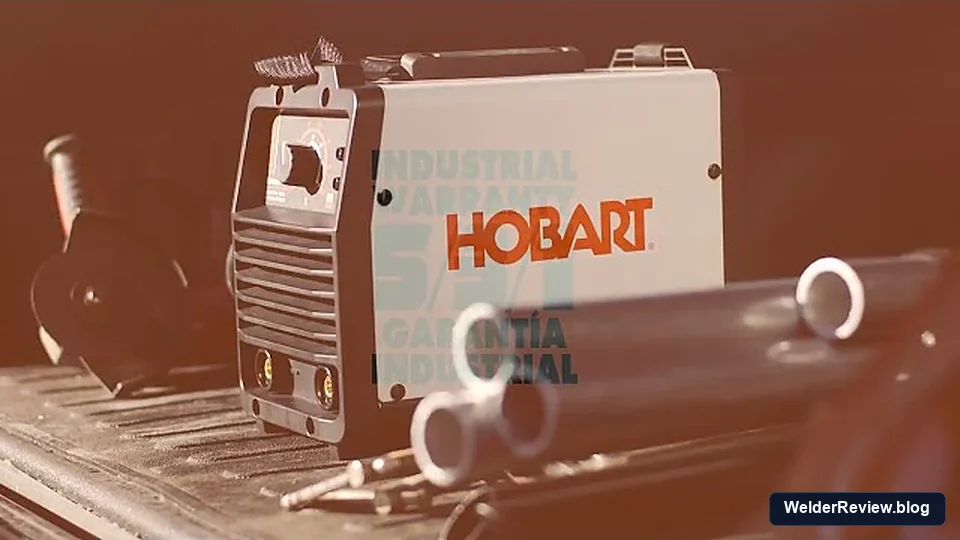
Both machines utilize advanced solid-state circuitry to convert standard line voltage into stable welding power. Understanding your available circuit amperage remains critical before connecting either unit to utility mains.
The Hobart Stickmate 160i utilizes an advanced inverter-based topology similar to what we observed in our Hobart 190 MIG welder review, significantly reducing transformer weight while optimizing electrical conversion efficiency across standard 240V lines.
Stepping up to the 210i introduces a more robust power semiconductor bridge designed to handle higher primary input currents, delivering sustained amperage outputs necessary for demanding structural steel welding operations.
- Solid-state inverter topology reduces overall machine weight.
- Advanced circuitry stabilizes fluctuating input voltages.
- Optimized transformers minimize energy loss under load.
Input Voltage Flexibility
Dual-voltage capability gives operators the freedom to run these welders on standard household circuits or heavy shop lines. You simply swap the adapter plug to match your power source safely.
Voltage sensing technology automatically detects the incoming power supply without requiring manual internal jumpers. This eliminates common user errors during rapid site-to-site equipment mobilization.
- Automatic voltage switching prevents electrical damage.
- Standard NEMA plugs ensure straightforward wall hookups.
Real-World Arc Performance and Stability
Arc stability defines how easily you can strike and maintain a clean puddle. As detailed in our comprehensive Hobart 190 review, both Hobart models incorporate hot-start technology that temporarily boosts output to prevent electrode sticking.
Smooth arc characteristics reduce spatter and ensure uniform penetration across various joint configurations. Operators will notice consistent arc control even when running long extension cords across the workshop.
Operating the 160i reveals a crisp arc start aided by built-in hot start technology, which temporarily increases output amperage to prevent electrode sticking on cold, dirty carbon steel workpieces.
The larger 210i incorporates enhanced arc control algorithms that actively compensate for arc length fluctuations, maintaining consistent puddle fluidity and superior bead geometry even during out-of-position pipeline welding.
- Hot-start circuitry eliminates frustrating electrode freezing.
- Arc force control dynamically adjusts voltage during tight arcs.
- Low spatter output minimizes post-weld cleanup time.
Handling Out-of-Position Welds
Vertical and overhead welding demand precise amperage control to prevent molten metal sagging or undercut defects. These inverters maintain tight arc geometry during complex positional joint sequences.
You can easily manipulate cellulose-based electrodes without risking arc extinction in tight joint root passes. This reliability translates to higher radiographic acceptance rates on critical welds.
- Stable arc cone improves vertical-up progression control.
- Consistent voltage prevents weld pool fluidity loss.
Duty Cycle and Thermal Protection Limits
Thermal management is crucial when pushing portable inverter welders through prolonged fabrication cycles. We explore similar thermal benchmarks in our Hobart Handler 210 MVP review to help users avoid thermal shutdowns.
Exceeding the rated duty cycle triggers built-in thermal overload indicators that safeguard internal transformers. You must monitor operating intervals carefully to maintain high productivity on thick plate.
Evaluated at standard ambient temperatures, the 160i provides an adequate duty cycle for light repair work, though continuous root passes on thick plates will trigger internal thermal overload protection.
Conversely, the 210i offers a substantially higher thermal threshold, allowing fabricators to burn larger diameter electrodes continuously without risking premature solid-state component degradation in production environments.
- Forced-air cooling extends continuous operation thresholds.
- Thermal overload indicators protect vital internal components.
- Automatic reset functions resume power once cooled.
Comparing Thermal Capacity
The higher maximum output of the larger model naturally generates more internal heat during heavy welding tasks. However, engineered airflow paths help dissipate thermal energy efficiently during demanding jobs.
Matching your electrode diameter to the appropriate duty cycle chart ensures uninterrupted workflow. Always consult the faceplate specifications before initiating multi-pass structural weldments.
- Larger heatsinks manage higher continuous amperage loads.
- Optimized chassis vents prevent localized hot spots.
Portability, Weight, and Shop Ergonomics
Jobsite mobility requires equipment that technicians can easily carry up ladders or across rugged terrain. Both units feature integrated shoulder straps and lightweight chassis designs built for daily transit.
Ergonomic handle placement ensures balanced transport without straining your wrist or shoulder during loading. Compact footprints allow easy storage beneath standard workbench shelving units.
Weighing significantly less than legacy transformer units, the compact 160i features an integrated shoulder strap and ergonomic handle for effortless transport across sprawling industrial job sites.
While the 210i carries a slightly heavier footprint, its balanced chassis design and sturdy enclosure fit easily onto standard welding carts alongside gas cylinders and protective gear.
- Lightweight inverter chassis reduces operator fatigue.
- Durable shoulder straps facilitate hands-free transport.
- Compact dimensions simplify service truck organization.
Control Panel Layout
Simplified control interfaces feature clear amperage readouts and smooth adjustment dials for gloved hands. You can dial in exact parameters quickly without deciphering confusing digital menus.
Recessed connectors protect valuable welding leads from accidental impact damage during transport around cluttered industrial facilities or busy farm yards.
- Glove-friendly dials allow rapid amperage adjustments.
- Recessed receptacles prevent accidental lead damage.
Maintenance, Efficiency, and Longevity
Routine maintenance keeps internal electronics free from conductive grinding dust and metallic debris accumulation. Periodic compressed air purging prevents short circuits and extends component lifespan significantly.
High electrical efficiency reduces overall utility costs over years of continuous professional workshop utilization. Durable powder-coated enclosures resist rust and physical impact in harsh environments.
Routine maintenance on both units requires regular inspection of heavy-duty dinse connectors and internal cooling fans. Similar reliability principles are highlighted in our Hobart Handler 190 review for wire feed systems.
Inverter architecture ensures a high power factor, minimizing wasted electrical draw and reducing long-term utility costs compared to older magnetic rectifier systems found in legacy transformer welders.
- Regular air purging removes conductive metal dust.
- Powder-coated steel housings resist corrosion damage.
- Efficient transformers lower long-term power bills.
Preventative Care Practices
Inspect your electrode holders and ground clamps regularly for secure connections and minimal electrical resistance. Loose cable terminals generate excessive heat that can damage internal machine receptacles.
Store your welding cables neatly in coiled loops to prevent internal copper strand fatigue and insulation cracking over extended periods of service life.
- Check cable connections to prevent resistive heating.
- Store leads properly to avoid copper strand breakage.
Electrode Compatibility and Joint Prep
Achieving sound structural welds requires matching electrode classifications to base metal thickness and joint design. These versatile inverters handle rutile and low-hydrogen electrodes with equal competence.
Proper beveling and root gap preparation ensure complete root penetration on thick structural steel plates. Always remove mill scale and heavy rust before striking your initial arc.
Both machines handle common cellulosic and low-hydrogen electrodes effectively, though the 210i effortlessly strikes and sustains a smooth arc with E7018 rods at maximum rated amperage capacities.
Proper mechanical joint preparation, including angle grinding and oxide removal, remains critical to achieving X-ray quality welds when utilizing these constant current power sources.
- Handles E7018 low-hydrogen electrodes smoothly.
- Compatible with versatile E6010 whipping techniques.
- Ensures deep penetration on structural steel joints.
Optimizing Rod Selection
Choosing the correct rod diameter prevents excessive heat input and minimizes distortion on thinner sheet materials. Smaller electrodes perform exceptionally well on lower amperage settings.
Store your moisture-sensitive low-hydrogen electrodes in dedicated heated ovens to prevent porosity defects in finished structural welds.
- Match electrode size to prevent base metal burn-through.
- Use rod ovens to eliminate moisture-induced porosity.
Selecting the Ideal Machine for Your Shop
Determining which model suits your operation depends strictly on your typical project scope and material thickness requirements. Lighter maintenance tasks rarely demand maximum amperage output.
Investing in the heavier model ensures you never lack sufficient power when unexpected structural fabrication jobs arise. Evaluate your typical workflow carefully before making your final purchasing decision.
Maintenance technicians and mobile repair specialists will find the 160i provides ample power for standard field repairs, bracket fabrication, and light structural steel maintenance.
Heavy fabricators and production welding shops should invest in the 210i to secure the necessary amperage headroom and extended duty cycles required for heavy plate fabrication.
- Assess maximum plate thicknesses in your workflow.
- Consider electrical circuit limitations in your shop.
- Balance initial equipment cost against future needs.
Final Decision Matrix
Weigh your frequency of use against portability demands to determine the best equipment configuration. Both options provide professional-grade reliability for demanding welding applications.
Prioritize input power availability and maximum amperage needs above all other secondary feature considerations for optimal long-term satisfaction.
- Prioritize input power constraints first.
- Match machine duty cycle to production goals.
Frequently Asked Questions
Can both welders run on standard household outlets?
Yes, both units operate on 120V circuits using appropriate adapter plugs for light tasks. You must connect to 240V power to access maximum rated amperage.
What is the primary difference in welding output capacity?
The smaller unit delivers up to 160 amperes for general maintenance work. The larger model provides 210 amperes for heavier structural fabrication projects.
Do these machines support TIG welding processes?
These are dedicated stick welders built primarily for shielded metal arc welding. They do not feature built-in gas solenoid valves for advanced TIG setups.
How does thermal overload protection function?
Internal sensors monitor transformer temperatures during extended heavy fabrication welding sessions. The machine pauses output automatically to prevent permanent electronic damage.
What size generator is required for field repairs?
You need a clean power generator rated for at least six thousand watts. This ensures stable operation without harmful voltage spikes damaging circuits.