Hobart Handler 140 vs 190: Head-to-Head Comparison
Choosing between these two popular wire feed welders requires balancing input power limitations against heavy fabrication capacity. Understanding your workshop electrical limits ensures you invest in the right machine.

Choose the Handler 140 if you primarily weld sheet metal on standard household circuits. Opt for the Handler 190 when your projects demand deeper penetration on thick structural steel plates.
Compare all top models in our Best Welder: Top Home Shop & Jobsite Picks Tested.
Side-by-Side Breakdown
| Criteria | Hobart Handler 140 | 190 | Edge |
|---|---|---|---|
| Core Design / Build | Compact steel cabinet housing a traditional transformer. | Larger structural frame supporting multi-voltage inputs. | Handler 190 |
| Real-World Performance | Maximum output handles up to quarter-inch steel adequately. | Robust output easily penetrates materials up to five-sixteenths. | Handler 190 |
| Ease of Setup & Use | Simple four-voltage tap setting for quick adjustments. | Seven-position voltage control for fine-tuned arc stability. | Handler 190 |
| Durability & Reliability | Industrial-grade cast aluminum wire drive mechanism. | Heavy-duty cast aluminum dual-roll drive assembly. | Tie |
| Efficiency / Operating Footprint | Operates efficiently on standard 115V household circuits. | Requires dedicated 230V power for maximum output potential. | Handler 140 |
| Maintenance Requirements | Routine cleaning of drive rolls and contact tips. | Standard preventative maintenance on gun liners and drive systems. | Tie |
| Best Ideal Use Case | Automotive restoration, light farm repairs, and DIY projects. | Heavy farm fabrication, trailer repairs, and structural work. | Handler 190 |
Core Design and Transformer Engineering Differences
Evaluating transformer-based welding machines reveals fundamental differences in how electrical power is stepped down for metal inert gas processes. Both units utilize reliable copper-wound architectures designed to withstand demanding workshop environments over decades.
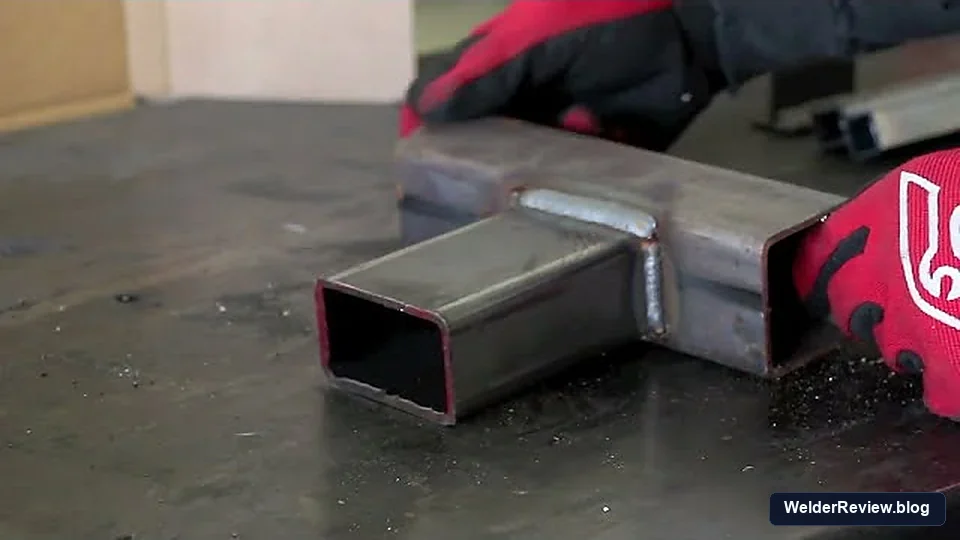
The smaller chassis layout of the first machine prioritizes portability for mobile repair technicians. Conversely, the larger footprint of the second unit accommodates heavy-duty internal components engineered for extended high-amperage duty cycles.
Internal cooling fans actively manage thermal loads during prolonged fabrication sessions. This prevents premature thermal overload trips while maintaining consistent wire feed speeds across varying thicknesses of carbon steel.
The Handler 140 relies on a traditional tapped transformer design operating strictly on 115V input power. This limits maximum output but provides rugged durability for basic farm repairs and light automotive sheet metal restoration work.
Conversely, as detailed in our Hobart Handler 190 review, this unit utilizes a multi-voltage tap-switched transformer capable of accepting 230V input power. This heavier internal architecture delivers significantly higher thermal thresholds for extended structural fabrication tasks.
Copper windings inside both units differ considerably in gauge and insulation class. The 190 model incorporates heavier winding specifications to handle increased amperage loads without degrading the internal dielectric properties over years of heavy usage.
- Transformer architecture ensures long-term operational reliability.
- Chassis dimensions dictate overall workshop portability.
- Forced-air cooling systems protect internal rectifiers.
Electrical Input Requirements and Circuit Demands
Power supply compatibility remains the single biggest deciding factor when selecting your ideal wire feed welder. Operating on standard household circuits limits maximum amperage output but offers unmatched job site versatility.
Stepping up to dual-voltage capabilities unlocks industrial-level performance by utilizing dedicated workshop lines. You must verify your breaker panel can handle the sustained electrical draw during maximum output welding.
- Standard household circuits limit maximum penetration depth.
- Dedicated higher voltage lines unlock full machine capacity.
Real-World Performance and Metal Thickness Capacities
As outlined in our Hobart Handler 140 MIG welder review, thinner gauge sheet metal responds exceptionally well to the smooth arc characteristics produced by lower amperage settings on 115V equipment.
Heavy plate fabrication demands significantly higher heat input to achieve proper fusion and structural integrity. Pushing smaller machines beyond their rated capacity often results in cold-lap defects and inadequate weld penetration.
Multi-position voltage taps allow operators to dial in exact parameters for diverse joint configurations. Proper wire selection complements these settings to ensure sound mechanical properties in finished weldments.
Operating on standard household circuits, the 140 model effectively welds materials from 24 gauge up to 1/4 inch mild steel. However, pushing past 3/16 inch requires meticulous beveling and multiple passes to ensure adequate structural penetration.
Stepping up to the 230V machine expands your true operating envelope to handle 24 gauge up to 5/16 inch thickness in a single pass. This extra thermal reserve makes it ideal for thicker trailer frames and heavy brackets.
Duty cycles also scale proportionally with input voltage and transformer mass. The smaller unit drops off faster under heavy loads, whereas the larger machine maintains a 30 percent duty cycle at higher amperages for continuous production workflows.
- Sheet metal fabrication benefits from fine-tuned voltage control.
- Structural steel requires high amperage for complete joint fusion.
- Correct shielding gas selection optimizes arc stability.
Duty Cycle Limitations Under Heavy Workshop Loads
Monitoring thermal duty cycles prevents internal component degradation during marathon welding sessions in busy fabrication shops. Smaller transformers require mandatory cooling periods after extended periods of continuous bead laying.
Higher-output alternatives sustain operational readiness longer before triggering internal thermal protection switches. Understanding these operational thresholds ensures your equipment survives demanding commercial production schedules.
- Thermal overload protection prevents permanent transformer damage.
- Extended duty cycles maximize daily fabrication productivity.
Arc Stability, Spool Guns, and Wire Feeding Systems
Reliable wire feeding directly influences bead appearance and overall structural soundness in everyday metal fabrication. Cast aluminum drive assemblies prevent wire bird-nesting by maintaining uniform tension on the spool.
Optional spool gun compatibility transforms these machines into capable aluminum welding platforms for specialized projects. Direct plug-in capabilities eliminate external control boxes, simplifying setup procedures for operators.
Stable arc characteristics minimize annoying spatter while promoting smooth puddle wet-in on rusted or mill-scaled steel surfaces. This reduces post-weld cleanup time significantly across production runs.
Both welders feature cast-aluminum dual-track drive rolls that ensure consistent wire delivery without slipping. Tension adjustments remain straightforward, minimizing bird-nesting issues when running thin aluminum or soft flux-cored wires through standard contact tips.
Arc stability on the 140 feels crisp at lower voltage settings, though it can exhibit some spatter when pushing the upper limits. The inductance tuning manages puddle fluidity well for beginners tackling thin auto body panels.
As evaluated in our Hobart Handler 190 MIG wire welder review, this machine offers direct plug-in capability for a spool gun accessory to eliminate soft alloy feeding friction.
- Aluminum drive rolls ensure consistent wire feeding pressure.
- Direct-connect spool gun ports simplify non-ferrous fabrication.
- Optimized inductance delivers smooth arcs with minimal spatter.
Voltage Tap Configurations and Arc Fine-Tuning
Controlling arc voltage through stepped tap switches provides repeatable settings for recurring fabrication tasks. Operators quickly memorize ideal tap combinations for specific material thicknesses encountered daily.
Infinite wire feed speed dials allow precise balancing against selected voltage outputs for optimal bead profiles. Mastering this balance yields professional-grade results on every structural joint.
- Stepped voltage selectors ensure consistent parameter repeatability.
- Infinite wire speed knobs fine-tune puddle fluidity.
Maintenance, Efficiency, and Long-Term Equipment Longevity
Routine preventative maintenance preserves the mechanical integrity of your welding machine throughout years of heavy use. Keeping drive rolls clean and replacing worn contact tips eliminates erratic wire feeding issues.
Internal transformer coils require periodic inspection and dusting with compressed air to prevent thermal insulation breakdown. Proper storage away from moisture-prone environments prevents premature internal corrosion.
Energy efficiency varies depending on the primary input voltage utilized during active welding operations. Higher voltage configurations draw fewer amps under load, reducing stress on facility wiring.
Routine maintenance for these Hobart units involves periodically cleaning the drive rolls with compressed air and inspecting the welding gun liner. Keeping these pathways clear prevents erratic wire feeding and premature contact tip wear during long shifts.
Transformer-based MIG machines boast exceptional long-term reliability compared to complex circuit-board units. Their mechanical switches and robust copper windings endure harsh workshop environments, surviving dust, moisture, and temperature fluctuations with minimal risk of catastrophic electronic failure.
Power efficiency heavily favors the higher-voltage machine when executing heavy fabrication tasks. Drawing power from a 230V circuit reduces amperage draw at the breaker, lowering overall line loss and delivering superior electrical stability under demanding loads.
- Regular drive roll cleaning prevents wire feeding interruptions.
- Compressed air dusting removes harmful conductive metallic debris.
- Proper workshop storage protects internal electrical components.
Consumable Wear and Everyday Shop Upkeep
Contact tips, nozzles, and gas diffusers suffer normal degradation during high-temperature welding operations. Keeping a ready stock of replacement consumables prevents frustrating project delays in the workshop.
Gun liners accumulate metallic debris over time, leading to friction and inconsistent wire delivery. Periodic cleaning and replacement of these liners restore factory-fresh wire feeding performance.
- Stocking replacement contact tips minimizes downtime delays.
- Liners require periodic cleaning to eliminate internal friction.
Portability, Ergonomics, and Workshop Footprint
Workshop layout often dictates whether a compact or heavy-duty welding machine suits your operational workflow. Lightweight chassis designs make transporting equipment to remote job sites effortless for mobile contractors.
Ergonomically designed welding guns reduce hand fatigue during extended overhead or out-of-position fabrication tasks. Flexible cable assemblies improve maneuverability around complex automotive frames and agricultural implements.
Balanced carrying handles allow secure one-handed transport across uneven terrain around the ranch or job site. Integrated cable wraps keep work leads tidy during storage periods.
As highlighted in our Hobart Handler 140 review, this compact 65-pound machine is exceptionally easy to hoist into a truck bed for mobile repairs alongside standard shielding gas cylinders.
The higher-capacity 190 machine adds substantial bulk and weight, tipping the scales near seventy-four pounds. While still technically portable, it demands a dedicated workshop cart or stable workbench rather than frequent transport to remote job sites.
Control panels on both welders feature clearly labeled voltage selector charts mounted inside the wire compartment. This ergonomic touch helps operators quickly dial in optimal wire speed and voltage parameters for varying base metal thicknesses.
- Lightweight construction enables seamless mobile job site transport.
- Ergonomic gun handles minimize operator fatigue over time.
- Integrated cable management keeps service leads organized.
Chassis Durability and Mobile Job Site Resilience
Heavy stamped steel outer cases protect delicate internal transformers from accidental impact damage during transport. Powder-coated finishes resist scratching and rusting in harsh outdoor weather conditions.
Secure door latches keep shielding gas cylinders and internal wire spools safely contained during mobile transit across rough terrain. Structural rigidity ensures long-term reliability under demanding conditions.
- Powder-coated steel cabinets resist harsh outdoor corrosion.
- Secure door latches protect internal wire spools effectively.
Which Option Fits Your Setup and Fabrication Goals
Selecting the correct welding machine ultimately depends on your specific metal fabrication requirements and power availability. Hobbyists working in residential garages will appreciate the convenience of standard household electrical integration.
Professional fabricators needing deep penetration on thick structural plates require the substantial muscle of higher-voltage equipment. Assessing your typical material thickness prevents costly equipment upgrades down the road.
Balancing initial investment against long-term fabrication needs ensures maximum satisfaction with your workshop equipment selection. Investing in the right machine empowers you to tackle diverse projects with absolute confidence.
Choose the smaller 140 unit if your garage lacks a dedicated 230V outlet and your projects center on sheet metal, exhaust systems, and general household repairs. It offers unbeatable convenience for DIY hobbyists working in standard residential spaces.
Invest in the robust 190 model if you regularly fabricate heavy equipment, roll cages, or structural trailers exceeding three-sixteenths inch steel. The extra power headroom prevents thermal shutdowns and guarantees professional penetration on demanding structural joints.
Assessing your primary material thickness requirements and available electrical infrastructure will immediately clarify your best path forward. Matching the machine to your realistic workload ensures optimal satisfaction and dependable performance over decades of reliable service.
- Match machine electrical requirements to your available workshop power.
- Evaluate maximum material thicknesses before making your final investment.
- Consider future fabrication goals to avoid premature equipment obsolescence.
Final Decision Matrix for Workshop Integration
Reviewing your typical daily workload highlights which machine specifications matter most for your specific application. Prioritizing portability leads you toward lighter single-voltage units.
Choosing maximum deposition rates and deeper penetration points directly toward robust dual-voltage alternatives. Your specific fabrication demands dictate the ultimate winner for your shop.
- Assess daily workloads to determine necessary machine capacity.
- Prioritize either ultimate portability or heavy structural capability.
Frequently Asked Questions
Can the Hobart Handler 140 run on a standard household outlet?
Yes, this machine operates efficiently on standard 115V household circuits without requiring special electrical modifications. You can plug it into any standard garage wall outlet for immediate project work.
What is the maximum steel thickness for the Hobart Handler 190?
The robust Handler 190 easily penetrates carbon steel up to five-sixteenths of an inch in a single pass. This makes it suitable for heavy farm repairs and structural fabrication tasks.
Do both welders support spool guns for aluminum welding?
Both models feature direct-connect receptacles that accommodate optional spool guns for feeding soft aluminum wire. This eliminates the need for bulky external control adapters during non-ferrous projects.
Which welding machine is better for automotive restoration work?
The Handler 140 excels at automotive sheet metal work because its lower amperage settings prevent burn-through. It provides the delicate heat control required for thin body panels.
How do I maintain the internal wire drive mechanism?
Regularly inspect the drive rolls for metallic debris and clean them with compressed air to prevent slipping. Ensuring proper tension prevents bird-nesting and maintains smooth wire delivery.