Gas vs Gasless Mig Welding: Concise Verdict
Choosing between shielding gas and flux-cored wire impacts weld integrity, equipment mobility, and operating costs. Understanding these fundamental differences ensures optimal results for your specific metal fabrication environment.

Pick Gas MIG welding for clean, showroom-quality auto body fabrication in controlled indoor shops. Choose Gasless flux-cored welding for outdoor repairs and deep penetration on thick structural steel plates.
Compare all top models in our Best Welder: Top Home Shop & Jobsite Picks Tested.
Side-by-Side Breakdown
| Criteria | Gas | Gasless Mig Welding | Edge |
|---|---|---|---|
| Core Design / Build | Utilizes external inert or active shielding gas cylinders. | Relies on flux-embedded tubular wire for internal shielding. | Gas |
| Real-World Performance | Produces minimal spatter and exceptionally clean weld beads. | Delivers deep penetration ideal for heavy structural steel. | Gasless Mig Welding |
| Ease of Setup & Use | Requires regulators, hoses, and precise flow meter calibration. | Offers rapid setup with no bottled gas tanks required. | Gasless Mig Welding |
| Durability & Reliability | Susceptible to wind interference blowing away shielding gas. | Highly resistant to windy outdoor job site conditions. | Gasless Mig Welding |
| Efficiency / Operating Footprint | Demands fixed workshop space for heavy gas cylinder storage. | Maximizes portable field operation and remote job mobility. | Gasless Mig Welding |
| Maintenance Requirements | Requires regular checks on gas solenoids and hose leaks. | Demands frequent removal of heavy slag and conductive buildup. | Gas |
| Best Ideal Use Case | Precision thin-gauge sheet metal and automotive restoration. | Outdoor farm repairs and thick carbon steel construction. | Split |
Fundamental Processing Mechanics
The primary processing distinction lies in how the molten weld pool is protected from atmospheric contamination. Shielding gas creates an inert envelope around the arc, whereas flux-cored wire generates its own protective gas via core combustion.
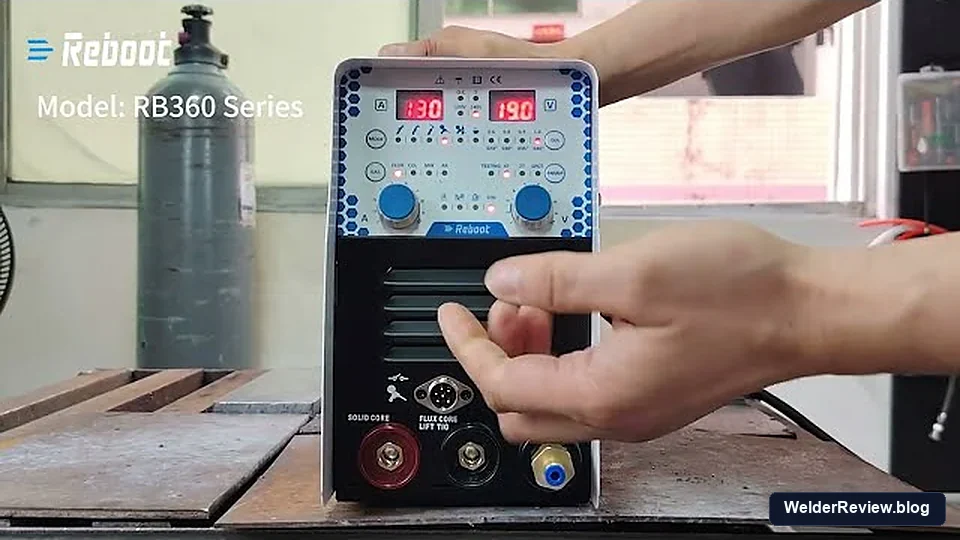
Understanding this metallurgical reaction dictates how electrical energy transfers across the arc gap. Solid wire combined with external gas relies entirely on external flow dynamics, while flux-cored processes create internal slag layers that solidify slowly.
Both methods melt consumable electrodes into base metals, but the resulting slag and surface finish vary drastically. Selecting the correct processing technique requires analyzing joint geometry, base metal thickness, and operational workspace restrictions.
Gas metal arc welding relies on an externally supplied shielding gas to protect the molten weld pool. Choosing the best gas for mig welding mild steel prevents atmospheric contamination and ensures sound metallurgical bonding.
Flux-cored arc welding without external gas utilizes specialized tubular wires containing internal flux compounds. During the arc cycle, these core materials vaporize to generate a protective gaseous shield and slag coverage.
The choice between these foundational mechanics dictates arc stability, spatter generation rates, and penetration profiles. Solid wire setups deliver smoother arcs, whereas self-shielded wires offer superior performance in windy outdoor environments.
- Solid wire requires external gas shielding for oxidation prevention.
- Flux-cored wire contains deoxidizers within the tubular center.
- External gas provides superior arc visibility during metal transfer.
Arc Stability and Transfer Modes
Arc stability directly dictates bead appearance and operator control during active fabrication. Gas-shielded setups typically feature smooth short-circuiting transfer with very little annoying spatter generation.
Gasless setups often produce a harsher, crackling arc sound due to expanding flux compounds. Operators must adjust voltage parameters carefully to maintain consistent puddle wetting and minimize cleanup time.
- Short-circuit transfer reduces heat input on thin materials.
- Globular transfer occurs more frequently with incorrect voltage.
Storage and Transport Logistics
Managing heavy pressurized cylinders introduces distinct storage and transport challenges for mobile welding operations. Compressed gas tanks demand secure upright chain restraints to prevent catastrophic valve damage during transit.
Selecting the best gasless mig welder eliminates bulky cylinders entirely, allowing technicians to load a compact machine and a small spool directly into service trucks for immediate remote field deployment.
Workshop layout planning must account for cylinder safety cages, ventilation clearances, and safe distances from high-frequency electrical equipment. Mobile rigs bypass these infrastructure demands, prioritizing rapid deployment over stationary convenience.
Compressed gas cylinders demand strict adherence to high-pressure safety regulations during transit. Tanks must remain chained upright in dedicated carts to prevent valve damage, catastrophic leaks, and uncontrolled projectile hazards on site.
Flux-cored spools require minimal handling equipment compared to heavy shielding gas cylinders. Standard wire rolls demand moisture-resistant storage containers to prevent flux degradation, ensuring porosity-free welds during fabrication operations.
Field mobility heavily favors gasless setups due to the elimination of bulky tanks and regulators. Mobile service trucks save valuable payload space by omitting high-capacity gas cylinders from their daily equipment manifests.
- Compressed gas cylinders require Department of Transportation compliance.
- Flux-cored wire spools need dry storage to prevent moisture absorption.
Cylinder Handling and Facility Safety
Storage facilities must maintain adequate clearance from flammable materials and ignition sources. Regulators should be removed and protective valve caps secured whenever moving cylinders across uneven terrain.
Proper handling protocols prevent dangerous high-pressure leaks and structural tipping hazards inside crowded fabrication bays.
- Always chain cylinders securely to stationary walls or carts.
- Never store gas tanks in unventilated or confined spaces.
Shielding Gas Economics and Regional Pricing
Operating costs fluctuate based on regional gas pricing, cylinder rental agreements, and consumption rates. Properly setting mig welding shielding gas flow rates reduces waste and controls your recurring operational expenses significantly.
Purchasing large industrial cylinders reduces per-cubic-foot gas expenses compared to small owner-owned bottles, but requires higher upfront capital investment and frequent refill transportation logistics.
Gasless operations replace recurring gas refill expenditures with slightly higher consumable wire costs. Balancing these financial variables helps shops determine the most profitable setup for their specific production volume.
Procuring shielding gases involves balancing initial cylinder lease agreements against ongoing refill expenses. Industrial fabricators typically utilize high-volume bulk tanks to minimize operational overhead and frequent exchange downtime.
Regional industrial gas availability directly impacts local supply chain efficiency and logistics costs. Rural fabrication shops often face extended delivery routes and surcharges for specialized argon blends, affecting project profitability.
Evaluating total consumable costs requires factoring in gas delivery fees, regulator maintenance, and rental contracts. Gasless operations bypass these recurring utility overheads, relying strictly on wire spool consumption metrics.
- Mixed gases offer superior penetration profiles for carbon steel.
- Pure argon is mandatory for aluminum MIG welding applications.
Comparing Regional Gas Tariffs
Local distribution networks heavily influence industrial gas pricing across different states and geographic regions. Rural fabrication shops often face higher delivery surcharges compared to urban manufacturing hubs.
Evaluating local supplier contracts ensures your business maintains competitive margins on high-volume production runs.
- Delivery fees add substantial overhead to rural shop operations.
- Bulk liquid micro-bulk systems benefit high-consumption facilities.
Health Effects and Fume Management
Welding processes generate complex airborne particulate matter that requires rigorous ventilation engineering. Flux-cored welding produces significantly higher smoke volume due to the vaporization of internal chemical compounds.
Inhalation of specific metallic fumes, including manganese and barium, poses serious occupational health risks if proper respiratory protection is neglected during continuous daily fabrication tasks.
Gas-shielded setups generally produce cleaner visible plumes, though hazardous hexavalent chromium can still form when joining stainless steel or coated metals without adequate local exhaust ventilation.
Welding processes generate complex airborne particulate matter that requires rigorous ventilation strategies. Solid wire processes produce relatively low fume volumes, while flux-cored methods generate dense plumes containing hazardous metallic oxides.
Self-shielded flux-cored wires often release elevated levels of barium, fluorides, and manganese into the workspace. Operators must utilize local exhaust ventilation systems to maintain permissible exposure limits inside enclosed shops.
Personal protective equipment like powered air-purifying respirators remains mandatory during heavy industrial fabrication. Proper respirator fit testing protects welders from chronic respiratory conditions associated with prolonged fume inhalation.
- Respirators with P100 filters protect against toxic metal particulates.
- Local exhaust hoods capture fumes directly at the arc source.
Ventilation Standards and Personal Safety
When selecting equipment like the best gasless mig welder for beginners, occupational safety guidelines still mandate minimum airflow velocities within enclosed workspaces to protect welder respiratory health.
Regular air quality monitoring ensures compliance with federal workplace exposure limits during heavy production shifts.
- Forced air blowers eliminate stagnant pockets of welding smoke.
- Always position your head outside the direct thermal plume.
Safety Concerns and Environmental Hazards
Working with pressurized gas cylinders introduces unique physical hazards absent in self-shielded operations. A sheared cylinder valve can transform a heavy steel tank into an uncontrolled projectile capable of breaching walls.
Electrical safety remains paramount across both methods, requiring dry insulating gloves, undamaged power cords, and proper grounding clamps to prevent severe shock hazards during wet or humid weather.
Fire prevention protocols demand the removal of combustible debris within a wide radius of the welding zone, especially when hot slag from flux-cored processes flies unpredictably across the floor.
Open-air fabrication using self-shielded wires introduces significant arc radiation and slag management risks. Welders must chip away brittle slag layers, wearing safety glasses to prevent flying debris injuries during cleanup.
High-pressure shielding gas cylinders represent severe kinetic hazards if cylinder valves shear off unexpectedly. Facilities must secure compressed gas manifolds and inspect regulator diaphragms regularly to prevent explosive pressure releases.
Environmental factors like crosswinds disrupt external shielding gas envelopes, leading to severe weld porosity. Conversely, gasless processes tolerate moderate drafts, maintaining adequate arc shielding through active flux decomposition mechanisms.
- Inspect welding leads regularly for frayed insulation and exposed copper.
- Keep calibrated fire extinguishers immediately accessible in every bay.
Mitigating Outdoor Environmental Risks
Wind gusts disrupt shielding gas coverage, forcing operators to install heavy wind screens or switch entirely to flux-cored wires. Moisture from rain or high humidity can cause severe porosity defects.
Protecting the immediate weld zone from weather elements ensures structural integrity and prevents costly rework on critical outdoor infrastructure projects.
- Erect temporary canvas shelters during outdoor field repairs.
- Pre-heat damp metal surfaces to drive out residual moisture.
Energy Input and Electrical Conversion Units
Welding machines transform high-voltage grid power into low-voltage, high-amperage direct current suitable for metal joining. Electrical efficiency varies between older transformer units and modern inverter-based power sources.
Understanding standard conversion units helps technicians calculate accurate duty cycles, input amp draws, and electrical breaker sizing requirements for their specific workshop electrical service panels.
Power factor correction technology in advanced welders reduces reactive energy waste, lowering monthly utility overhead for high-output manufacturing facilities operating multiple shifts simultaneously.
Modern inverter power sources optimize electrical conversion efficiency for both gas and gasless setups. These advanced machines transform incoming line voltage into precise constant voltage outputs tailored for stable wire feed dynamics.
Self-shielded flux-cored operations frequently require higher amperage outputs to achieve complete joint penetration. The internal flux ingredients consume thermal energy during decomposition, altering the effective heat input calculations significantly.
Duty cycle ratings determine how long a welding machine can operate continuously at rated amperages. Industrial applications demand high duty cycle transformers to prevent thermal overloads during extended heavy fabrication shifts.
- Inverter machines offer superior electrical conversion efficiency.
- Duty cycle ratings dictate continuous running time limits safely.
Interpreting Energy Units in Welding
Energy is measured in joules, while electrical power output relies on volts and amperes multiplied together. Calculating total heat input helps prevent metallurgical degradation in heat-sensitive alloys.
Reviewing equipment specification manuals clarifies how input voltage fluctuations impact arc stability and overall machine performance during peak grid demand hours.
- Voltage controls arc length and overall bead width profile.
- Amperage dictates base metal penetration depth and deposition rate.
Frequently Asked Questions
Can I use standard shielding gas with flux-cored wire?
Certain dual-shield flux-cored wires require an external gas mixture like carbon dioxide to operate correctly. Always verify manufacturer specifications before combining internal flux with external bottled shielding gases.
Why is my gasless MIG weld producing excessive spatter?
Excessive spatter usually stems from incorrect voltage settings or improper polarity during setup. Switching to electrode negative polarity typically resolves erratic arc transfer and smooths out the weld puddle.
Is gasless MIG welding strong enough for heavy structural projects?
Gasless flux-cored wire provides deep penetration, making it exceptionally strong for thick steel plates. Proper technique and correct wire selection ensure structural welds easily meet professional engineering standards.
How do I prevent porosity when welding outdoors without gas?
Wind blows away shielding gases and cooling flux gases, causing porous, weak weld deposits. Using adequate wind screens and dry wire prevents atmospheric contamination and ensures sound welds.
Which method is better for thin auto body sheet metal?
Gas-shielded MIG welding delivers cooler, cleaner results ideal for delicate automotive sheet metal. Solid wire and argon blends prevent burn-through and eliminate tedious slag chipping on thin panels.