Flux Core vs Solid Wire Mig: Complete Welding Guide
Choosing between self-shielded flux core and gas-shielded solid wire defines your shop capabilities. Understanding their engineering differences ensures structural integrity across various steel thicknesses and joint configurations.

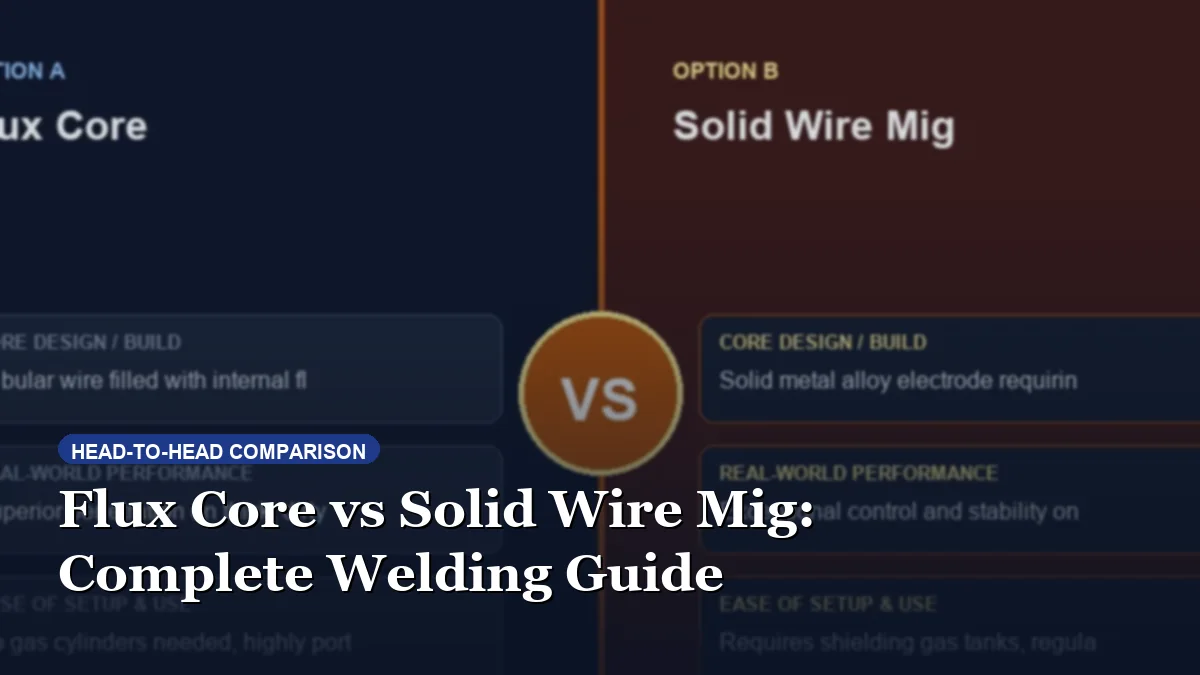
Choose Flux Core for maximum outdoor penetration and zero shielding gas bottles, but pick Solid Wire Mig when you require clean, aesthetically superior welds on thin automotive sheet metal without excessive post-weld cleanup.
Compare all top models in our Best Welder: Top Home Shop & Jobsite Picks Tested.
Side-by-Side Breakdown
| Criteria | Flux Core | Solid Wire Mig | Edge |
|---|---|---|---|
| Core Design / Build | Tubular wire filled with internal fluxing agents | Solid metal alloy electrode requiring external gas | Solid Wire Mig |
| Real-World Performance | Superior penetration on thick, dirty, or rusted steel | Exceptional control and stability on clean metals | Flux Core |
| Ease of Setup & Use | No gas cylinders needed, highly portable field setup | Requires shielding gas tanks, regulators, and hoses | Flux Core |
| Durability & Reliability | Withstands windy outdoor jobsite environments effortlessly | Susceptible to shielding gas disruption outdoors | Flux Core |
| Efficiency / Operating Footprint | Higher deposition rates with continuous slag coverage | Continuous clean arcs with minimal downtime for cleaning | Solid Wire Mig |
| Maintenance Requirements | Frequent slag chipping, brushing, and tip cleaning | Minimal post-weld cleanup, rapid wire feed reliability | Solid Wire Mig |
| Best Ideal Use Case | Structural outdoor construction and heavy farm repairs | Automotive body panels and indoor fabrication shops | Tie |
Core Engineering And Wire Design Principles
Modern welding metallurgy relies heavily on how filler metals deliver shielding to the molten weld pool. Examining the foundational differences between self-shielded tubular options and solid electrodes reveals critical operational trade-offs for structural fabricators.
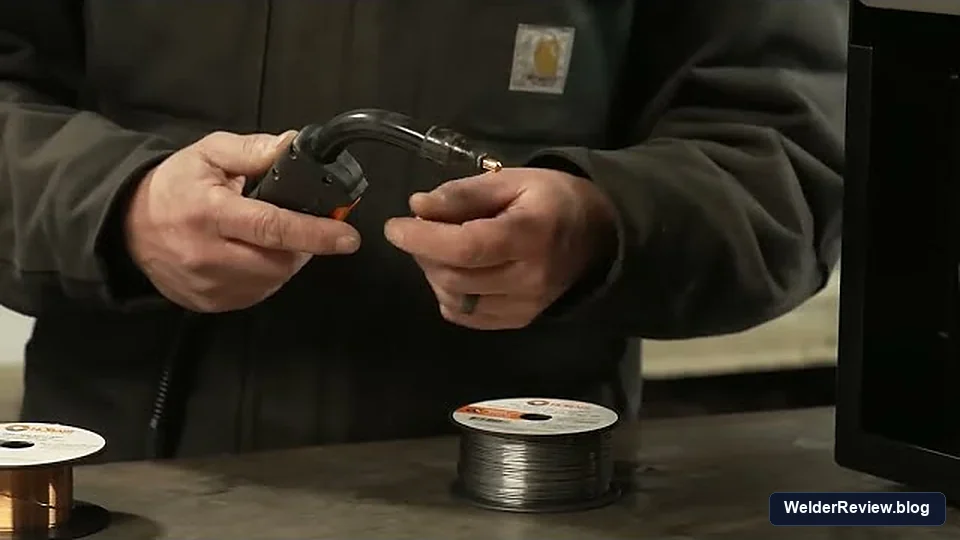
Engineers design Flux Core electrodes as small metal tubes packed with deoxidizers. When selecting the best flux core wire for beginners, this internal chemistry generates a protective gas shield.
Conversely, solid wire relies entirely on external shielding gases like carbon dioxide or argon mixtures to prevent atmospheric contamination. This fundamental design distinction directly dictates where and how each welding process operates most efficiently.
- Internal flux compounds protect the weld pool against atmospheric nitrogen and oxygen without external gas.
- Solid wire relies on pressurized external shielding gases delivered directly through the welding gun nozzle.
- Tubular wire designs require specialized knurled drive rolls to prevent crushing the soft outer metallic sheath.
Tubular Flux Architecture
The hollow structural design of flux-cored wire houses chemical compounds that vaporize during the arc cycle. This controlled chemical reaction creates a protective slag blanket over the cooling weld metal, stabilizing the arc significantly.
Operators must handle these tubular wires with care because moisture absorption inside the exposed flux can cause severe porosity defects. Proper storage in dry environments remains an absolute necessity for structural integrity.
- Chemical agents inside the core clean dirty metal surfaces during the welding process.
- Moisture intrusion ruins flux integrity and forces strict electrode storage protocols in workshops.
Solid Electrode Composition
Solid MIG wire is drawn from homogenous metal alloys matching standard structural steel specifications closely. The absence of internal cavities provides superior column strength, ensuring smooth wire feeding through long gun liners.
Because these electrodes lack internal deoxidizers, they demand impeccably clean base metals free from heavy rust, mill scale, or oil to prevent weld contamination and subsequent structural failure.
- Homogenous metal composition ensures consistent electrical contact inside the contact tip during high-amperage runs.
- Absolute dependence on external shielding gas requires draft-free indoor or sheltered outdoor working environments.
Real-World Performance And Arc Dynamics
Evaluating real-world arc dynamics highlights how these two processes handle different joint configurations and environmental conditions. Professional welders look closely at arc stability, penetration profiles, and bead appearance on structural joints.
Self-shielded tubular wires produce a distinct, aggressive digging arc that excels at fusing thick steel sections. This high heat input guarantees deep root penetration, making it a favorite for heavy equipment repair tasks.
Solid wire mig delivers a smoother, softer spray or short-circuit transfer that minimizes spatter. Fabricators prefer this refined arc behavior when working on thinner gauge materials where burn-through presents a constant operational hazard.
- Aggressive digging arcs on tubular wires achieve exceptional penetration on thick structural plates effortlessly.
- Smooth short-circuit transfers on solid wire prevent catastrophic burn-through on delicate sheet metal assemblies.
- Arc stability fluctuates drastically when strong winds displace shielding gas around unprotected solid wire joints.
Outdoor Weather Resistance
Jobsite environments present severe challenges for gas-shielded processes due to ambient wind drafts. Even moderate breezes blow away external shielding gas, causing severe porosity and brittle weld deposits during critical structural connections.
Self-shielded tubular alternatives completely ignore windy conditions because their internal chemical reactions generate localized protection instantly. Field construction crews rely heavily on this distinct weather immunity for outdoor structural erection.
- Wind speeds exceeding five miles per hour easily disrupt external shielding gas envelopes on solid wire.
- Self-shielded tubular arcs maintain complete atmospheric protection regardless of severe outdoor weather conditions.
Indoor Shielding Gas Dynamics
Controlled indoor fabrication shops maximize the potential of solid wire through precise gas flow management. Utilizing specific argon and carbon dioxide blends optimizes arc transfer modes, reducing spatter and enhancing overall bead aesthetics.
Operators fine-tune voltage and wire feed speed parameters to achieve a stable arc. For portable equipment insights, consult our Century Flux Core 90 welder review covering compact performance.
- Optimized gas blends improve weld puddle wetting action and reduce excessive spatter accumulation significantly.
- Precise voltage adjustments yield uniform bead profiles on standard carbon steel plate weldments.
Equipment Setup And Polarity Requirements
Proper electrical configuration remains vital for achieving optimal weld quality across both wire feeding methods. Incorrect polarity settings lead to poor arc characteristics, excessive spatter, and incomplete fusion defects on structural joints.
Self-shielded tubular wires typically demand Direct Current Electrode Negative polarity to maximize heat input on the base metal. This specific setup concentrates electron bombardment on the workpiece, ensuring adequate penetration depth.
Solid wire mig setups exclusively require Direct Current Electrode Positive polarity for stable arc transfer and minimal spatter. Reversing these polarity cables causes erratic wire burn-back and severely compromises the mechanical joint strength.
- DCEN polarity for self-shielded wire directs intense arc heat straight into the structural workpiece.
- DCEP polarity for solid wire ensures smooth droplet transfer and cleaner weld puddle visibility.
- Drive roll tension must be calibrated precisely to match the specific wire type being fed.
DCEP Versus DCEN Configurations
Understanding electrical polarity fundamentals prevents costly mistakes during machine setup and daily fabrication tasks. Polarity dictates the flow direction of electrons, directly influencing heat distribution between the electrode and metal plate.
Switching terminal connections inside the machine cabinet takes only minutes but dictates whether your chosen wire process functions correctly. Always verify machine manual recommendations before initiating any critical welding procedure.
- Electron flow dynamics determine the thermal balance across the welding arc zone.
- Incorrect cable configurations ruin consumable lifespan and degrade structural weld soundness entirely.
Drive Roll And Liner Maintenance
Feeding mechanisms require diligent maintenance to prevent erratic wire feeding and costly bird-nesting issues. Tubular wires demand knurled drive rolls, whereas solid wires perform best with smooth U-groove or V-groove rollers.
Worn gun liners trap metallic debris, causing friction that disrupts consistent wire delivery speeds. Beginners can find machine recommendations inside our best flux core welder for beginners purchasing guide.
- Knurled rollers grip soft tubular wire without crushing the delicate internal chemical core.
- Regular liner blowouts eliminate accumulated metallic shavings and reduce wire feed friction.
Material Compatibility And Thickness Ranges
Selecting the correct wire type depends heavily on the thickness and cleanliness of the base material. Matching consumable specifications to the project requirements prevents structural failure and excessive rework in the shop.
Heavy structural steel fabrication frequently utilizes large-diameter flux-cored electrodes because they handle thick plates effortlessly. Review our best budget flux core welder selections to find affordable workshop equipment.
Conversely, precision fabrication on thin automotive sheet metal demands solid wire setups. The lower heat input and fine control prevent warping and burn-through on body panels and thin tubing assemblies.
- Thick structural plate fabrication benefits from the deep penetration of flux-cored electrodes.
- Thin sheet metal projects require solid wire to avoid destructive burn-through complications.
- Surface contaminants require robust wire types or extensive prep work for sound joints.
Heavy Structural Steel Fabrication
Building robust equipment frames and structural bridges requires maximum joint strength and reliable penetration. Tubular wires provide high deposition rates, allowing fabricators to fill large bevel joints efficiently and quickly.
The resulting weld metal meets strict structural code requirements when matched with proper preheat and interpass temperature controls. Professional shops trust these consumables for load-bearing applications under heavy stress.
- High deposition rates accelerate heavy plate fabrication schedules across industrial workshops.
- Deep penetration profiles satisfy stringent structural engineering design specifications safely.
Precision Sheet Metal Work
Automotive restoration and thin-wall tubing fabrication require delicate heat control to preserve dimensional accuracy. Solid wire mig excels in this arena, producing clean, low-profile welds on materials under eighth-inch thickness.
The absence of heavy slag coverings allows fabricators to stack consistent dimes without constant chipping. This efficiency transforms hours of tedious cleanup work into rapid, productive assembly shifts.
- Thin-gauge fabrication avoids thermal distortion when paired with small solid wire diameters.
- Minimal spatter generation protects surrounding painted or finished metal surfaces effectively.
Post-Weld Cleanup And Slag Management
Evaluating cleanup requirements highlights the hidden labor costs associated with each specific welding process. Time spent chipping slag and grinding beads directly impacts shop profitability and project delivery timelines.
Self-shielded tubular processes leave a thick layer of hardened slag covering the finished weld bead. Operators must chip this protective coating away with a chipping hammer and wire brush before applying any paint.
Solid wire mig virtually eliminates heavy slag removal, leaving only minor silica islands on the bead surface. A quick pass with a wire brush prepares the clean joint instantly for secondary finishing operations.
- Hardened slag layers on tubular welds require manual chipping and vigorous wire brushing.
- Solid wire beads feature minimal surface oxidation, drastically reducing post-weld labor hours.
- Painting requirements dictate how thoroughly operators must clean residual chemical deposits.
Handling Flux Slag Residue
The slag blanket serves a vital metallurgical purpose by slowing cooling rates and protecting hot metal. However, removing this hard crust demands physical labor and generates sharp airborne debris inside the workshop.
Failing to completely remove slag prior to painting leads to premature coating failure and unsightly rust breakouts. Meticulous cleanup habits remain non-negotiable for professional structural steel fabricators.
- Slag cooling protection prevents brittle microstructures in high-carbon steel weldments.
- Incomplete slag removal compromises secondary primer and topcoat adhesion permanently.
Achieving Mill-Scale Cleanliness
Solid wire applications demand immaculate metal preparation to avoid porous, weak weld joints. Grinding away rust, oil, and mill scale takes extra time before welding begins but saves hours of repair work later.
This upfront preparation ensures smooth short-circuit transfer and eliminates troublesome inclusions that weaken the final assembly. Clean metal habits distinguish amateur hobbyists from certified professional welding technicians.
- Grinding base metals removes contaminants that ruin solid wire arc stability.
- Proper surface preparation guarantees sound mechanical properties across critical structural joints.
Operating Costs And Consumable Efficiency
Analyzing ongoing operational expenses helps fabricators optimize their consumable budgets and equipment investments wisely. Balancing gas cylinder rentals against consumable wire pricing determines the true cost per weld inch.
While self-shielded wire costs more per pound than solid wire, it completely eliminates expensive shielding gas rentals. This makes it an economical choice for intermittent users who weld outdoors infrequently.
High-volume indoor production shops find solid wire more cost-effective despite monthly gas cylinder lease expenses. The cheaper base wire and minimal cleanup labor offset shielding gas overhead during continuous fabrication.
- Eliminating gas cylinder rentals reduces overhead for mobile repair technicians significantly.
- Bulk solid wire purchases lower consumable costs for high-volume manufacturing facilities.
- Cleanup labor hours heavily influence the overall financial equation of each process.
Gas Cylinder Management
Managing compressed gas cylinders involves rental agreements, safety inspections, and heavy lifting logistics. Shops must secure tanks upright and monitor regulators to prevent costly gas leaks during idle periods.
Mobile operations find transporting heavy gas bottles hazardous and cumbersome on rough jobsite terrain. Self-shielded wires remove this logistical burden entirely, streamlining field service truck configurations.
- Compressed gas cylinder rentals add fixed monthly overhead to shop operating budgets.
- Mobile repair trucks gain immense convenience by eliminating heavy shielding gas bottles.
Wire Cost Variances
Specialized internal flux formulations make tubular consumable spools noticeably pricier than plain solid steel wire. Fabricators must weigh this higher raw material cost against the savings of skipped gas rentals.
Calculating total project expenses requires factoring in consumable efficiency, cleanup time, and equipment mobility. Smart purchasing decisions maximize shop profitability across diverse fabrication contracts.
- Tubular wire spools carry a higher per-pound price tag due to complex internal manufacturing.
- Solid wire offers lower raw material costs for high-output industrial production lines.
Environmental Factors And Shop Ergonomics
Working environment safety and ergonomic factors dictate operator comfort during long production welding shifts. Managing welding fumes and equipment weight directly influences daily productivity and long-term welder health.
Self-shielded tubular processes generate significantly higher smoke volumes and distinct chemical fumes due to flux vaporization. Adequate workshop ventilation or personal respirator use is mandatory for operator safety.
Solid wire mig produces fewer heavy fumes when welding clean steel, but shielding gas displaces oxygen in confined spaces. Proper safety protocols ensure a secure working atmosphere for all shop personnel.
- Flux vaporization creates dense smoke clouds requiring robust local exhaust ventilation systems.
- Shielding gases like carbon dioxide pose asphyxiation risks inside tight, unventilated compartments.
- Ergonomic gun weight and cable stiffness impact operator fatigue during prolonged shifts.
Fume Generation And Ventilation
Welding safety standards mandate proper extraction equipment to protect operators from hazardous particulate inhalation. Tubular fluxes produce complex fumes that demand rigorous air filtration systems inside enclosed fabrication shops.
Portable extraction fans or approved respirators must be utilized when operating self-shielded wires outdoors or in drafty environments. Prioritizing respiratory health prevents chronic occupational illnesses among professional welders.
- Flux-cored fumes contain metallic oxides requiring certified personal protective equipment.
- Local exhaust hoods capture airborne contaminants before they reach the welder's breathing zone.
Portability And Jobsite Mobility
Field service technicians require lightweight, adaptable equipment that deploys rapidly at remote work locations. Eliminating compressed gas cylinders makes compact multi-process machines far easier to carry up ladders.
This enhanced jobsite mobility allows structural repair crews to tackle emergency maintenance tasks without hauling cumbersome gear. Choosing the right wire process directly empowers efficient field operations.
- Compact machine setups without gas bottles improve maneuverability on remote jobsites.
- Rapid deployment capabilities minimize downtime during emergency structural repair calls.
Frequently Asked Questions
Can I use flux core wire with a standard shielding gas setup?
Certain tubular wires are dual-shielded and require external gas, but self-shielded flux core needs no gas. Always verify your specific consumable packaging before connecting any gas regulator.
Why is my flux core weld spattering so much during operation?
Excessive spatter usually stems from incorrect polarity settings or an overly long electrical stickout. Ensure your machine runs on DCEN and maintain a short wire extension.
Is solid wire mig suitable for welding rusted or dirty steel?
Solid wire demands impeccably clean metal surfaces free from heavy mill scale and rust. Attempting to weld dirty joints causes severe porosity and weak structural connections.
How do I prevent my wire from bird-nesting inside the drive mechanism?
Bird-nesting occurs when drive roll tension is too high or your contact tip is clogged. Adjust tension properly and replace worn gun liners to ensure smooth feeding.
Which process is better for a beginner learning to weld at home?
Solid wire mig offers easier visual learning with minimal cleanup and smooth arc transfers. However, flux core provides greater outdoor versatility for garage hobbyists.