Esab vs Fronius: Industrial Welder Duel
Two heavy-hitting brands clash in this technical evaluation. Discover which welding manufacturer delivers superior arc stability and long-term shop productivity.

Choose Esab for rugged multi-process versatility on heavy job sites, while Fronius dominates precision automated fabrication with unmatched arc control.
Compare all top models in our Best Welder: Top Home Shop & Jobsite Picks Tested.
Side-by-Side Breakdown
| Criteria | Esab | Fronius | Edge |
|---|---|---|---|
| Core Design / Build | Rugged steel housing | Modular aluminum chassis | Fronius |
| Real-World Performance | High duty cycle output | Superior digital arc control | Fronius |
| Ease of Setup & Use | Intuitive touchscreen menus | Advanced synergic software curves | Esab |
| Durability & Reliability | Impact-resistant exterior panels | Sealed internal electronics cooling | Esab |
| Efficiency / Operating Footprint | Standard power factor correction | High-efficiency resonant topology | Fronius |
| Maintenance Requirements | Modular board replacement | Diagnostic error logging systems | Fronius |
| Best Ideal Use Case | Heavy structural fabrication | Aerospace and thin-gauge precision | Split |
Core Engineering and Build Philosophy
Industrial welding equipment requires robust housing to withstand harsh fabrication environments. Esab constructs its machines using heavy gauge steel panels designed to absorb severe physical impacts on construction sites.
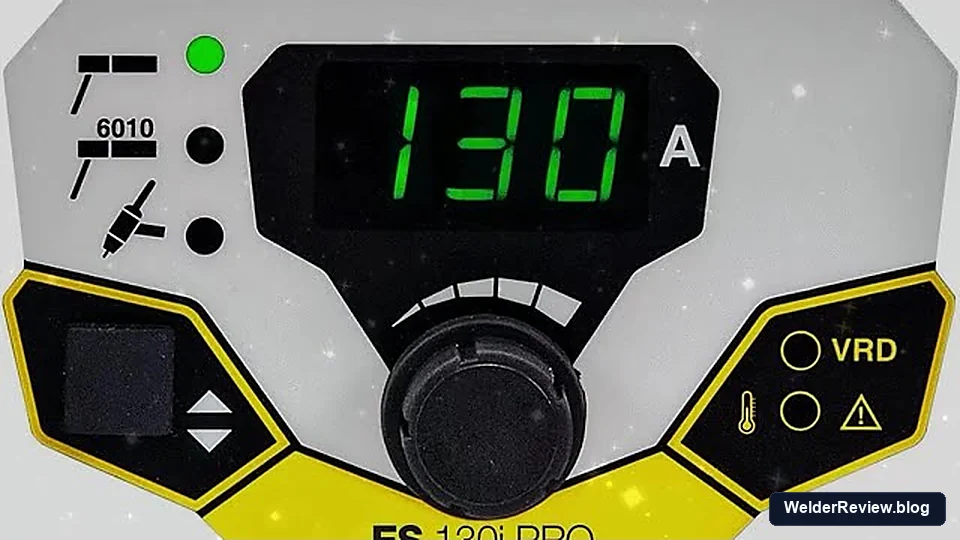
Conversely, Fronius adopts a lightweight modular aluminum frame approach. This design reduces overall machine weight while protecting sensitive internal components from airborne contaminants and workshop debris.
As detailed in our esab 215ic review, ESAB implements robust IP23S enclosures designed to withstand harsh fabrication yards, protecting internal components from heavy metallic dust, moisture ingress, and thermal shock during continuous operations.
Fronius approaches mechanical chassis design with lightweight extruded aluminum frames, optimizing portability for field technicians while maintaining strict structural rigidity against torsional twisting, heavy drop impacts, and aggressive transport vibration across rough job sites.
- Esab prioritizes impact-resistant exterior structural plating.
- Fronius utilizes sealed internal compartments for circuit boards.
- Both brands exceed standard NEMA enclosure protection ratings.
Chassis Construction Analysis
Evaluating internal layouts reveals distinct cooling philosophies. Esab relies on high-flow ducted air streams to cool primary transformer windings under extreme loads.
Fronius implements isolated cooling tunnels that prevent metal dust from reaching critical inverter modules during continuous welding operations.
- Esab uses direct-airflow cooling channels.
- Fronius deploys separated thermal management zones.
Arc Performance and Process Control
As highlighted in our esab rebel emp 215ic review, achieving consistent weld pools demands precise amperage regulation and rapid waveform adjustments through proprietary digital controls that stabilize short-circuit transfers instantly.
Fronius counters with advanced high-frequency switching technology. This proprietary architecture minimizes spatter generation while maximizing penetration depth across various carbon steel thicknesses.
ESAB power sources utilize proprietary digital waveform control algorithms to stabilize short-circuit transfer dynamics, minimizing detrimental spatter generation and reducing post-weld clean-up time on heavy carbon steel structural weldments.
Fronius integrates advanced pulsed MIG technology that dynamically adjusts arc length hundreds of times per second, guaranteeing exceptional penetration profiles and flawless bead aesthetics on sensitive aluminum alloys and stainless steels.
- Esab excels at dampening erratic droplet transfers.
- Fronius maintains ultra-stable arc lengths at low currents.
- Both manufacturers support advanced pulsed MIG waveforms.
Transient Response Evaluation
Transient voltage spikes can disrupt delicate root passes on pipe joints. Esab automatically adjusts inductance to smooth out the arc during abrupt stickout variations.
Fronius samples arc data thousands of times per second to dynamically alter wire feed speed, ensuring flawless puddle fluidity on stainless steel alloys.
- Esab adapts inductance dynamically during erratic hand movements.
- Fronius samples electrical feedback at microsecond intervals.
User Interface and Digital Integration
As noted within our esab 205 review, modern fabrication shops demand intuitive interfaces that reduce operator training time. Esab equips these flagship systems with high-resolution touchscreens featuring straightforward parameter menus.
Fronius focuses on streamlined multi-function control dials paired with comprehensive software suites for remote job monitoring and quality assurance record keeping.
Operating an ESAB machine involves navigating high-contrast TFT display screens engineered for gloved hands, providing immediate visual feedback on amperage, voltage, wire feed speed, and synergic parameter selections in poorly lit shops.
Fronius emphasizes seamless connectivity through WeldCube fleet management software, enabling quality managers to track exact heat inputs, log arc times, and export comprehensive quality control data directly via secure network protocols.
- Esab simplifies parameter selection via graphical displays.
- Fronius integrates deep data logging for ISO compliance.
- Both systems support firmware updates through USB ports.
Software Ecosystem Usability
Operators must navigate complex menus efficiently without halting production lines. Esab organizes welding variables into clear categorical tabs that minimize accidental input errors.
Fronius offers a deeply customizable dashboard layout favored by lead welding engineers managing multiple automated robotic welding cells simultaneously.
- Esab features straightforward beginner and expert modes.
- Fronius provides advanced network connectivity options.
Energy Efficiency and Power Management
As explored throughout our esab rebel 205 ac dc review, electrical consumption significantly impacts overhead in high-volume production facilities. Esab integrates power factor circuitry to minimize reactive energy losses.
Fronius utilizes state-of-the-art resonant inverter topologies that achieve remarkable conversion efficiencies exceeding ninety percent across standard three-phase input voltages.
Both manufacturers incorporate high-efficiency inverter topologies that drastically reduce idle power consumption while meeting stringent international grid regulations for harmonic distortion and power factor correction across standard factory supply voltages.
Fronius further optimizes electrical efficiency with intelligent standby mode functions that shut down cooling fans and auxiliary electronics during extended inactive periods, lowering overall facility operating overhead without compromising fast startup capabilities.
- Esab reduces harmonic distortion on shared facility grids.
- Fronius draws less idle current during standby periods.
- Both brands support multi-voltage input flexibility globally.
Standby Power Consumption
Idle power draw accumulates over years of continuous workshop operation. Esab incorporates automatic sleep modes that power down auxiliary cooling fans when the torch is inactive.
Fronius employs intelligent transformer shutdown protocols that reduce unnecessary baseline energy consumption to absolute minimum levels during extended lunch breaks.
- Esab shuts down cooling fans during idle states.
- Fronius cuts transformer excitation currents automatically.
Maintenance, Servicing, and Downtime
Minimizing equipment downtime remains paramount for profitable manufacturing operations. Esab designs its internal components with clearly labeled test points that simplify routine electrical troubleshooting.
Fronius implements advanced diagnostic error codes that pinpoint faulty sub-assemblies instantly, allowing certified technicians to replace modular circuit boards within minutes.
Routine preventive maintenance on ESAB equipment focuses on modular circuit board layouts that allow technicians to isolate faults quickly, replacing sub-assemblies without requiring complete system overhauls during critical production schedules.
Fronius streamlines long-term servicing through diagnostic error codes and push-pull wire feeding diagnostics, preventing premature mechanical wear and minimizing unexpected workshop downtime through proactive component health monitoring and alert notifications.
- Esab provides clear wiring schematics inside access panels.
- Fronius stores comprehensive fault history logs digitally.
- Both brands require authorized service centers for major repairs.
Preventative Servicing Protocols
Routine cleaning extends the operational lifespan of expensive industrial power sources. Esab recommends regular compressed air purging of internal heat sinks to prevent thermal throttling.
Fronius utilizes closed-loop electronics that eliminate the need for frequent internal blowouts, significantly reducing required scheduled maintenance man-hours.
- Esab requires periodic dust clearance from heat sinks.
- Fronius protects sensitive boards from ambient workshop contaminants.
Consumables Compatibility and Cost of Ownership
Long-term operational costs depend heavily on readily available replacement parts and torch consumables. Esab supports universally standard gun connections and widely distributed contact tips.
Fronius utilizes proprietary torch designs that offer superior thermal dissipation but require specialized replacement parts sourced through authorized distribution networks.
Selecting compatible front-end consumables for ESAB systems ensures broad availability of standard contact tips and nozzles, reducing ongoing operational expenditures for high-volume production facilities running multiple shifts daily.
Fronius mandates precision-engineered contact tips and liners designed specifically to reduce frictional drag, extending consumable life significantly and offsetting higher upfront equipment acquisition investments over the total operational lifecycle.
- Esab parts are widely available at local welding supply stores.
- Fronius consumables last longer under high-amperage stress.
- Initial equipment investment reflects heavy-duty industrial positioning.
Torch Ergonomics and Wear
Operators handling heavy welding torches experience fatigue during long shifts. Esab focuses on balanced handle geometry wrapped in high-friction gripping polymers for secure holds.
Fronius engineers exceptionally lightweight liquid-cooled torches that reduce wrist strain while maintaining optimal electrical contact under extreme duty cycles.
- Esab prioritizes comfortable grip textures for manual welding.
- Fronius optimizes coolant flow to prevent overheating issues.
Frequently Asked Questions
Which brand offers better durability for harsh outdoor job sites?
Esab generally provides superior impact resistance with heavy-gauge steel casing designed for harsh environments. Their robust frames withstand heavy job site abuse better than lightweight alternatives.
Are Fronius welding machines more difficult to program than Esab units?
Fronius utilizes advanced synergic software curves that simplify setup despite offering deep customization. Both brands feature intuitive touchscreens designed to minimize operator learning curves significantly.
Do Esab and Fronius machines require specialized electrical installation?
Both manufacturers require standard industrial three-phase power drops depending on output amperage ratings. Professional electricians must verify breaker sizing before commissioning these high-performance power sources.
Which system delivers lower overall energy consumption during continuous welding?
Fronius units typically achieve slightly higher electrical efficiency ratings through advanced resonant inverter topologies. This efficiency reduces long-term utility costs in high-volume production facilities.
Can I use third-party welding guns with these industrial power sources?
Esab readily accepts standard universal torch connections available from multiple aftermarket suppliers. Fronius systems often perform best with proprietary torches that integrate specialized control pins.