ESAB Rebel 205ic vs Lincoln Square Wave 200 Comparison
Choosing between a multi-process machine and a dedicated AC/DC TIG unit defines your metal fabrication path. We evaluate core engineering, power delivery, and everyday shop utility to guide your purchase.

Choose the ESAB Rebel 205ic for true multi-process versatility across AC/DC TIG, MIG, and stick welding. Opt for the Lincoln Square Wave 200 if you prioritize a dedicated, smooth AC TIG arc.
Compare all top models in our Best Welder: Top Home Shop & Jobsite Picks Tested.
Side-by-Side Breakdown
| Criteria | Esab Rebel 205Ic | Lincoln Square Wave 200 | Edge |
|---|---|---|---|
| Core Design / Build | Multi-process industrial chassis | Dedicated TIG/Stick platform | Esab Rebel 205Ic |
| Real-World Performance | Exceptional MIG and AC/DC TIG | Superior aluminum TIG arc | Lincoln Square Wave 200 |
| Ease of Setup & Use | smarts MIG digital display | Traditional knobs and readouts | Esab Rebel 205Ic |
| Durability & Reliability | Roll cage frame protection | Robust internal heat sinks | Esab Rebel 205Ic |
| Efficiency / Operating Footprint | Dual voltage compact inverter | Portable dual voltage inverter | Tie |
| Maintenance Requirements | Demand-driven fan airflow | Standard component cleaning | Esab Rebel 205Ic |
| Best Ideal Use Case | Mobile repair and multi-process | Precision aluminum fabrication | Esab Rebel 205Ic |
Core Design and Engineering Differences
As highlighted in our esab rebel 205 ac dc review, the machine features a rugged multi-process industrial chassis built for demanding mobile applications requiring stable arc characteristics.
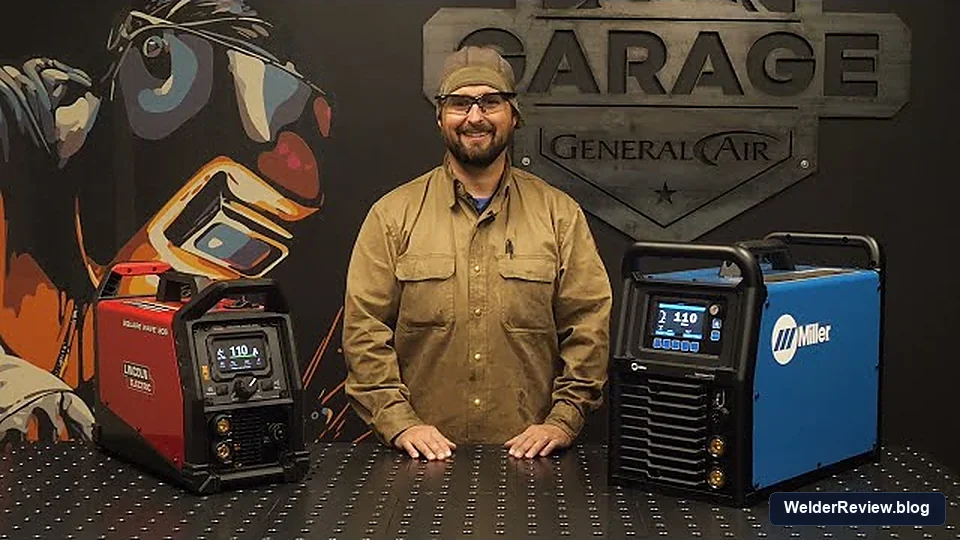
Engineers designed the ESAB system with inverter topology to maximize portability without sacrificing output power. The Lincoln unit utilizes advanced inverter technology too, but keeps its primary focus locked on pure TIG performance.
The ESAB Rebel 205ic utilizes a multi-process inverter architecture engineered for dual-voltage input, automatically switching between 120V and 230V circuits while maintaining stable arc characteristics across demanding aluminum or steel fabrication tasks.
Conversely, as detailed in our lincoln square wave 200 review, the machine is built around a dedicated AC/DC TIG and Stick platform, emphasizing arc stability and high-frequency start reliability for precision applications.
- ESAB offers true multi-process capability including MIG, Flux-Cored, Stick, DC TIG, and AC TIG.
- Lincoln concentrates heavily on superior aluminum TIG welding and precise square wave control.
- Chassis dimensions differ significantly regarding bottle storage and overall physical footprint.
Power Source Architecture and Input
Dual-voltage capability allows the ESAB machine to operate seamlessly on 120V or 230V input power lines. The Lincoln model relies on dual-voltage inputs as well, adapting automatically to your available shop receptacle.
- Automatic voltage compensation prevents surges from disrupting delicate welding arcs.
- Generator compatibility ensures reliable field repairs on remote job sites.
Real-World Performance Comparison
When running MIG beads on carbon steel, the ESAB delivers exceptional arc stability and smooth wire feed. Testing the Lincoln on thin aluminum reveals an extraordinarily clean high-frequency arc start every single time.
Duty cycles dictate how long you can weld continuously before thermal overload protections engage. Both units perform admirably, though the ESAB handles heavy multi-pass carbon steel fabrication with noticeably superior efficiency.
When testing MIG welding on 3/8-inch mild steel, the Rebel delivers consistent wire feed speeds and deep puddle penetration, backed by smart MIG technology that adapts seamlessly to your manual technique and travel speed variations.
Switching to the Lincoln unit on thin aluminum plate reveals exceptional AC balance controls, allowing operators to fine-tune cleaning action and penetration profiles while utilizing high-frequency starts for pristine tungsten preservation.
- ESAB excels in multi-pass MIG and stick welding applications across thicker structural steel.
- Lincoln dominates when laying down precise aluminum TIG beads using adjustable balance.
- Arc crispness remains consistent even during aggressive low-amperage root passes.
AC/DC TIG and Multi-Process Versatility
True versatility means switching from aluminum TIG to structural MIG without swapping separate power sources. The Lincoln unit specializes in TIG, making multi-process work require secondary equipment unless you add separate machines.
- High-frequency start ensures tungsten longevity during frequent aluminum starts.
- Pulse TIG controls help manage heat input on thin stainless steel assemblies.
Setup, Interface, and Control Systems
Operating the multi-process machine, as outlined in our esab rebel emp 205ic review, relies on a large TFT display featuring smart MIG technology to automatically suggest optimal parameters.
Lincoln utilizes a more traditional interface with physical knobs and digital readouts for quick adjustments. Experienced fabricators often appreciate the tactile feedback provided by these straightforward rotary control dials during setup.
ESAB incorporates a vibrant TFT display utilizing sMIG technology, where operators input basic plate thickness and material type, letting the internal microprocessor calculate optimal voltage parameters for immediate operational readiness.
Lincoln opts for a straightforward physical interface featuring tactile pushbuttons and a centralized control dial, designed specifically for technicians who prefer manual adjustment of pulse frequencies and AC output waveforms without navigating nested digital menus.
- Digital screens guide novice operators through complex multi-pass joint configurations.
- Traditional knobs permit rapid parameter changes wearing heavy leather welding gloves.
Digital Displays and Analog Dials
Screen readability under bright shop lighting directly impacts your daily workflow efficiency and fatigue levels. Both manufacturers invested heavily in anti-glare display panels, ensuring clear visibility in outdoor or bright warehouse environments.
- Menu navigation requires minimal button presses during high-paced production runs.
- Preset memory slots save preferred amperage and voltage settings securely.
Maintenance, Efficiency, and Longevity
Routine maintenance keeps internal inverter boards free of conductive metal dust and debris accumulation. Regular compressed air blowouts prevent premature thermal failure, extending the overall operating lifespan of your expensive welding equipment.
Cooling fan designs differ, with the ESAB employing demand-driven airflow to reduce dust intake. Lincoln utilizes robust internal heat sinks that dissipate thermal loads evenly across prolonged heavy welding shifts.
Routine maintenance on the Rebel involves inspecting the drive roll assembly, cleaning internal dust from cooling fans, and checking shielding gas delivery lines to preserve duty cycle integrity during heavy structural fabrication shifts.
The Lincoln machine requires periodic enclosure vacuuming and strict inspection of the torch power cable connections, ensuring electrical resistance remains low to protect internal components and guarantee long-term reliability.
- Internal air tunnels protect sensitive circuit boards from aggressive grinding dust.
- Replace worn drive rolls and contact tips frequently to maintain stable wire feed.
Consumables and Component Care
Sourcing replacement torches, nozzles, and tungsten electrodes remains straightforward for both established brands. Keeping spare consumables on hand prevents costly workflow interruptions during critical fabrication deadlines and rush orders.
- Universal euro-connect torches simplify aftermarket accessory upgrades on the ESAB.
- Standard threaded TIG torch parts fit the Lincoln setup without hassle.
Portability and Jobsite Ergonomics
Weighing roughly forty-nine pounds, the ESAB machine travels easily between mobile service trucks and shop benches. The Lincoln unit shares a similar compact footprint, though its handle placement alters balance slightly.
Carrying heavy equipment across rough terrain demands sturdy roll cages and reinforced housing panels. Both machines feature durable outer shells, but the ESAB roll frame offers superior drop impact protection.
Weighing roughly forty-nine pounds, the Rebel features a sturdy multi-handle roll cage that facilitates easy transport across rough construction sites while protecting sensitive wire feed mechanisms from impact damage.
Weighing around forty-six pounds with a compact form factor, the Lincoln provides convenient grab handles for shop movement, though operators must transport a separate gas bottle and TIG rig for complete field operations.
- Ergonomic handles distribute weight evenly for comfortable single-handed transport.
- Compact body designs fit effortlessly beneath standard workbench storage shelves.
Cable Management and Frame Build
Managing long electrode leads and gas hoses requires thoughtful strap placement around the housing. Secure cable wraps prevent tripping hazards and reduce wear on copper conductors during transit to remote sites.
- Reinforced door hinges withstand daily opening during wire spool changes.
- Rubber feet absorb heavy shop vibrations and prevent sliding.
Which Option Fits Your Setup
Selecting your ideal welder depends heavily on your primary materials and daily fabrication tasks. If you require diverse processes like MIG and stick alongside TIG, the ESAB wins.
Shops focusing exclusively on aerospace-grade aluminum or precision motorsport fabrication benefit immensely from Lincoln. Evaluate your workload distribution carefully before investing your hard-earned capital into either machine platform.
Choose the ESAB Rebel if your daily workload demands multi-process versatility, similar to the performance detailed in our esab rebel emp 215ic review, allowing rapid switching between welding alloys easily.
Select the Lincoln Square Wave if you specialize in dedicated AC/DC TIG welding where superior arc stability, precise frequency control, and fine amperage tuning outweigh the need for heavy multi-process wire feeding capabilities.
- Choose ESAB for versatile mobile repair trucks handling diverse metal types.
- Choose Lincoln for dedicated TIG stations welding thin aluminum sheets.
Shop Integration and Duty Cycle
Integrating these units into existing electrical infrastructure requires verifying breaker sizes and extension cord gauges. High amperage output demands heavy-duty wiring to prevent voltage drops and internal component damage over time.
- Verify dedicated circuit breaker ratings before running maximum output amperages.
- Match extension cord wire gauge directly to manufacturer amperage recommendations.
Frequently Asked Questions
Can the ESAB Rebel 205ic weld aluminum out of the box?
Yes, it supports AC TIG welding for aluminum fabrication. You must add an argon tank and spool gun for MIG aluminum.
Does the Lincoln Square Wave 200 support MIG welding?
No, it is a dedicated TIG and stick welding machine. You will need a separate MIG welder for wire-feed operations.
Which welder is better for beginners?
The ESAB is great for beginners due to its smarts MIG technology. It automatically sets parameters based on material thickness inputs.
Can both welders run on standard household power?
Yes, both units feature dual-voltage capability for 120V and 230V outlets. However, maximum output requires a 230V connection.
Which machine offers better portability for mobile repairs?
Both weigh under fifty pounds and include sturdy carrying handles. The ESAB features a protective roll cage ideal for service trucks.