ESAB Rebel 205 vs Miller Multimatic 220
Comparing two heavy-hitting multi-process welding machines built for advanced fabrication shops. This breakdown evaluates architecture, power delivery, and practical shop utility.

Choose the ESAB Rebel 205 for true industrial multi-voltage versatility and dedicated high-frequency TIG performance. Opt for the Miller Multimatic 220 if you prioritize intuitive auto-set controls and seamless AC/DC aluminum capabilities.
Compare all top models in our Best Welder: Top Home Shop & Jobsite Picks Tested.
Side-by-Side Breakdown
| Criteria | Esab Rebel 205 | Miller Multimatic 220 | Edge |
|---|---|---|---|
| Core Design / Build | Industrial roll-cage frame with multi-voltage plug options. | Compact enclosed cabinet with dual-cylinder rack design. | Esab Rebel 205 |
| Real-World Performance | 205A max output with true high-frequency TIG start capabilities. | 220A max output featuring smooth Auto-Set Elite technology. | Miller Multimatic 220 |
| Ease of Setup & Use | sXpand tech and large TFT display for advanced parameter control. | Pro-Set and Auto-Set menus simplify multi-process transitions. | Miller Multimatic 220 |
| Durability & Reliability | Rugged exterior housing designed for harsh mobile job sites. | Robust internal components built for permanent automotive shop bays. | Esab Rebel 205 |
| Efficiency / Operating Footprint | Weighs roughly 49 pounds with a compact portable footprint. | Weighs around 56 pounds with integrated running gear capacity. | Esab Rebel 205 |
| Maintenance Requirements | Standard drive roll service and regular circuit board dusting. | Routine fan inspection and quick-change contact tip replacements. | Miller Multimatic 220 |
| Best Ideal Use Case | Mobile structural fabrication requiring dedicated high-frequency TIG. | In-shop sheet metal fabrication and aluminum repair work. | Split |
Core Design and Engineering Architecture
Modern multi-process welding machines require sophisticated internal architecture to handle alternating current and direct current without sacrificing arc stability. Both units approach power conversion through advanced inverter technology.
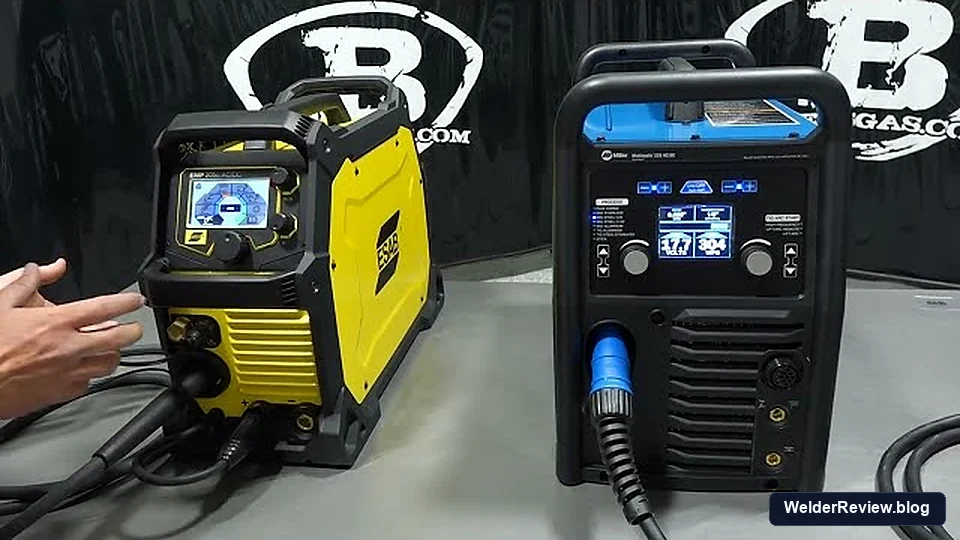
The ESAB Rebel 205 utilizes a rugged industrial roll-cage chassis that protects sensitive electronics during transit. Its multi-voltage plug system adapts instantly to available facility power.
Conversely, the Miller unit adopts a slightly heavier enclosed cabinet design. This construction prioritizes component cooling efficiency and minimizes dust ingress during heavy grinding operations.
Both systems use advanced inverter architectures to convert single-phase input power into stable welding output. Our detailed Miller Multimatic 220 review highlights how the machine prioritizes streamlined circuit integration.
Internal component cooling relies on variable-speed fan systems that activate under thermal load. This design minimizes dust ingestion inside the chassis, protecting sensitive PCBs during aggressive shop fabrication work and field repairs.
Electrical input flexibility is a major engineering feature for both units, handling dual-voltage requirements seamlessly. Operators can connect to 120V or 240V receptacles using dependable twist-lock adapters without suffering arc instability.
- Inverter-based power sources reduce overall unit weight significantly.
- Industrial roll-cage frames protect dials and digital screens from impacts.
- Multi-voltage input technology supports both standard household and industrial lines.
Power Delivery and Inverter Efficiency
Internal transformer design dictates how smoothly these machines transition between MIG, stick, and TIG welding processes. High switching frequencies ensure minimal voltage drop during long structural beads.
The ESAB machine maintains superior arc stiffness when pushing through contaminated or painted structural steels. This raw power delivery benefits heavy-duty fabrication professionals.
- High frequency switching optimizes arc stabilization across all processes.
- Voltage compensation circuits prevent surging during minor power supply fluctuations.
Real-World Performance and Arc Quality
Evaluating real-world performance requires testing actual arc characteristics on varied material thicknesses. Both machines deliver exceptional results, but their underlying personalities differ noticeably under load.
Our in-depth Miller Multimatic 220 AC/DC review highlights its proprietary Auto-Set Elite technology. Operators simply input material thickness and wire diameter to establish optimal baseline parameters.
Meanwhile, the ESAB alternative grants manual control lovers deep access to waveform tuning. Experienced fabricators can adjust inductance and pre-flow timers for absolute precision.
Our latest Miller Electric Multimatic 220 review shows how it offers exceptionally smooth high-frequency arc starts, while the ESAB Rebel 205 delivers aggressive puddle wetting on thick plate.
MIG welding output exhibits consistent wire feed dynamics across standard steel and stainless steel alloys. Utilizing a four-drive roll system, the ESAB model maintains superior tension control over long gun cable assemblies.
Stick welding characteristics impress structural fabricators requiring deep penetration on dirty or rusty carbon steel. Both machines incorporate adaptive hot start technology and reliable arc force control to prevent electrode sticking.
- Auto-set technology drastically reduces calibration time for junior welders.
- Manual parameter overrides give master fabricators complete control over puddle dynamics.
- Duty cycles remain robust enough for continuous light-industrial manufacturing shifts.
Aluminum TIG Performance Breakdown
Welding aluminum requires reliable high-frequency starts and precise AC balance control. The Miller unit features seamless AC/DC switching that simplifies thin-gauge aluminum box fabrication.
The ESAB competitor counters with dedicated high-frequency TIG ignition that never relies on scratch-start methods. This ensures tungsten longevity during intricate aerospace or motorsport repairs.
- High-frequency TIG starts eliminate tungsten contamination risks completely.
- AC balance adjustments clean oxide layers effectively on structural aluminum plates.
Interface Usability and Operator Ergonomics
Interface design directly impacts daily productivity, especially when operators wear heavy leather gloves. Large digital displays must remain readable under bright shop lighting conditions.
ESAB incorporates a vibrant TFT screen utilizing their unique sXpand technology. The display presents process metrics clearly, guiding users through multi-step parameter setup sequences efficiently.
Miller utilizes a streamlined menu system paired with centralized control knobs. This interface minimizes menu clicking, letting fabricators adjust wire feed speed rapidly mid-weld.
Digital control panels dictate how quickly an operator can navigate parameters during fast-paced fabrication projects. The TFT display on the ESAB unit provides extensive visual feedback, whereas Miller utilizes a menu-driven single-knob layout.
Synergic MIG modes on both systems simplify setup times for less experienced fabricators working in various environments. Operators merely input material thickness and wire diameter to let the microprocessor automatically calculate ideal voltage parameters.
Physical knob resistance and button tactile response matter significantly when operators wear heavy welding gloves. The robust control dials on both machines withstand workshop abuse while maintaining precise digital feedback.
- Large TFT color displays improve visibility in dimly lit shop environments.
- Glove-friendly control knobs prevent accidental setting changes during operation.
- Logical menu structures decrease training time for apprentice shop workers.
Display Clarity and Control Layout
Ergonomic placement of gas valves, torch connections, and polarity leads reduces setup frustration. Both manufacturers position auxiliary hookups logically on the front face.
The digital interface clarity on the ESAB model gives it a slight edge for advanced users wanting comprehensive diagnostic readouts directly on screen.
- Front-mounted quick connectors speed up torch changeover procedures.
- Clear diagnostic error codes simplify internal troubleshooting protocols.
Maintenance, Efficiency and Longevity
Long-term machine reliability depends heavily on cooling fan quality and dust filtration. Industrial environments demand robust internal protection against metal shavings and debris.
Routine maintenance involves inspecting drive rolls, cleaning liner assemblies, and periodically clearing internal dust using compressed air. Both units feature accessible wire drive compartments.
The internal cooling fans on these devices operate on demand to minimize dust accumulation inside the primary inverter chassis during idle periods.
Routine maintenance routines preserve long-term machine reliability across high-amperage cycles and dusty jobsite locations. Regular inspection of internal wire drives and gas solenoids prevents unexpected downtime during critical production runs.
Power efficiency metrics show modern inverter designs consume considerably less idle amperage than legacy transformer machines. Both manufacturers implement auto-fan features that reduce ambient noise and limit internal particulate accumulation inside power modules.
Consumable availability dictates ongoing operational costs for shops running continuous production shifts week after week. Utilizing standard contact tips and reliable nozzles ensures operators can source replacement parts locally without shipping delays.
- On-demand cooling fans reduce unnecessary intake of abrasive shop dust.
- Accessible wire drive housings simplify daily spool changeover tasks.
- Durable exterior coatings resist corrosion in humid coastal environments.
Consumable Wear and Serviceability
Sourcing replacement contact tips, nozzles, and drive rolls is straightforward for both brands. Standardized Euro-style MIG connections ensure broad compatibility with aftermarket torches.
Regular preventive maintenance ensures these expensive inverter power sources last well beyond their standard warranty periods without catastrophic electronic failures occurring unexpectedly.
- Standardized torch connections allow easy integration of specialty leads.
- Readily available replacement parts minimize costly equipment downtime.
Portability and Shop Footprint Comparisons
Mobile repair technicians require lightweight equipment that loads easily into service truck beds. Heavy transformer systems have given way to portable inverter packages.
The ESAB Rebel weighs approximately forty-nine pounds, making it exceptionally easy to lift into overhead service racks. Its dual-voltage capabilities add incredible field utility.
The Miller unit is slightly heavier at fifty-six pounds, yet it accommodates dual gas cylinders effectively. This feature benefits mobile operations requiring shielding gas mixes.
Jobsite mobility remains a critical buying factor for mobile contractors and installation technicians moving between sites. Weighing under fifty pounds, both welders can be lifted easily into truck beds or carried up scaffolding platforms.
Carrying handle ergonomics and strap attachment points influence how comfortably technicians can transport heavy equipment. The robust roll cage design on the ESAB unit doubles as a secure tie-down anchor for transit security.
Shop floor space utilization improves when multi-process equipment replaces three separate dedicated welding machines. Compact cabinet footprints allow operators to mount these systems directly onto rolling carts alongside standard gas cylinders.
- Weighing under fifty pounds enables comfortable single-person loading.
- Compact chassis footprints fit neatly inside crowded service truck toolboxes.
- Dual-cylinder mounting options simplify switching between mixed shielding gases.
Field Utility and Generator Compatibility
Running sensitive inverter welders off portable engine-driven generators requires stable clean power output. Voltage spikes can easily fry delicate microprocessors inside modern machines.
Both units feature built-in protective circuitry designed to handle dirty generator power encountered on remote construction sites safely and reliably.
- Surge protection safeguards internal microprocessors from dirty generator power.
- Wide voltage tolerance prevents nuisance tripping during brownout conditions.
Which Option Fits Your Fabrication Setup
Selecting the right multi-process welder ultimately depends on your primary material types and workflow habits. Automotive repair shops have vastly different needs than structural steel erectors.
If your daily routine involves heavy structural steel fabrication and precise manual TIG tuning, the ESAB system is exceptional. It handles rugged outdoor environments remarkably well.
Conversely, if you primarily weld thin-gauge aluminum and carbon steel inside a climate-controlled shop, the Miller unit maximizes efficiency through automation.
Selecting the appropriate multi-process system depends heavily on your primary welding processes and material thicknesses. Our comprehensive Esab Rebel 205 AC DC review details its robust structural output.
Budget allocation for shielding gases and dedicated torches should also guide your final purchasing evaluation. Ensuring you have proper regulators and drive rolls included prevents unexpected expenditures after initial machine delivery.
Evaluating local distributor support networks ensures quick access to technical service and warranty assistance when challenges arise. A strong local dealer network guarantees minimal downtime and reliable access to specialized welding accessories and consumable supplies.
- Match machine capabilities directly to your primary production materials.
- Consider whether mobile field use or permanent shop placement is priority.
- Factor in operator skill levels when choosing between automated and manual controls.
Making Your Final Purchasing Decision
Investing in a premium multi-process machine requires balancing initial equipment cost against long-term productivity gains. Evaluate your typical project scope carefully before buying.
Consulting local welding distributors for live demonstrations remains the best way to evaluate arc characteristics personally before making your ultimate investment decision.
- Live welding demonstrations reveal subtle arc characteristic differences.
- Evaluate long-term warranty coverage options provided by authorized dealers.
Frequently Asked Questions
Can both machines weld aluminum out of the box?
Yes, both units handle aluminum welding successfully when equipped with proper spool guns or TIG torches. The Miller unit features particularly intuitive AC settings for beginners.
Do these welders operate on standard household electrical circuits?
Both machines feature multi-voltage plugs allowing connection to standard household 115V or industrial 230V outlets. However, maximum output amperage requires dedicated 230V input power.
Which machine offers better high-frequency TIG starting?
The ESAB Rebel provides dedicated high-frequency TIG ignition that excels on precise aerospace components. This eliminates tungsten contamination common with scratch-start setups.
Are replacement parts and consumables easy to find locally?
Yes, both manufacturers use highly standardized consumables and universal Euro-style torch connections. Local welding supply stores typically stock these everyday replacement parts readily.
Which welder is better suited for mobile field service trucks?
The ESAB Rebel is slightly lighter and features a rugged roll-cage frame. This makes it ideal for harsh mobile environments and rough job sites.