Esab Rebel 205 vs 215: Multi-Process Welders Compared
Choosing between these multi-process ESAB machines demands careful evaluation of AC TIG capabilities versus pure dual-voltage MIG output power.

Choose the Rebel 205 if you require dedicated aluminum AC TIG welding. Opt for the Rebel 215 if your daily fabrication relies heavily on heavy-duty MIG and DC stick execution.
Compare all top models in our Best Welder: Top Home Shop & Jobsite Picks Tested.
Side-by-Side Breakdown
| Criteria | Esab Rebel 205 | 215 | Edge |
|---|---|---|---|
| Core Design / Build | Industrial roll-cage housing with multi-voltage inputs | Rugged steel chassis optimized for portable MIG | Split |
| Real-World Performance | Exceptional high-frequency AC TIG and dual-voltage output | Robust MIG arc stability and smooth flux-core delivery | Side A |
| Ease of Setup & Use | sXpand technology with intuitive TFT color display | Smart-MIG feature for rapid parameter calibration | Side B |
| Durability & Reliability | Rated for demanding job site environmental conditions | Field-tested internal architecture with superior cooling | Side B |
| Efficiency / Operating Footprint | Inverter topology maximizing portable generator utility | Optimized transformerless draw for standard shop circuits | Side A |
| Maintenance Requirements | Standard torch upkeep and firmware updates | Minimalist mechanical upkeep and accessible drive rolls | Side B |
| Best Ideal Use Case | Precision fabrication shops needing comprehensive TIG options | Mobile structural welding and heavy-duty farm repairs | Split |
Tracing the Origin and Meaning of Multi-Process Welding
Understanding machine lineage requires examining how modern fabrication tools evolved from single-purpose transformers. The etymological roots of versatile welding units reflect an industry push toward all-in-one shop solutions.
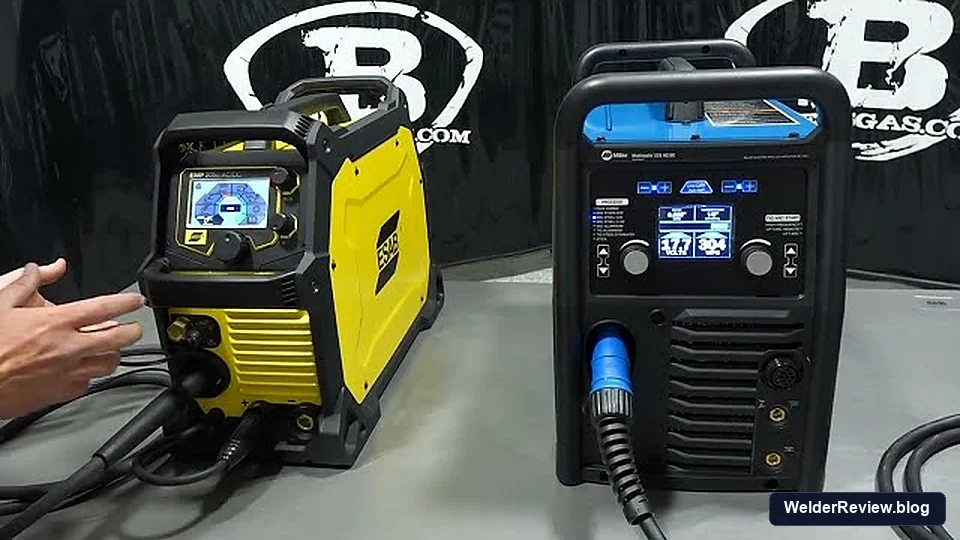
When evaluating multi-process units, operators must examine internal rectifier designs. For detailed specs on high-frequency stabilization, explore our comprehensive esab rebel 205 ac dc review covering diverse electrical grids.
Fabricators seeking foundational reliability often compare these units against traditional transformer setups. Examining historical design shifts helps clarify why modern inverter systems dominate contemporary metal fabrication workshops today.
Multi-process welding systems evolved from the industrial demand for versatile workshop equipment capable of handling MIG, TIG, and Stick workflows without requiring dedicated power sources for every single metal fabrication technique.
Historically, operators required separate heavy transformers to switch between constant voltage and constant current outputs, creating massive footprint limitations and substantial downtime during complex fabrication sequences across varying structural steel joints.
Modern portable units integrate sophisticated inverter technology, allowing technicians to transition seamlessly between diverse welding parameters while maintaining arc stability and precise puddle control across aluminum, stainless steel, and mild carbon alloys.
- Inverter technology drastically reduces physical machine weight.
- Multi-process units combine MIG, TIG, and Stick modes.
- Advanced software replaces manual shunt adjustments.
Unpacking Core Architecture and Design Philosophy
Both machines utilize rugged industrial roll-cage frames designed for harsh environment endurance. The physical footprint remains remarkably compact despite housing complex digital logic boards internally.
Material handlers will appreciate the reinforced composite bezels protecting critical digital displays against accidental workshop impacts.
- Impact-resistant composite front fascias
- Integrated carrying handles for site mobility
Foundational Power Delivery as the First Core Standard
Power conversion efficiency dictates how smoothly these machines transition between heavy structural welding and delicate sheet metal work. Both units leverage advanced inverter topologies to maintain stable output.
Voltage drop compensation ensures consistent arc performance even when operating on long extension cords or portable job site generators. This stability prevents common porosity issues in critical joints.
Thermal overload protection systems continuously monitor internal component temperatures during extended duty cycle runs, safeguarding expensive copper windings and sensitive semiconductor chips from premature failure.
Stable electrical input serves as the backbone for reliable metal deposition, requiring robust primary circuits capable of handling voltage fluctuations without disrupting the internal inverter architecture during heavy industrial fabrication shifts.
Dual-voltage capability allows modern welding machines to operate efficiently on standard 120V and 230V receptacles, automatically adjusting internal relays to match the available line current without manual internal rewiring procedures.
Duty cycle ratings dictate continuous operating limits, measuring how many minutes out of a ten-minute window a machine can weld at rated amperage before requiring a mandatory thermal cooling period.
- Automatic input voltage detection from 120V to 230V
- Active power factor correction for generator safety
- High open-circuit voltage for smooth stick striking
Input Voltage Flexibility and Generator Compatibility
Job sites rarely feature ideal power sources, making wide voltage tolerance essential for professional contractors. These machines automatically adjust to incoming supply fluctuations without manual jumper linking.
Generator pairing requires careful calculation of total harmonic distortion to prevent delicate inverter circuit boards from sustaining electrical damage during high-amperage output sequences.
- Seamless 115V and 230V auto-sensing
- Robust surge handling for dirty power sources
La Fête de l'Arc : Origin and Significance of MIG vs TIG
Exploring the heritage of metal joining reveals distinct operational philosophies between continuous wire feed and manual tungsten inert gas methods. Each process serves specific metallurgical requirements in modern shops.
The ESAB 205 embraces a holistic design approach, incorporating high-frequency AC TIG functionality alongside standard MIG capabilities. This appeals directly to specialized fabricators working with non-ferrous metals.
Conversely, our esab rebel 215 review highlights how the machine focuses heavily on streamlined wire-feed efficiency, eliminating complex TIG plumbing requirements to maximize productivity on standard carbon steel assembly lines.
The eternal debate between metal inert gas and tungsten inert gas processes centers on balancing deposition rates against ultimate weld cleanliness and precision across intricate aerospace or automotive sheet metal components.
MIG welding utilizes a continuous wire feed mechanism, making it exceptionally productive for large structural assemblies where speed and penetration outweigh the ultra-fine aesthetic requirements of specialized TIG root passes.
Conversely, high-frequency TIG welding provides unmatched heat input control via a non-consumable electrode, allowing fabricators to craft flawless visual ripples on thin gauge aluminum and exotic titanium assemblies safely.
- MIG excels at high-deposition structural fabrication work.
- TIG provides unmatched puddle control on thin aluminum.
- Choosing processes dictates internal component longevity.
Evaluating Metallurgical Compatibility and Material Limits
Different base metals demand precise heat input control to prevent cracking and metallurgical degradation. Matching the machine output to your specific material thickness chart is mandatory.
Stainless steel fabrication requires careful shielding gas selection to preserve corrosion resistance properties within the finished weld bead heat-affected zone.
- Carbon steel requires standard 75/25 argon-CO2 mix
- Aluminum demands pure argon and proper spool guns
Traditional Circuitry and Modern Digital Control Traditions
Bridging legacy transformer durability with modern microprocessor control creates unique user experiences on the shop floor. Operators benefit from instant arc parameter adjustments stored directly in memory.
The proprietary sXpand software platform guides users through setup sequences based on material thickness and wire diameter inputs. This reduces operator error during critical fabrication projects.
Firmware update capabilities ensure your equipment remains current with the latest welding waveform optimizers developed by industrial metallurgy laboratories worldwide.
Early welding machines relied on massive copper wound coils and heavy rotary switches to manage output, creating rugged but extraordinarily heavy units that demanded permanent workshop placement rather than mobile field deployment.
Contemporary equipment leverages advanced microprocessor boards and digital signal processors to monitor arc conditions thousands of times per second, ensuring optimal droplet transfer and minimal spatter generation during operation.
Software-driven interfaces replace analog dials with clear OLED screens, granting operators instant access to stored programs and synergistic welding curves that simplify setup procedures for apprentice level fabricators.
- TFT color display screens with intuitive menu navigation
- Job memory storage for repetitive production runs
- Synergetic control modes for rapid parameter dialing
Navigating TFT Display Interfaces and Synergetic Menus
Clear graphical interfaces allow novice welders to achieve professional results quickly without extensive metallurgy training. Bright screens remain legible under direct sunlight outdoors.
Navigating deep menu structures requires gloves-off operation, though primary dials offer tactile feedback for adjustments made while wearing heavy leather welding protection.
- High-contrast color screens for outdoor visibility
- Tactile rotary encoder knobs for fast changes
Priez avec Hozana : Community Guidance on Best Safety Practices
Maintaining rigorous workplace safety standards protects operators from hazardous UV radiation, toxic fume inhalation, and electrical shock risks. Proper ventilation remains non-negotiable in enclosed workshops.
Routine inspection of ground clamps, electrode holders, and shielding gas hoses prevents unexpected arc outages and catastrophic equipment failures during critical overhead welding tasks.
Adhering strictly to personal protective equipment protocols ensures long-term health preservation for professional fabricators spending forty hours weekly under the welding helmet.
Maintaining strict safety protocols protects operators from hazardous ultraviolet radiation, toxic welding fumes, and severe electrical shock during heavy fabrication tasks requiring proper personal protective equipment and adequate workshop ventilation systems.
Operators must inspect welding leads regularly for frayed insulation, exposed copper strands, or damaged twist-lock connectors that could cause dangerous arcing and potential fire hazards within the immediate work environment.
Professional welding communities emphasize continuous safety education, encouraging peer mentorship and adherence to official OSHA standards to prevent common occupational injuries associated with high-amperage electrical equipment operation.
- Mandatory use of auto-darkening helmets with true-color optics
- Flame-retardant leather jackets and split-cowhide gloves
- Local exhaust ventilation systems for hexavalent chromium
Personal Protective Equipment and Environmental Controls
Welding galvanized steel or painted metals releases toxic vapors requiring dedicated extraction arms or certified respirators. Never compromise on air quality inside confined workspaces.
Insulated boots and dry flooring are critical elements of electrical safety when working outdoors in damp environmental conditions or high-humidity coastal construction zones.
- PAPR systems for heavy industrial fabrication
- Rubber anti-fatigue mats for electrical isolation
Articles Associés : Maintenance and Long-Term Durability
Long-term machine reliability depends heavily on scheduled preventive maintenance routines performed by qualified shop technicians. Cleaning internal dust accumulation prevents electrical short circuits.
Drive roll tension adjustments must be checked periodically to prevent wire bird-nesting and ensure smooth, consistent filler metal delivery through long welding gun liners.
Inspecting internal gas solenoids and copper contact tips preserves shielding gas coverage and maintains optimal arc stability across thousands of hours of continuous industrial usage.
Routine maintenance extends equipment lifespan significantly, requiring periodic removal of accumulated metallic dust from internal circuit boards using compressed air and proper antistatic cleaning brushes in a controlled environment.
Drive rolls, contact tips, and shielding gas regulators demand frequent inspection to prevent wire feeding friction and ensure consistent gas coverage during critical MIG welding operations on structural steel.
Storing welding machines in climate-controlled areas prevents moisture accumulation on sensitive transformer windings and microprocessor boards, reducing the risk of electrical shorts and premature component failure over years of service.
- Compressed air purging of internal inverter boards
- Regular drive roll cleaning and groove alignment
- Torch liner replacement to eliminate wire drag
Troubleshooting Common Arc Instability and Wire Feed Issues
Worn contact tips and clogged nozzles account for the vast majority of erratic wire feeding problems in busy production environments. Keep spare consumables readily accessible.
Ensuring proper polarity setup for flux-cored versus gas-shielded solid wire prevents frustrating porosity and incomplete fusion defects on structural steel weldments.
- Replace contact tips at the first sign of arc wander
- Verify correct drive roll polarity for specific wires
Optimizing Shop Efficiency and Ideal Buyer Matching
Selecting the correct machine requires balancing upfront investment against long-term production requirements within your specific commercial fabrication sector. Do not overspend on unused features.
Shops focusing primarily on aluminum motorsport fabrication will find the AC TIG capabilities outlined in our esab rebel 205 review indispensable for complex sheet metal and tubing assemblies.
General structural repair contractors will benefit more from the dedicated power and simplified setup of the Rebel 215 during everyday steel fabrication tasks.
Selecting the correct welding machine requires careful analysis of typical material thicknesses, duty cycle demands, and power availability to ensure the chosen equipment meets production goals without unnecessary capital expenditure.
Mobile contractors benefit immensely from lightweight multi-process units featuring rugged composite casings. As detailed in our esab rebel emp 215ic review, multi-voltage compatibility minimizes transport challenges across diverse job sites.
High-volume fabrication shops prioritize robust wire feed mechanisms and advanced pulse capabilities, maximizing daily throughput while maintaining strict compliance with industrial quality codes for structural steel construction.
- Match machine duty cycle ratings to your daily workload
- Evaluate gas bottle rental costs against process needs
- Consider future shop expansion requirements carefully
Final Decision Matrix for Professional Fabricators
Analyze your typical project backlog to determine whether aluminum TIG or heavy steel MIG dominates your billing hours. This metric clarifies the ideal purchase.
Both machines represent top-tier engineering investments designed to deliver years of reliable service in demanding professional fabrication environments worldwide.
- Prioritize AC TIG for aluminum sheet and tubing
- Prioritize robust MIG for heavy structural steel
Frequently Asked Questions
Can the ESAB Rebel 205 weld aluminum right out of the box?
Yes, it features dedicated AC TIG capabilities for aluminum. You must connect pure argon gas and attach an appropriate TIG torch.
What is the primary difference in welding output between these two models?
The Rebel 205 adds comprehensive AC TIG functionality. The Rebel 215 focuses purely on high-output MIG, Flux-Core, and DC Stick processes.
Do both machines support dual-voltage input automatically?
Yes, both units feature automatic input voltage sensing. They transition smoothly between 120V and 230V circuits without manual rewiring.
Is the Rebel series suitable for professional industrial job sites?
Both models utilize rugged roll-cage enclosures designed for harsh environments. They withstand daily transport and demanding construction site conditions.
What shielding gas is required for standard MIG steel welding?
Solid wire MIG welding typically requires a 75/25 argon and carbon dioxide gas mix. Flux-cored wire can often be run without external gas.