ESAB Rebel 205ic vs Miller Multimatic 220: Technical Showdown
Choosing between these multi-process champions requires careful evaluation of heavy-duty duty cycles, arc characteristics, and shop footprints. This technical comparison analyzes their engineering foundations to help professional fabricators decide.

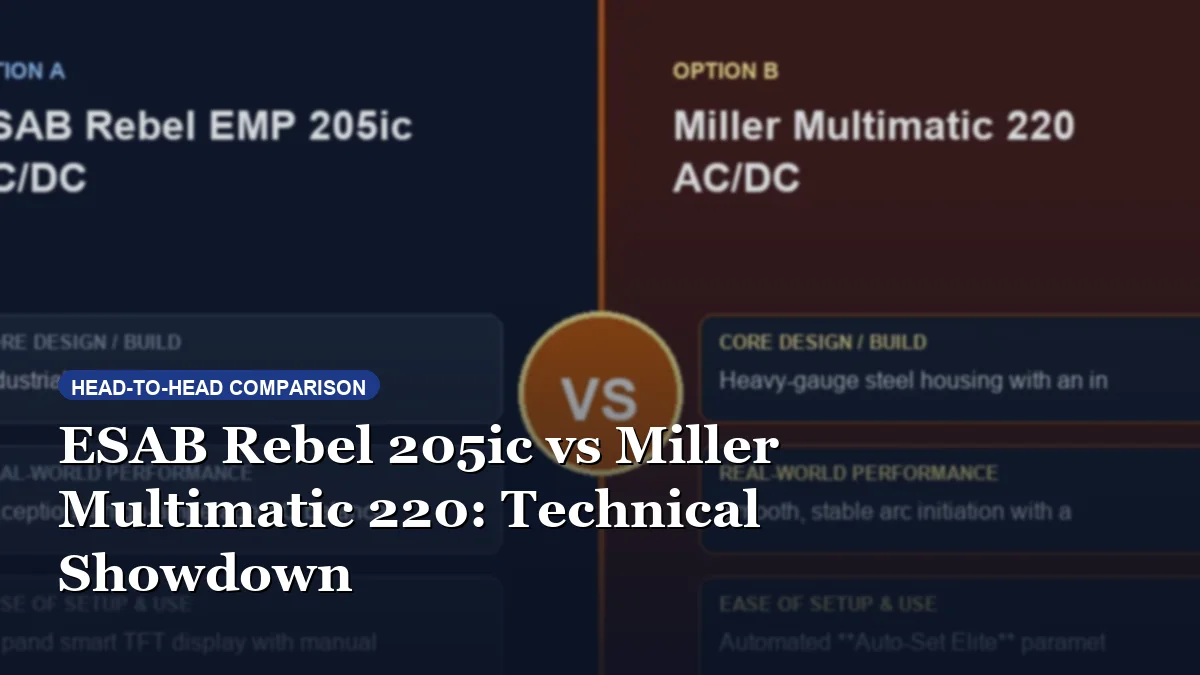
Choose the ESAB Rebel 205ic if you demand superior high-output AC TIG performance and rugged portability. Opt for the Miller Multimatic 220 if you prioritize automated setup simplicity and intuitive dual-cylinder gas management.
Compare all top models in our Best Welder: Top Home Shop & Jobsite Picks Tested.
Side-by-Side Breakdown
| Criteria | ESAB Rebel EMP 205ic AC/DC | Miller Multimatic 220 AC/DC | Edge |
|---|---|---|---|
| Core Design / Build | Industrial roll-cage composite chassis with robust corner guards. | Heavy-gauge steel housing with an integrated dual-cylinder rack. | ESAB Rebel 205ic |
| Real-World Performance | Exceptional high-amperage AC balance control for thick aluminum. | Smooth, stable arc initiation with advanced Pro-Set technology. | Tie |
| Ease of Setup & Use | sXpand smart TFT display with manual override capabilities. | Automated Auto-Set Elite parameter selection by material. | Miller Multimatic 220 |
| Durability & Reliability | IP23S rated enclosure built for harsh jobsite environments. | Precision-engineered internal architecture designed for clean shops. | ESAB Rebel 205ic |
| Efficiency / Operating Footprint | Dual-voltage input flexibility with compact generator compatibility. | Optimized power draw handling standard 120V and 240V lines. | Miller Multimatic 220 |
| Maintenance Requirements | Modular internal layout simplifying drive roll and torch service. | Standardized consumable replacement with easy-access wire drives. | Miller Multimatic 220 |
| Best Ideal Use Code | Mobile structural fabrication and heavy-duty motorsport repairs. | Light manufacturing, maintenance shops, and artistic metalwork. | ESAB Rebel 205ic |
Core Design and Engineering Differences
Engineering multi-process welding machines demands a careful balance between structural weight reduction and rugged jobsite durability. Both manufacturers approach this mechanical challenge using distinct architectural philosophies built for modern fabrication shops.
The internal layout determines how efficiently heat dissipates during extended MIG or TIG welding sessions. Structural integrity also dictates whether these portable units can survive daily transit across rough construction terrain.
- Composite roll-cage versus sheet-metal housing architectures
- Internal inverter topology and cooling fan placement strategies
- Enclosure ingress protection ratings for outdoor jobsite environments
Chassis Construction and Enclosure Durability
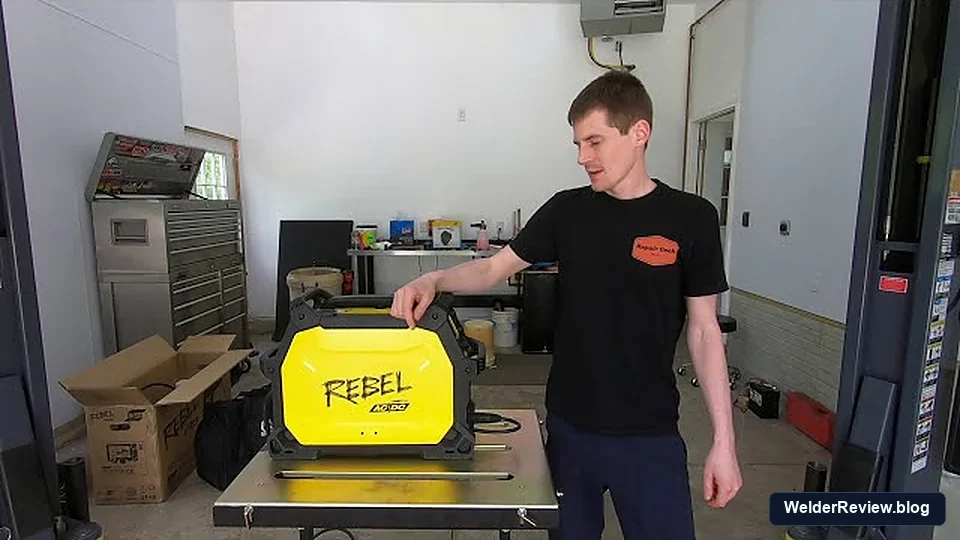
ESAB utilizes an industrial roll-cage composite framework featuring impact-absorbing corner bumpers. This exterior design protects sensitive internal components against accidental drops and severe jobsite impacts.
According to our miller electric multimatic 220 review, Miller relies on a traditional heavy-gauge steel cabinet with an integrated rear platform accommodating dual gas cylinders safely.
- Impact-resistant composite roll cage on the ESAB unit
- Integrated dual-cylinder storage shelf on the Miller chassis
Internal Component Layout and Cooling
Thermal management remains critical for maintaining high duty cycles during demanding structural welding applications. ESAB employs a targeted air-flow pathway that isolates sensitive electronics from the wire-feed compartment.
Miller utilizes a demand-driven cooling fan that only operates when internal temperatures require active thermal dissipation. This reduces dust ingestion during intermittent light-duty fabrication tasks.
- Isolated airflow pathways protecting internal inverter boards
- Demand-driven cooling fans minimizing particulate accumulation inside
Power Delivery and Electrical Specifications
Electrical efficiency directly impacts penetration depth and overall arc stability across variable input voltages. Both machines accept standard 120V and 240V primary power sources with automatic voltage detection.
Understanding maximum output amperage helps fabricators select the correct machine for heavy structural plate or delicate sheet metal projects.
- Primary input voltage range and automatic switching capabilities
- Maximum rated output amperage at specific duty cycle thresholds
- Generator compatibility for remote field repair operations
Input Voltage Versatility and Generator Use
Building on insights from our miller multimatic 215 review, dual-voltage flexibility ensures seamless operation when moving between residential outlets and heavy industrial circuits during critical field maintenance tasks.
Miller engineers their power supply to compensate for long extension cord voltage drops automatically. This prevents arc stutter when operating far from the primary electrical panel.
- Automatic voltage selection across 120V and 240V inputs
- Surge suppression circuitry protecting against dirty generator power
Output Amperage and Duty Cycle Ratings
High output capacity allows fabricators to join thicker materials without risking thermal overload shutdowns. The ESAB delivers robust high-amperage performance for demanding structural steel fabrication tasks.
Miller balances its duty cycle to favor precision MIG and TIG applications over extended durations. Operators must monitor thermal thresholds when pushing maximum amperage limits.
- Maximum 200-plus amp output ceiling on both platforms
- Thermal protection cutoffs preventing premature transformer degradation
Real-World Performance and Arc Quality
Arc stability dictates bead appearance, spatter levels, and post-weld cleanup time across all three major welding processes. Experienced welders evaluate puddle fluidity and wet-in characteristics under actual shop conditions.
Comparing MIG, TIG, and stick performance reveals subtle differences in how these machines handle difficult base metals like aluminum and stainless steel.
- MIG short-circuit arc stability and dynamic puddle control
- AC TIG frequency adjustments for cleaning aluminum oxides
- Stick electrode digging force and arc restart reliability
MIG Welding Dynamics and Spatter Control
Consistent wire delivery is essential for producing clean, porosity-free MIG welds on carbon steel. ESAB incorporates adaptive arc control that automatically adjusts parameters to match your hand speed.
Miller utilizes proprietary waveform technology to minimize spatter and reduce post-weld cleanup time significantly. This makes it ideal for production environments requiring high cosmetic standards.
- Adaptive waveform control minimizing molten metal spatter
- Smooth wire feed mechanisms preventing bird-nesting issues
TIG Arc Characteristics and Aluminum Welding
We evaluate these capabilities thoroughly in our miller multimatic 220 review, noting how advanced frequency and balance controls deliver exceptional aluminum cleaning action during demanding structural fabrication tasks.
Miller provides simplified TIG controls that make high-frequency arc initiation extremely reliable. Both units deliver stable low-end amperage for welding thin gauge materials.
- Adjustable AC frequency for optimizing cleaning versus penetration
- High-frequency arc starting ensuring tungsten contamination prevention
Usability, Interface, and Parameter Setup
Digital interfaces and control panels drastically influence how quickly operators can transition between different welding joints. Modern machines feature sophisticated software designed to eliminate guesswork during setup.
Evaluating screen clarity and menu navigation helps determine which welder reduces operator fatigue and programming errors in fast-paced shops.
- High-resolution TFT display screens with protective lenses
- Automated parameter selection based on material thickness
- Manual override capabilities for expert welder customization
Digital Display Screens and Menu Navigation
A clear, bright screen is essential when working under harsh shop lighting or wearing dark welding helmets. ESAB features a vibrant color TFT display with intuitive graphical menu icons.
Miller uses a structured control layout that guides operators through material selection step by step. Both interfaces respond quickly to gloved touch inputs without lag.
- Vibrant color TFT screens visible from wide viewing angles
- Logical menu structures reducing unnecessary button presses
Automated Setup Technologies
Automated setup aids inexperienced operators by calculating optimal voltage, wire feed speed, and gas flow rates. Miller relies on its proven Auto-Set technology for instant parameter generation.
ESAB counters with sXpand technology, offering smart memory storage for recalling favorite weld parameters instantly. Experienced fabricators can easily bypass these presets for manual tuning.
- Preset material thickness calculators for rapid machine dialing
- Memory storage saving custom welding parameter configurations
Maintenance, Serviceability, and Longevity
Routine maintenance keeps multi-process machines operating at peak electrical efficiency over many years of service. Accessible internal components reduce downtime during scheduled consumable replacements and wire drive servicing.
Evaluating long-term reliability requires examining drive roll assemblies, torch connections, and internal circuit board protection.
- Toolless wire drive roll replacement mechanisms
- Standardized consumable availability for torches and guns
- Enclosure sealing protecting against conductive metal dust
Wire Drive Assembly and Consumable Access
Reliable wire feeding prevents bird-nesting and erratic arc behavior during long MIG welding runs. Both machines feature heavy-duty cast aluminum drive mechanisms built for daily commercial use.
Quick-release tension arms allow operators to swap drive rolls without requiring specialized hand tools. Consumables like contact tips and nozzles are widely available across welding suppliers.
- Cast aluminum drive housings ensuring long mechanical life
- Toolless tension adjustment for rapid wire spool changes
Long-Term Reliability and Service Support
Industrial welding equipment represents a significant financial investment for any fabrication business. Robust warranty coverage and accessible service centers ensure minimal downtime if component failure occurs.
Proper preventative maintenance, including regular compressed air cleaning, extends the operational lifespan of internal inverter boards significantly.
- Comprehensive manufacturer warranties covering main power units
- Readily available replacement parts through authorized distributors
Efficiency and Operating Footprint
Shop floor space is a premium asset in modern fabrication facilities and mobile repair trucks alike. Evaluating physical dimensions and weight ensures the chosen welder integrates smoothly into your existing workspace.
Electrical conversion efficiency also affects monthly utility costs during heavy production runs.
- Overall machine weight and physical cabinet dimensions
- Standby power consumption and inverter efficiency ratings
- Compatibility with standard shop carts and transport vehicles
Physical Dimensions and Portability
Compact footprints allow operators to lift and transport these machines easily around crowded workshops. The ESAB roll-cage design doubles as secure tie-down points for truck bed transport.
Miller integrates a dedicated running gear attachment system for smooth rolling across concrete floors. Both welders balance power output with manageable physical weight specifications.
- Compact physical envelopes fitting standard shop carts
- Integrated lifting handles and secure tie-down points
Power Efficiency and Utility Costs
Inverter-based power sources draw significantly less amperage than older transformer welding machines. This efficiency translates directly into lower electrical utility bills over extended operational lifespans.
Optimized power factor correction circuitry ensures maximum energy delivery straight to the welding arc.
- High electrical conversion efficiency reducing power waste
- Power factor correction minimizing reactive current draw
Which Option Fits Your Setup
Selecting the ideal multi-process welder depends heavily on your specific material types and daily fabrication volume. Analyzing your workflow ensures you purchase a machine that enhances productivity rather than limiting capabilities.
Consider whether your shop requires advanced manual TIG controls or automated MIG setup assistance for various operators.
- Matching machine strengths to your primary metal fabrication tasks
- Weighing operator skill levels against automated setup features
- Evaluating budget constraints and long-term production goals
Ideal User Profiles for the ESAB Rebel
The ESAB Rebel suits professional fabricators who demand uncompromising AC TIG performance and rugged chassis durability. It excels in demanding environments where structural integrity and high output matter most.
Mobile repair technicians will appreciate its impact-resistant roll-cage construction during frequent truck transport.
- Professional fabricators requiring advanced aluminum TIG controls
- Mobile repair technicians needing rugged roll-cage protection
Ideal User Profiles for the Miller Multimatic
As detailed in our miller multimatic 220 ac dc review, this versatile machine fits busy maintenance departments and training facilities where automated setup features reduce operator learning curves.
Shops focusing on light manufacturing will benefit immensely from its integrated dual-cylinder storage rack.
- Maintenance shops with multiple operators sharing one machine
- Fabricators prioritizing automated setup simplicity over manual tuning
Frequently Asked Questions
Can both welders run on standard household 120V power outlets?
Yes, both machines feature automatic voltage detection that supports standard 120V and 240V input circuits seamlessly. You will experience lower maximum output amperages when operating on standard household power.
Which machine provides better aluminum TIG welding performance?
The ESAB Rebel 205ic generally offers more granular AC frequency and balance controls for thick aluminum plates. Both units handle thin-gauge aluminum effectively with high-frequency arc starting.
Are the wire drive mechanisms made of metal or plastic?
Both manufacturers utilize heavy-duty cast aluminum drive assemblies designed for commercial fabrication use. This ensures reliable wire feeding and prevents premature mechanical failure.
Do these welders include spool guns for aluminum MIG welding?
Spool guns are sold separately as optional accessories for both the ESAB and Miller platforms. Each machine features dedicated connections for direct spool gun integration.
Which welder is better suited for rough jobsite transport?
The ESAB Rebel 205ic features an integrated roll-cage composite chassis built specifically to withstand harsh jobsite conditions. Its protective frame absorbs impacts better than standard steel cabinets.