ER70S-6 vs ER70S-2: Carbon Steel Wire Comparison
Selecting the right carbon steel filler metal dictates weld integrity. This guide analyzes chemical deoxidizers, bead profiles, and joint prep demands.

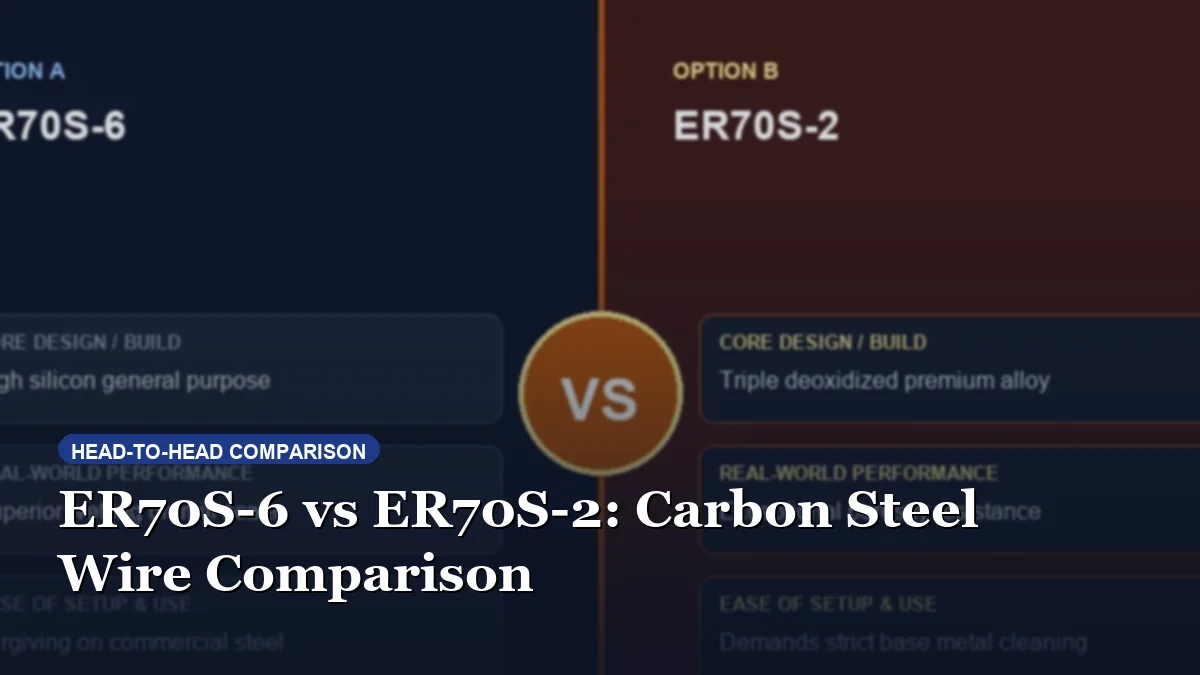
Choose ER70S-6 for high silicon levels and excellent weld pool wetting on commercial steel. Select ER70S-2 for multi-pass X-ray quality welds requiring specialized triple deoxidizers.
Compare all top models in our Best Welder: Top Home Shop & Jobsite Picks Tested.
Side-by-Side Breakdown
| Criteria | ER70S-6 | ER70S-2 | Edge |
|---|---|---|---|
| Core Design / Build | High silicon general purpose | Triple deoxidized premium alloy | ER70S-2 |
| Real-World Performance | Superior wetting on mill scale | Exceptional porosity resistance | ER70S-6 |
| Ease of Setup & Use | Forgiving on commercial steel | Demands strict base metal cleaning | ER70S-6 |
| Durability & Reliability | Reliable commercial strength | Critical code-grade toughness | ER70S-2 |
| Efficiency / Operating Footprint | High deposition rate MIG/TIG | Optimized strictly for TIG root passes | ER70S-6 |
| Maintenance Requirements | Standard post-weld slag cleanup | Minimal post-weld silica island deposits | ER70S-2 |
| Best Ideal Use Case | General structural fabrication shops | Pressure vessels and aerospace piping | ER70S-2 |
Metallurgical Composition and Core Engineering Differences
Filler metal selection governs the ultimate metallurgical properties of your carbon steel weldment. Understanding AWS A5.18 specifications helps structural fabricators choose the correct wire chemistry for demanding industrial applications.
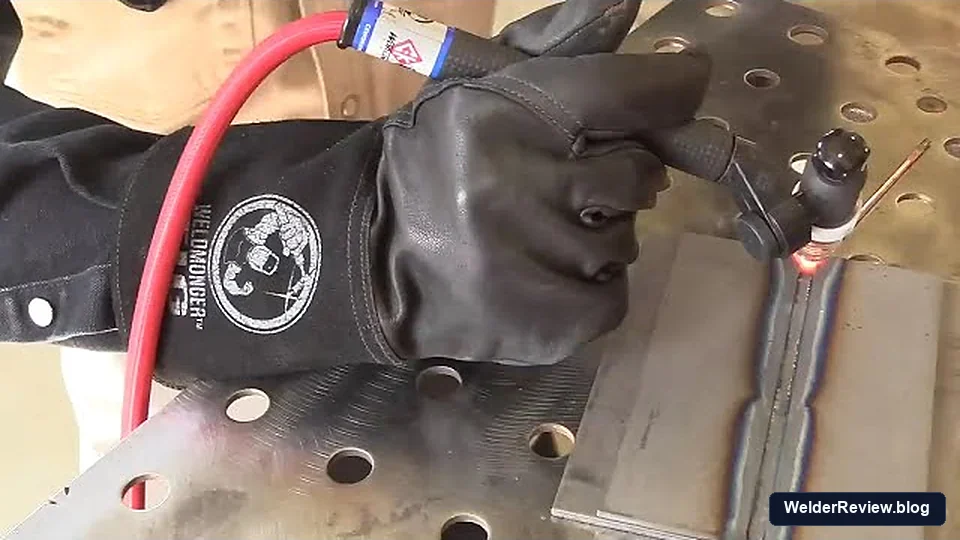
Engineering standards classify both wires under carbon steel specifications, but their minor alloying elements differ significantly. Testing these consumables using a best starter welder pick reveals how molten puddles react to impurities.
ER70S-6 contains higher levels of manganese and silicon than ER70S-2, providing enhanced deoxidation for carbon steels. This specific alloy chemistry promotes stronger, cleaner welds on structural components requiring robust tensile strength.
Conversely, ER70S-2 incorporates zirconium, titanium, and aluminum. These triple deoxidizers bind impurities aggressively, making it the preferred choice for root passes where porosity must be strictly avoided during critical pipe welding.
- ER70S-6 contains higher manganese and silicon levels for enhanced deoxidation.
- ER70S-2 utilizes a proprietary triple deoxidizer blend including zirconium, titanium, and aluminum.
- Both wires deliver a nominal 70,000 psi tensile strength matching structural plate.
Alloying Elements and Silicon Content
Silicon acts as a primary deoxidizing agent in carbon steel welding wires. The higher percentage found in grade six improves puddle fluidity significantly.
Grade two relies on balanced micro-alloying to prevent cracking in sensitive base materials without leaving heavy glassy deposits.
- Silicon ranges from 0.80 to 1.15 percent in typical grade six formulations.
- Grade two keeps silicon lower to minimize brittle phase transformation risks.
Deoxidizer Packages and Shielding Gas Dynamics
Deoxidizers clean the molten weld pool by binding with oxygen and floating impurities to the surface. Selecting equipment featured in our best welder for beginners review ensures wires handle imperfect joints safely.
Shielding gas selection interacts directly with these chemical packages. Argon-carbon dioxide mixes pair exceptionally well with commercial grade six wire for general shop fabrication tasks.
The rich silicon and manganese package in ER70S-6 reacts effectively with 75/25 Argon-CO2 shielding gas. This pairing stabilizes the spray transfer arc, reducing spatter while ensuring deep penetration profiles on thicker plates.
ER70S-2 thrives under pure argon or high-argon mixes, utilizing its reactive elements to stabilize the arc. Welders must adjust gas flow rates carefully to prevent atmospheric contamination during precise GTAW operations.
- Triple deoxidizer systems in grade two neutralize minor surface contaminants effectively.
- Pure argon shielding maximizes arc stability when feeding premium TIG rods.
- Manganese and silicon compounds form surface silica islands during cooling.
Shielding Gas Compatibility
Running standard argon and carbon dioxide blends enhances arc action for both wire types. Higher CO2 percentages increase spatter but improve deep root penetration.
Pure argon is mandatory for gas tungsten arc welding applications to protect tungsten electrodes.
- Argon-CO2 mixes improve puddle wetting on structural steel joints.
- Tungsten arc stability depends on maintaining proper gas flow rates.
Bead Profile, Wetting Action and Puddle Control
Weld bead geometry directly impacts post-processing labor requirements and overall structural integrity. Achieving flat, well-wetted toes prevents stress concentrations under heavy dynamic mechanical loads.
Grade six wire produces a flatter bead profile with smooth toe lines due to high silicon content. Testing this consumable on a best multi process welder unit reduces grinding time between structural passes.
ER70S-6 produces a flatter, wider bead profile with exceptional wetting action at the toes. This characteristic minimizes undercut risks and helps fabricators achieve smooth fillet transitions on standard structural joints.
When deploying ER70S-2, the puddle is remarkably fluid yet controllable, allowing precise manipulation. Operators appreciate how the puddle behaves during out-of-position work, ensuring uniform root reinforcement without excessive convexity.
- Wetting action is markedly superior with high silicon filler metals.
- Puddle fluidity allows operators to bridge minor joint fit-up gaps easily.
- Grade two provides excellent puddle control on thin-walled tubing.
Controlling Puddle Fluidity
Managing a fluid weld puddle requires precise torch angle manipulation and heat input control. High silicon wires tend to spread out widely across the joint faces.
Operators must adjust travel speed to prevent excessive convexity when switching between different consumable classifications.
- Fluid puddles demand steady travel speeds to maintain uniform bead width.
- Correct amperage settings prevent burn-through on thin sheet metal joints.
Mill Scale Tolerance and Surface Preparation Demands
Surface preparation remains a critical factor in achieving porosity-free welds in industrial environments. Failing to remove contaminants properly leads to internal defects and joint failure.
Grade six stands out for its exceptional tolerance to residual mill scale and light rust. This makes it the preferred choice for production welding where cleaning time is limited.
ER70S-6 tolerates minor mill scale and light rust due to its heavy deoxidizer load. However, professional standards still demand proper surface grinding to eliminate inclusions and prevent hydrogen cracking in load-bearing weldments.
ER70S-2 exhibits low tolerance for surface contaminants, requiring aggressive mechanical cleaning. Skipping rigorous solvent wiping or wire brushing guarantees surface porosity, compromising the integrity of pressure vessel welds.
- Mill scale tolerance saves valuable labor hours in high-production fabrication shops.
- Grade two requires pristine base metal surfaces to prevent subsurface porosity.
- Chemical cleaning or mechanical grinding is mandatory for critical code work.
Cleaning Protocols for Critical Welds
High-integrity applications demand aggressive mechanical cleaning before striking an arc. Stainless steel wire brushes remove loose oxides without embedding contaminants into the joint.
Acetone wiping eliminates organic oils and machining lubricants that cause hydrogen cracking.
- Mechanical grinding exposes bright, bare metal for optimal arc initiation.
- Solvent degreasing prevents hydrocarbon-induced porosity in structural passes.
Mechanical Properties and Tensile Strength Behavior
Structural engineers evaluate mechanical test data to ensure weldments withstand extreme operational stresses. Both filler wires exceed seventy thousand pounds per square inch ultimate tensile strength.
Impact toughness at sub-zero temperatures distinguishes premium alloy formulations from standard commercial options. Grade two often provides superior notch toughness in cryogenic service environments.
Both filler wires deliver a minimum tensile strength of 70,000 psi in the as-welded condition. ER70S-6 typically yields slightly higher hardness values, making it ideal for heavy machinery subject to continuous abrasive wear.
ER70S-2 maintains superior impact toughness at sub-zero temperatures because of its refined grain structure. Metallurgical testing confirms excellent Charpy V-notch performance, satisfying strict structural codes for cold-weather infrastructure.
- Tensile strength ratings meet demanding structural engineering design codes.
- Charpy V-notch values confirm reliable performance in cold weather conditions.
- Ductility parameters accommodate cyclic loading without premature fatigue cracking.
Charpy V-Notch Toughness Testing
Impact testing measures energy absorption capacity under sudden dynamic shock loading. Premium wire chemistries maintain high toughness values down to negative forty degrees Fahrenheit.
Standard commercial grades perform adequately for normal structural building applications.
- Sub-zero testing validates material performance in severe winter climates.
- Energy absorption data guides engineering safety factor calculations.
Application Scenarios and Industry Best Practices
Matching the filler metal to the specific industrial application ensures long-term structural reliability. Automotive manufacturing, heavy equipment, and pressure vessel fabrication have distinct consumable requirements.
Choosing grade six for general structural steel framework maximizes shop throughput. Selecting grade two for piping systems and pressure vessels satisfies strict radiographic inspection criteria.
Use ER70S-6 for general structural fabrication, automotive frames, and agricultural equipment manufacturing. Its rapid deposition rate and robust silicon islands maximize productivity across standard carbon steel assembly lines.
Reserve ER70S-2 for aerospace tubing, nuclear piping, and root passes on pressure vessels. The alloy prevents oxide inclusions in tight root gaps, satisfying rigorous ASME Section IX qualification requirements effortlessly.
- Structural fabrication benefits from the forgiving nature of high silicon wires.
- Pressure piping requires the clean radiographic results of triple deoxidized rods.
- Automotive assembly lines utilize high deposition MIG wires for speed.
Pressure Vessel and Piping Standards
Code welding requires filler metals that pass rigorous radiographic and ultrasonic testing. Grade two minimizes slag inclusions that cause rejectable indications on film.
Welders appreciate the clean puddle behavior when executing root passes on open-root pipe joints.
- Radiographic testing demands exceptionally clean weld metal deposition.
- Open-root pipe welding requires precise heat management and control.
Operational Efficiency and Consumable Longevity
Minimizing downtime and reducing post-weld cleanup directly affects shop profitability. Choosing the right machine from our best welder guide influences arc stability, spatter generation, and total abrasive grinding costs.
Grade six produces noticeable silica islands that require chipping hammer removal between passes. Grade two leaves a cleaner surface finish, reducing interpass preparation time.
ER70S-6 generates a glass-like silica slag that requires post-weld chipping or brushing. While manageable, this cleanup phase adds labor time during continuous production runs involving multiple multi-pass structural welds.
ER70S-2 leaves virtually no silicate island residue, drastically reducing cleanup time between passes. This characteristic improves overall workflow efficiency when executing complex joints requiring meticulous interpass cleaning protocols.
- Silica islands require mechanical removal on multi-pass welds.
- Arc stability reduces spatter and minimizes equipment maintenance overhead.
- Consumable feedability ensures consistent wire delivery through long torch liners.
Interpass Cleanup and Maintenance
Removing surface slag between successive weld layers prevents entrapment defects. Neglecting this crucial step compromises structural integrity in thick plate weldments.
Using pneumatic needle scalers speeds up the interpass cleaning workflow significantly.
- Interpass cleaning prevents slag inclusions in thick structural joints.
- Pneumatic tools accelerate cleanup operations in busy fabrication shops.
Frequently Asked Questions
What is the primary difference between ER70S-6 and ER70S-2?
Grade six features a high silicon content for better wetting on dirty steel. Grade two utilizes a triple deoxidizer blend for critical X-ray quality welds.
Can ER70S-6 be used on dirty or rusty steel?
Yes, its robust deoxidizer package handles minor mill scale and rust exceptionally well. However, heavy contamination still requires mechanical cleaning to prevent porosity.
Why does ER70S-6 leave glass-like deposits on the weld bead?
The high silicon and manganese levels react with atmospheric oxygen to form silica islands. Welders easily chip away these glassy deposits between multi-pass layers.
When should I choose ER70S-2 over ER70S-6?
Select grade two for critical applications like pressure vessels, piping, and aerospace components. It delivers superior impact toughness and clean radiographic inspection results.
Do both wires meet the same structural tensile strength requirements?
Both filler metals provide a nominal seventy thousand psi ultimate tensile strength. They satisfy standard AWS structural design specifications for carbon steel fabrication.