ER70S 2 vs ER70S 6: Selecting the Ideal Carbon Steel Filler Metal
Choosing between triple-deoxidized ER70S-2 and high-silicon ER70S-6 defines weld bead quality. This technical comparison examines chemistry, puddle dynamics, and optimal joint preparation.

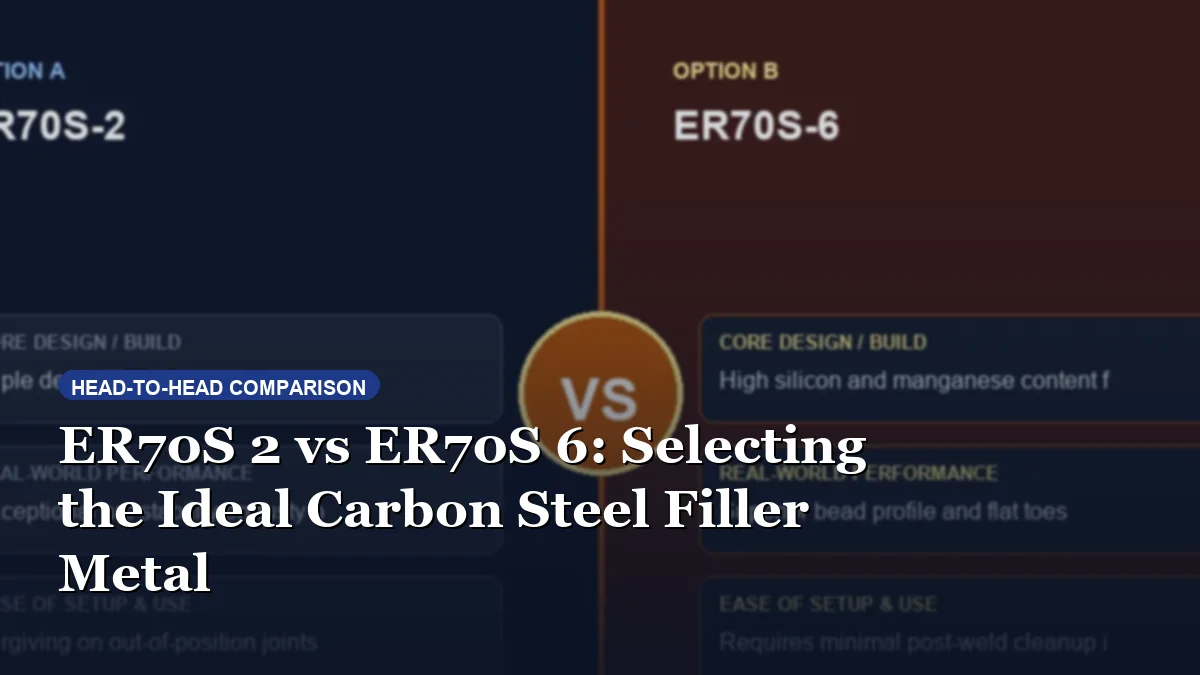
Choose ER70S-2 for critical root passes on dirty pipe or multi-pass aerospace assemblies. Select ER70S-6 for high-deposition structural fabrication requiring maximum wetting and smooth toe lines.
Compare all top models in our Best Welder: Top Home Shop & Jobsite Picks Tested.
Side-by-Side Breakdown
| Criteria | ER70S-2 | ER70S-6 | Edge |
|---|---|---|---|
| Core Design / Build | Triple deoxidized wire with zirconium, titanium, and aluminum. | High silicon and manganese content for enhanced puddle wetting. | Split |
| Real-World Performance | Exceptional arc stability on rusty or mill-scale plate. | Superior bead profile and flat toes on clean carbon steel. | Side B |
| Ease of Setup & Use | Forgiving on out-of-position joints and root passes. | Requires minimal post-weld cleanup in production settings. | Side B |
| Durability & Reliability | Certified radiographic integrity for pressure vessels. | High tensile strength matching structural steel codes. | Split |
| Efficiency / Operating Footprint | Lower silicon minimizes slag islands in multi-pass welds. | Higher deposition rates speed up single-pass production runs. | Side B |
| Maintenance Requirements | Requires dry storage to prevent surface moisture pickup. | Standard copper coating resists atmospheric corrosion effectively. | Split |
| Best Ideal Use Case | Critical piping, nuclear work, and contaminated sheet metal. | Structural steel, automotive frames, and general fabrication. | Side B |
Core Metallurgical Engineering and Alloy Chemistry
Understanding filler metal chemistry starts with examining internal wire composition. ER70S-2 utilizes a complex blend of active deoxidizers designed to chemically scrub impurities from the molten weld pool during arc initiation.
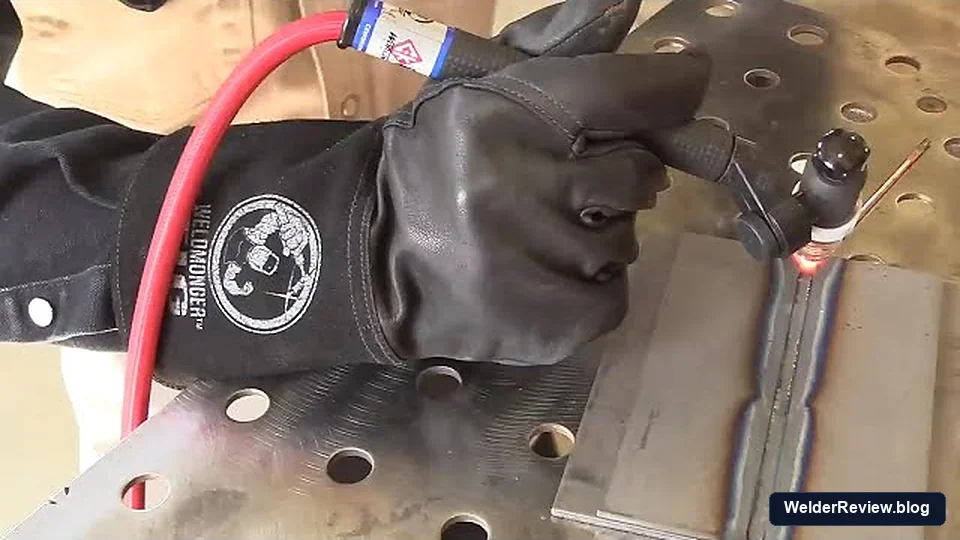
Conversely, ER70S-6 relies primarily on elevated manganese and silicon levels. This specific formulation boosts ultimate tensile strength while promoting superior arc fluidity across standard structural carbon steel plate components.
ER70S-2 incorporates a complex deoxidizer package featuring aluminum, titanium, and zirconium alongside standard manganese and silicon. This specific chemistry actively purifies dirty carbon steel bases by neutralizing residual oxygen and nitrogen impurities effectively.
Conversely, ER70S-6 relies strictly on higher levels of manganese and silicon for its deoxidation duties. This simpler formulation provides adequate cleansing for standard mill scale while maintaining lower alloy costs during high-volume structural fabrication runs.
- ER70S-2 contains zirconium, titanium, and aluminum deoxidizers.
- ER70S-6 maximizes silicon content for fluid puddle wetting.
- Both wires share a nominal 70 ksi minimum tensile strength rating.
Deoxidizer Package Differences
The multi-deoxidizer system in ER70S-2 captures stray oxygen molecules effectively. When paired with machines from our multi-process welder roundup, this wire prevents porosity over minor surface contaminants or difficult mill scale.
High silicon levels in ER70S-6 lower surface tension. Consequently, the molten puddle spreads flatter, reducing undercut risks along joint toes during high-speed automated or semi-automated welding runs.
- Titanium and zirconium control grain refinement in ER70S-2.
- Silicon drives edge wetting in ER70S-6 weld profiles.
Real-World Arc Performance and Puddle Dynamics
Arc stability dictates bead appearance and operator comfort. ER70S-2 delivers a crisp, focused arc that handles varying arc lengths with minimal spatter, even under standard argon-rich shielding gas mixtures.
Operating with ER70S-6 produces a slightly broader, softer arc cone. Welders benefit from excellent wetting action that naturally fills minor joint fit-up gaps in structural assembly environments.
Operating with ER70S-2 yields an exceptionally fluid weld puddle that wets out smoothly against joint toes. Welders appreciate the calm, stable arc characteristic that significantly reduces spatter generation when running on straight argon or gas mixes.
ER70S-6 produces a slightly stiffer arc column that generates increased droplet force for superior penetration profiles. While minor spatter may occur with argon-CO2 shielding gases, the directional stiffness helps maintain precise control in vertical or overhead positions.
- ER70S-2 maintains stability during tight root pass gaps.
- ER70S-6 provides smooth tie-ins on fillet and groove welds.
- Spatter levels remain exceptionally low for both carbon steel electrodes.
Positional Welding Characteristics
Positional welding demands strict control over molten metal freezing rates. ER70S-2 solidifies predictably, making it a favorite for vertical-down pipe welding and complex aerospace structural frameworks.
When executing horizontal fillets, ER70S-6 excels by resisting sag. The balanced chemistry supports consistent bead profiles without requiring excessive amperage adjustments from the machine operator.
- Fast freeze characteristics aid overhead and vertical positions.
- Fluid puddle control reduces rework on complex weldments.
Surface Preparation and Contamination Tolerance
Surface preparation requirements heavily influence shop throughput times. ER70S-2 tolerates residual mill scale and light rust much better than standard commercial alternatives due to its active cleaning agents.
Using ER70S-6 typically requires cleaner base metal joints to achieve radiographic soundness. Heavy surface oxides can trap silicon islands beneath the weld surface, creating localized inclusions.
The triple-deoxidizer system inside ER70S-2 tolerates trace surface impurities, allowing sound welds over light rust films without immediate porosity. However, heavy mill scale still demands mechanical removal to prevent localized inclusions and marginal fusion defects.
ER70S-6 excels when burning directly through hot-rolled mill scale due to its elevated silicon content. The chemistry floats contaminants to the surface as a glassy silica island, which requires chipping before depositing subsequent multi-pass weld layers.
- Active deoxidizers in ER70S-2 neutralize minor surface impurities.
- ER70S-6 performs best on mechanically cleaned or abrasive-blasted steel.
- Proper shielding gas selection enhances contamination tolerance further.
Managing Oxide Inclusions
Oxide management remains critical in multi-pass welding applications. ER70S-2 deposits less glassy silica on the bead surface, reducing inter-pass cleaning time between successive structural weld layers.
Welders utilizing ER70S-6 must brush away the distinct silica crust before laying down cover passes. Neglecting this step introduces severe lack of fusion defects in heavy weldments.
- Silica islands form naturally on ER70S-6 cooling beads.
- Inter-pass grinding requirements are lower with ER70S-2 wire.
Mechanical Properties and Code Compliance
Engineering standards require verified mechanical performance under load. Both filler metals meet AWS A5.18 specifications, ensuring a minimum tensile strength of 70,000 psi in as-welded test conditions.
Impact toughness ratings diverge slightly at sub-zero temperatures. ER70S-2 often maintains superior Charpy V-notch values in cryogenic service due to its refined grain structure and low impurity levels.
Both alloy classifications easily exceed the 70 ksi tensile strength threshold required for structural carbon steel applications. Yet, ER70S-2 often provides superior low-temperature impact toughness values due to grain-refining titanium and aluminum additions within the wire.
Structural engineers frequently specify ER70S-6 for AWS D1.1 compliance because its high manganese content guarantees predictable yield strengths. Recommended across our beginner welder reviews, these weld deposits satisfy strict radiographic testing standards on heavy equipment.
- AWS A5.18 standard governs chemical and mechanical benchmarks.
- Tensile strength exceeds base metal limits for standard A36 steel.
- Impact testing verifies reliability in cold weather environments.
X-Ray Quality Radiographic Standards
Pressure vessel fabrication demands flawless internal soundness. ER70S-2 is frequently specified for root passes on critical piping because it minimizes centerline cracking risks under high restraint.
Structural steel codes readily accept ER70S-6 for primary load-bearing connections. Its high deposition efficiency and robust yield strength satisfy structural engineering requirements without issue.
- Root pass crack resistance favors ER70S-2 in pipe codes.
- Structural column connections rely on ER70S-6 efficiency.
Efficiency, Deposition Rates, and Operating Costs
Production efficiency directly impacts project profitability in commercial fab shops. ER70S-6 offers higher silicon levels that accelerate puddle wetting, allowing slightly faster travel speeds on flat plate.
While ER70S-2 carries a higher material purchase cost, it saves labor hours in industries requiring rigorous X-ray inspection by reducing root pass grinding and weld repair rates.
Production throughput heavily favors ER70S-6 when measuring pounds per hour deposited on heavy weldments. The high silicon and manganese formula supports aggressive wire feed speeds without destabilizing the primary shielding gas envelope during continuous fabrication runs.
While ER70S-2 delivers exceptional quality, its lower deposition efficiency and slower travel speeds can increase overall labor expenditure. Shops must weigh the reduced cleanup time against higher per-foot welding costs when selecting this premium alloy.
- Travel speed optimization favors ER70S-6 in automated stations.
- Reduced repair rates offset the premium cost of ER70S-2.
- Shielding gas costs remain identical for both carbon steel wires.
Shielding Gas Optimization
Selecting the correct shielding gas maximizes electrode performance. Pure argon mixed with carbon dioxide provides the ideal balance of penetration and arc stability for ER70S-6 applications.
Using tri-gas mixes with ER70S-2 enhances puddle fluidity further. This specialized gas blend supports ultra-smooth transfer modes in high-end stainless and alloy steel transition joints.
- Ar/CO2 blends maximize ER70S-6 arc characteristics.
- Tri-gas mixtures optimize high-purity ER70S-2 root passes.
Maintenance, Storage, and Spool Longevity
Proper electrode storage prevents hydrogen cracking and feed jams. Both ER70S-2 and ER70S-6 feature precision copper coatings that protect the underlying carbon steel from atmospheric oxidation during storage.
Keeping spools in climate-controlled environments prevents moisture absorption. Wet wire surfaces cause severe porosity and erratic wire feeding through standard push-pull GMAW welding torch liners.
Proper storage in a climate-controlled environment prevents moisture absorption that leads to hydrogen-induced cracking in high-strength carbon steels. Copper-coated spools require clean handling to avoid transferring body oils onto the bare steel wire surface.
Unused filler metal left on feed machines should be protected using airtight plastic covers to mitigate airborne oxidation. Maintaining clean drive rolls prevents flaking of the copper coating, ensuring smooth feeding through long welding gun liner assemblies.
- Copper plating prevents surface rust on stored wire spools.
- Climate-controlled rooms preserve electrode integrity indefinitely.
- Drive roll tension must be adjusted to prevent copper flaking.
Preventing Feeding Issues
Consistent wire delivery ensures stable arc voltage. Inspecting drive rolls regularly prevents copper shaving accumulation, which causes erratic arc starts and inconsistent weld penetration profiles.
Using Teflon or polymer liners with ER70S-2 minimizes friction in long push-pull welding gun assemblies, ensuring smooth wire feeding during demanding out-of-position structural fabrication tasks.
- Regular drive roll cleaning eliminates copper build-up.
- Polymer torch liners improve long-distance wire feeding.
Application Matching and Final Industry Selection
Choosing the correct electrode depends on specific project demands. ER70S-2 remains the gold standard for critical pipe welding, nuclear repairs, and aerospace sheet metal where defect tolerance is zero.
For general structural fabrication, automotive frames, and heavy machinery repair, ER70S-6 delivers unbeatable productivity, aesthetic appeal, and dependable mechanical strength across diverse shop environments.
Aerospace component manufacturers and nuclear fabricators routinely select ER70S-2 for its rigorous chemical purity and defect-free root passes. Critical piping systems demand this grade to eliminate microscopic inclusions under demanding radiographic inspection standards.
General structural contractors and automotive shops rely on ER70S-6 because of its outstanding cost efficiency. Featured heavily in our best starter welder guide, it remains an absolute industry standard for everyday carbon steel fabrication tasks.
- ER70S-2 dominates critical piping and pressure vessel roots.
- ER70S-6 powers high-output structural and general fabrication shops.
- Matching wire to base metal condition ensures optimal results.
Making Your Final Purchasing Decision
Evaluate your typical shop workflow before purchasing bulk filler metal. If your projects involve heavy mill scale and require maximum deposition rates, ER70S-6 is the smart economic choice.
When your work demands strict radiographic inspection and superior crack resistance on contaminated joints, investing in ER70S-2 prevents costly weld failures and expensive structural repair work.
- Assess joint cleanliness and inspection standards first.
- Balance material cost against anticipated weld repair rates.
Frequently Asked Questions
Can ER70S-2 replace ER70S-6 in structural fabrication shops?
Yes, ER70S-2 can replace ER70S-6 structurally, but it costs more and lacks the high silicon wetting action preferred for flat fillet joints.
Why does ER70S-6 leave a glassy silica crust on weld beads?
The elevated silicon content floats impurities to the surface during cooling, creating a thin silica crust that requires manual chipping or wire brushing.
Which filler wire performs better on rusty or uncleaned steel plate?
ER70S-2 offers superior contamination tolerance because its active triple-deoxidizer package chemically neutralizes residual rust and mill scale much more effectively.
Do both ER70S-2 and ER70S-6 meet AWS structural code requirements?
Both electrodes satisfy AWS A5.18 specifications, providing a guaranteed minimum tensile strength of 70 ksi in standard as-welded carbon steel test configurations.
What shielding gas is recommended for welding with ER70S-6 wire?
A standard mixture of argon and carbon dioxide provides optimal arc stability, smooth metal transfer, and excellent penetration on structural steel components.