ER70S-2 vs ER70S-6 Wire: Technical Comparison
Choosing the correct carbon steel filler metal determines weld integrity and post-weld cleanup. This guide compares chemistry, performance, and practical shop applications.

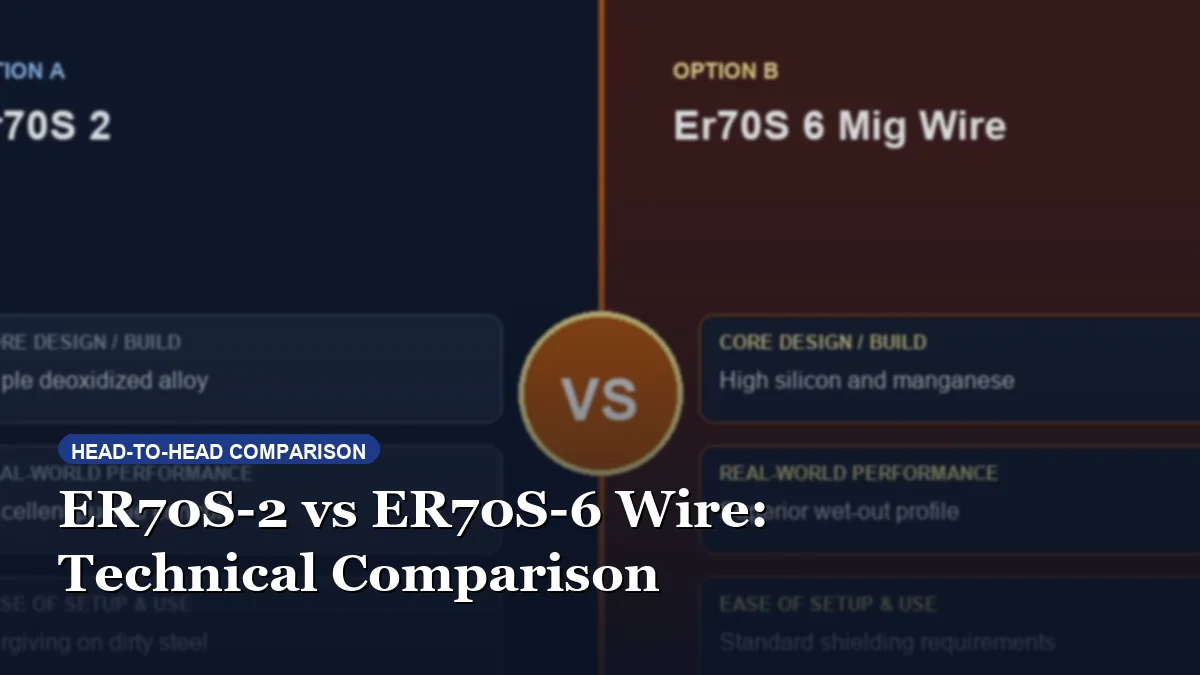
Select ER70S-2 for multi-deoxidized precision on contaminated base metals, or choose ER70S-6 for higher silicon content delivering superior bead wet-out and ultimate tensile strength in structural fabrication.
Compare all top models in our Best Welder: Top Home Shop & Jobsite Picks Tested.
Side-by-Side Breakdown
| Criteria | Er70S 2 | Er70S 6 Mig Wire | Edge |
|---|---|---|---|
| Core Design / Build | Triple deoxidized alloy | High silicon and manganese | ER70S-6 |
| Real-World Performance | Excellent puddle control | Superior wet-out profile | ER70S-6 |
| Ease of Setup & Use | Forgiving on dirty steel | Standard shielding requirements | ER70S-2 |
| Durability & Reliability | High impact toughness | High tensile strength | ER70S-6 |
| Efficiency / Operating Footprint | Slower deposition rates | Optimized for production | ER70S-6 |
| Maintenance Requirements | Minimal porosity issues | Standard silica island cleanup | ER70S-2 |
| Best Ideal Use Case | Critical root passes | General structural welding | ER70S-6 |
Core Design and Engineering Differences
Understanding filler metal chemistry starts with alloy designations and specific deoxidizer packages. ER70S-2 features aluminum, titanium, and zirconium additions designed to neutralize surface oxides effectively during critical welding operations.
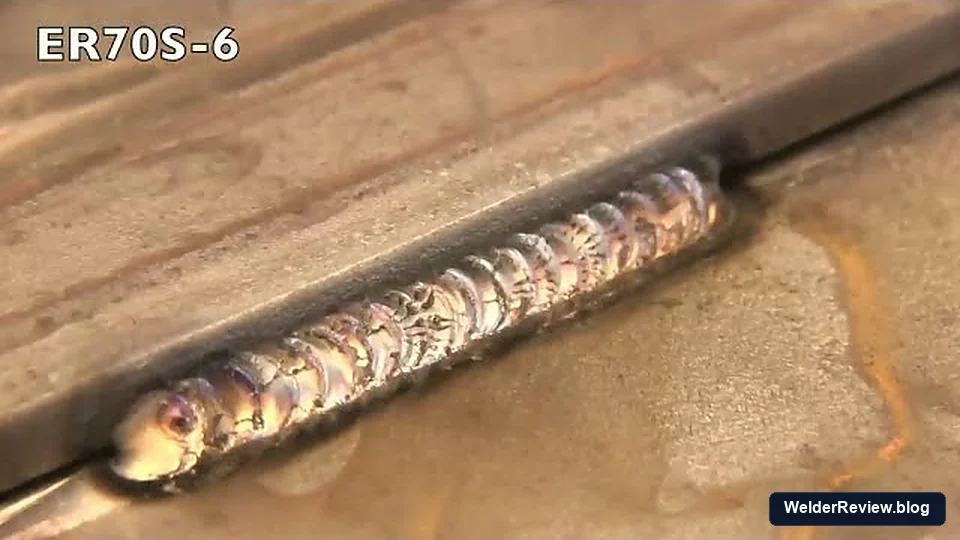
Conversely, ER70S-6 relies primarily on higher levels of manganese and silicon. This specific chemical balance promotes excellent arc stability and reduces the risk of underlying porosity in standard carbon steels.
ER70S-2 incorporates a triple deoxidizer blend containing zirconium, titanium, and aluminum. This complex chemical formulation actively scavenges oxygen and nitrogen, effectively neutralizing surface impurities on contaminated structural steel plates during welding.
Conversely, ER70S-6 relies on a higher concentration of manganese and silicon. This specific dual-deoxidizer system drives superior puddle fluidity, producing smooth bead profiles while accommodating mill scale on standard carbon steel.
- ER70S-2 contains triple deoxidizers for specialized alloy work.
- ER70S-6 utilizes enhanced silicon for fluid weld puddles.
- Both wires yield a minimum 70,000 psi tensile strength.
Chemical Composition Breakdown
Incorporating insights from our best wire for gasless mig welder tests, fabricators working with older, contaminated materials often rely on this specific titanium-heavy formulation to prevent cracking.
Higher silicon percentages in the alternative wire improve puddle wetting significantly. Welders notice flatter bead profiles that require less mechanical finishing work after completion.
- Silicon ranges differ notably between the two classifications.
- Deoxidizer packages dictate overall puddle fluidity.
Real-World Performance Comparison
Performance metrics in industrial settings depend heavily on arc stability and spatter generation. ER70S-6 delivers exceptional wet-out characteristics across a wide range of standard shielding gas mixtures.
Meanwhile, ER70S-2 provides superior control when managing out-of-position joints or difficult root passes where precise puddle manipulation prevents lack of fusion defects.
When joining rusty plates, ER70S-2 prevents porosity through aggressive deoxidation. However, it requires precise gun angles to manage the fluid weld puddle and maintain consistent arc stability across complex joint configurations.
ER70S-6 excels on clean or lightly prepared metals, delivering exceptional wet-out. Fabricators frequently choose this alloy for fillet welds because it minimizes post-weld grinding and speeds up production workflows.
- ER70S-6 minimizes spatter when paired with Argon-CO2 blends.
- ER70S-2 excels during intricate multi-pass manual welding tasks.
- Puddle fluidity affects overall bead geometry and profile.
Arc Stability and Spatter Control
Stable arcs reduce cleanup time and improve operator efficiency during long production runs. Silicon additives create a smooth transfer mode that operators prefer for general fabrication.
Operators must manage residual silica islands when using high-silicon wires. Proper interpass cleaning prevents slag inclusions in thick structural weldments.
- Silica deposits form naturally on high-silicon weld surfaces.
- Proper shielding gas selection reduces excessive spatter.
Efficiency and Operating Footprint
Production environments demand high deposition rates and minimal downtime for equipment adjustments. ER70S-6 remains the industry workhorse for automated and semi-automated robotic welding cells globally.
Choosing the right wire directly impacts consumable costs and overall project turnaround times. Shops consulting our best mig wire for sheet metal picks can balance precision against speed carefully.
Operational efficiency shifts based on material preparation time. ER70S-2 demands rigorous joint cleaning, increasing initial labor hours, but it drastically reduces reject rates on critical multi-pass structural weldments and pressure piping.
ER70S-6 maximizes throughput by tolerating minor surface contaminants. This characteristic reduces prep times, though operators must manage increased silica island formation on the hardened weld surface before subsequent passes.
- ER70S-6 offers high deposition efficiency for production lines.
- Material costs vary based on specific alloy additions.
- Reducing post-weld cleanup lowers overall labor expenses.
Deposition Rates and Speed
High wire feed speeds demand consistent electrical stickout and proper contact tip maintenance. Following our selecting the correct mig contact tip size guide prevents erratic arc behavior.
Production managers track wire consumption metrics to optimize inventory levels across multiple welding stations and shifting fabrication workloads throughout the year.
- Consistent feed rates prevent arc stubbing issues.
- Tip wear increases with higher amperage settings.
Maintenance, Efficiency and Longevity
Equipment upkeep ensures smooth wire feeding and prevents birdnesting. Mentioned frequently in our hobart handler 190 mig wire welder review, using clean liners guarantees consistent electrical pickup.
Proper storage conditions protect copper-coated steel wires from atmospheric moisture and oxidation. Humid shop environments require sealed packaging until immediate deployment on the shop floor.
Consumable longevity depends heavily on storage conditions and liner wear. Both wires require dry environments to prevent moisture absorption, which directly causes hydrogen cracking in high-strength carbon steel applications.
Feeding mechanisms experience less abrasive friction with copper-coated ER70S-6 compared to specialized alloy wires. Regular maintenance of drive rolls and contact tips ensures consistent wire feed speed over extended operational shifts.
- Store filler metals in climate-controlled environments.
- Inspect drive rolls regularly for metal shavings.
- Replace worn contact tips to maintain arc stability.
Storage and Handling Protocols
Moisture absorption leads to hydrogen cracking and porosity in finished welds. Keeping spools elevated off concrete floors prevents moisture transfer into the consumable material.
Technicians should discard rusted or contaminated wire segments before starting critical fabrication projects to ensure absolute compliance with structural welding codes.
- Rust on wire causes severe internal porosity.
- Sealed plastic bags protect unused spools effectively.
Which Option Fits Your Setup
Matching your filler metal to the base material thickness and cleanliness determines success. ER70S-2 suits aerospace, piping, and specialized repair work involving questionable metal conditions.
Standard structural steel fabrication thrives on the cost-effectiveness and mechanical strength of ER70S-6. Assessing your specific shop requirements guides your purchasing decisions efficiently.
Select ER70S-2 when executing code-sensitive projects involving uncleaned steel or certified nuclear components. Its robust deoxidizers guarantee compliance with strict AWS D1.1 structural welding standards and stringent quality inspections.
Choose ER70S-6 for general fabrication, automotive repair, and heavy equipment manufacturing. The enhanced tensile strength and superior bead wetting make it the optimal default choice for standard workshop environments.
- Analyze joint geometry before selecting your filler wire.
- Verify code compliance for structural or pressure vessels.
- Consider clean-up labor when calculating project budgets.
Matching Base Metals to Wire
Clean carbon steel plates accept high-silicon wires without surface preparation complications. Rusty or mill-scaled steel benefits from the aggressive deoxidizers found in specialty grades.
Consulting material test reports ensures compatibility between your chosen wire chemistry and structural design specifications required by engineering oversight teams.
- Mill scale requires adequate cleaning before welding.
- Alloy compatibility dictates long-term structural integrity.
Safety Standards and Shop Ergonomics
Welding fume management remains a primary safety priority in enclosed fabrication spaces. Proper ventilation systems protect operators from hazardous metallic oxides generated during the arc process.
Ergonomic gun positioning reduces operator fatigue during extended vertical or overhead welding sequences. Comfortable torch designs improve overall weld quality and consistency across shifts.
Shop safety demands rigorous fume extraction due to manganese content in ER70S-6. Operators must utilize proper PAPR respirators to mitigate long-term respiratory risks associated with heavy industrial welding fumes.
Ergonomic torch handling remains essential during long production runs. Minimizing wrist strain and maintaining optimal contact-to-work distance ensures consistent arc voltage and reduces operator fatigue across extended shifts.
- Use local exhaust ventilation to remove welding fumes.
- Wear appropriate personal protective equipment at all times.
- Maintain proper posture to reduce musculoskeletal strain.
Fume Extraction and PPE
Manganese and silicon fumes require effective extraction hoods positioned close to the arc. Safe operating practices protect shop personnel from chronic respiratory health risks over time.
Selecting proper shade lenses prevents arc eye and reduces eye strain during intricate inspection and fabrication tasks performed daily in industrial workshops.
- Respirators safeguard lungs against fine particulate matter.
- Auto-darkening helmets enhance workflow efficiency significantly.
Frequently Asked Questions
What is the primary chemical difference between ER70S-2 and ER70S-6?
ER70S-2 utilizes a triple-deoxidizer package containing aluminum, titanium, and zirconium for complex alloy work, whereas ER70S-6 features higher silicon and manganese levels to maximize puddle fluidity and overall structural tensile strength.
Can ER70S-6 be used on rusty or dirty steel surfaces?
While ER70S-6 handles minor impurities well due to its manganese content, heavily rusted or contaminated surfaces require thorough mechanical cleaning to prevent internal porosity and lack of fusion defects during welding operations.
Why does ER70S-6 leave glass-like deposits on the weld bead?
The higher silicon content naturally migrates to the surface during cooling, forming glassy silica islands that require simple chipping or wire brushing before applying secondary passes or protective coatings.
Which wire is better suited for critical pipe welding root passes?
Professional fabricators overwhelmingly prefer ER70S-2 for critical root passes because its specialized deoxidizers help manage minor contamination and provide superior puddle control in out-of-position joint configurations.
Do both wires require the same shielding gas mixtures in MIG applications?
Both filler wires perform exceptionally well when paired with standard argon and carbon dioxide shielding gas blends, allowing shops to maintain versatile gas delivery systems across different production lines.