ER4043 vs ER5356: Aluminum Filler Wire Guide
Choosing the correct aluminum filler metal prevents catastrophic cracking and joint failure. Understand how alloy composition dictates your ultimate structural integrity.

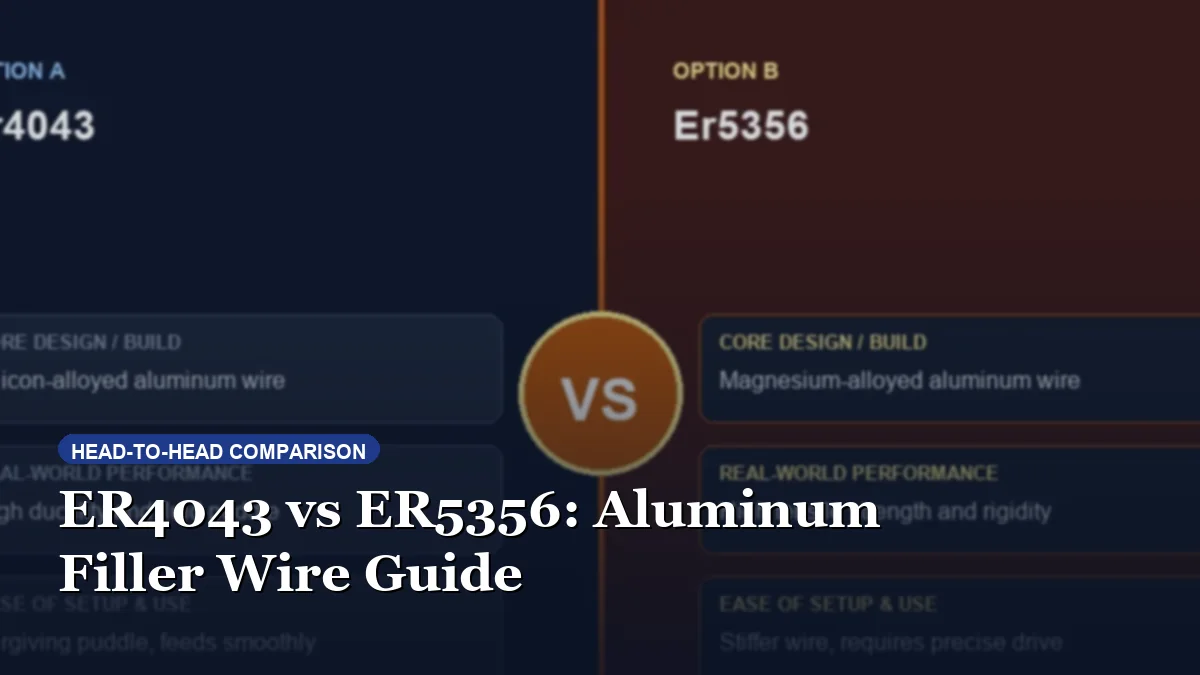
Pick ER4043 for superior fluidity and reduced cracking on 6xxx series alloys. Choose ER5356 when maximum tensile strength and marine-grade corrosion resistance are mandatory.
Compare all top models in our Best Welder: Top Home Shop & Jobsite Picks Tested.
Side-by-Side Breakdown
| Criteria | Er4043 | Er5356 | Edge |
|---|---|---|---|
| Core Design / Build | Silicon-alloyed aluminum wire | Magnesium-alloyed aluminum wire | Depends |
| Real-World Performance | High ductility and fluid puddle | High tensile strength and rigidity | Depends |
| Ease of Setup & Use | Forgiving puddle, feeds smoothly | Stiffer wire, requires precise drive rolls | Er4043 |
| Durability & Reliability | Good general corrosion resistance | Excellent marine-grade saltwater resistance | Er5356 |
| Efficiency / Operating Footprint | Reduces hot cracking tendencies | Provides higher shear strength profiles | Er5356 |
| Maintenance Requirements | Standard post-weld wire brushing | Standard post-weld wire brushing | Tie |
| Best Ideal Use Case | Automotive castings and general repairs | Structural frames and marine hulls | Depends |
Fundamental Metallurgy and Alloying Elements
Understanding aluminum filler metals starts with their primary alloying elements. ER4043 contains silicon, giving it a lower melting point and exceptional puddle fluidity during welding operations.
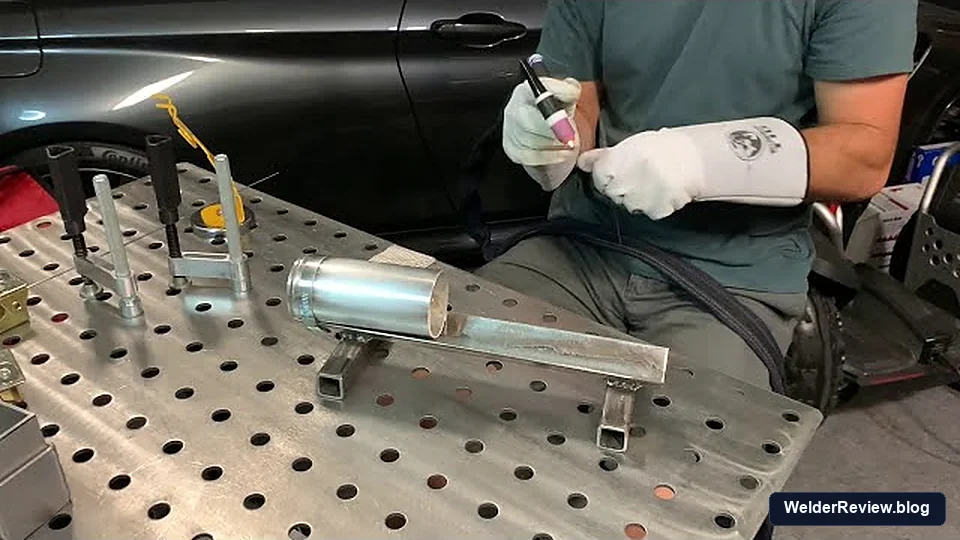
Conversely, ER5356 contains magnesium, which drastically increases structural strength and improves color matching when the welded assembly undergoes post-fabrication anodizing treatments common in projects built using a trusted machine from our best starter welder guide.
Selecting the proper chemistry ensures compatibility with your base metal. Mismatched filler wires often lead to premature joint degradation, intergranular corrosion, or severe mechanical failure under load.
ER4043 is an aluminum-silicon filler wire containing approximately five percent silicon, which significantly lowers the melting point and increases fluidity during the molten welding phase.
Conversely, ER5356 is an aluminum-magnesium alloy utilizing around five percent magnesium as its primary strengthening element, providing superior structural integrity and strong resistance against shear forces.
These fundamental metallurgical differences dictate their base metal compatibility, requiring welders to carefully match filler wires to specific parent materials like 6061 or 5052 series alloys.
- ER4043 utilizes a five percent silicon composition.
- ER5356 relies on a five percent magnesium addition.
- Base metal dilution directly alters final weld chemistry.
Melting Range and Fluidity Dynamics
The silicon content in ER4043 narrows the freezing range, allowing the molten puddle to flow smoothly into tight joint fit-ups.
Magnesium-rich ER5356 solidifies differently, demanding better operator technique to control bead profile and prevent undercut defects.
- Lower melting points reduce base metal distortion.
- Higher magnesium increases puddle surface tension.
Mechanical Properties and Tensile Strength
Structural applications demand rigorous evaluation of tensile and yield strengths. ER5356 delivers higher shear strength, making it the industry standard for load-bearing frameworks when practicing techniques featured inside our best welder for beginners guide.
While ER4043 offers lower tensile strength, its superior ductility helps absorb dynamic impact loads without fracturing unexpectedly in service environments.
Engineers must evaluate operational stresses before specifying filler wire to guarantee safety margins remain compliant with recognized structural welding codes.
When evaluating tensile strength, ER5356 consistently outperforms ER4043, delivering a minimum tensile strength of roughly 38,000 psi in as-welded conditions for demanding structural applications.
ER4043 provides lower ultimate tensile strength, usually hovering around 29,000 psi, making it more suitable for components that experience moderate loads rather than extreme structural stress.
Ductility and elongation characteristics also favor ER5356 in dynamic load environments, whereas ER4043 exhibits lower elongation values that limit its effectiveness in high-vibration assemblies.
- ER5356 provides superior as-welded tensile strength.
- ER4043 excels in high-ductility impact absorption.
- Code compliance dictates specific filler alloy selections.
Elongation and Ductility Metrics
Ductility measures a material's ability to deform under tensile stress. ER4043 stretches further before reaching its ultimate breaking point.
Rigid applications benefit from ER5356 because it minimizes joint flex under heavy static loads.
- Higher elongation prevents sudden catastrophic snaps.
- Lower elasticity maintains strict dimensional tolerances.
Corrosion Resistance in Real Environments
Operating environments dictate corrosion performance requirements. ER5356 provides exceptional resistance to marine atmospheres and constant saltwater immersion conditions often encountered by machines selected via our best multi process welder overview.
Using ER4043 in marine settings risks accelerated galvanic corrosion due to the presence of silicon particles within the weld matrix.
For architectural or indoor applications, both wires perform admirably when proper surface preparation and post-weld cleaning protocols are strictly followed.
Marine environments and chemical exposure demand high corrosion resistance, an area where ER5356 excels due to its stable magnesium content resisting saltwater degradation effectively.
ER4043 offers decent corrosion resistance for standard atmospheric conditions, but it can experience galvanic corrosion when exposed to continuous moisture and certain industrial chemicals.
Furthermore, anodizing response varies significantly between these two filler metals, with ER4043 turning dark gray post-anodizing while ER5356 maintains a much closer color match.
- Magnesium resists saltwater oxidation effectively.
- Silicon can promote localized pitting in marine environments.
- Post-weld cleaning removes corrosive flux residues.
Anodizing and Color Matching
Aesthetic finishes require careful consideration of filler wire metallurgy. ER5356 turns dark grey during chemical anodizing processes.
ER4043 typically turns dark or black after anodizing, making invisible repairs nearly impossible on bright finished aluminum structures.
- ER5356 matches 5xxx series base metals better.
- Silicon discoloration ruins decorative anodized finishes.
Feedability, Arc Stability, and Usability
Welders appreciate smooth wire feeding during MIG processes. ER4043 features a softer wire body, which requires properly adjusted drive roll tension to prevent birdnesting.
ER5356 is significantly stiffer, pushing through long welding gun liners with ease and maintaining consistent arc stability over extended production runs.
Mastering torch manipulation techniques helps overcome the unique fluidity traits associated with each specific aluminum filler wire.
Wire feedability is a critical operational factor; softer ER4043 wire often requires U-groove drive rolls and teflon liners to prevent birdnesting during MIG welding operations.
ER5356 possesses a higher column strength because of its magnesium content, allowing smoother pushes through standard welding gun liners with fewer feeding interruptions.
Arc stability remains exceptionally smooth with both alloys when shielding gas parameters are optimized, though ER4043 typically produces slightly less spatter on clean aluminum plates.
- Soft ER4043 wires demand Teflon gun liners.
- Stiff ER5356 feeds smoothly through standard U-groove rolls.
- Consistent wire speed eliminates arc stutter.
Gun Setup and Liner Maintenance
Aluminum welding requires specialized equipment setups. U-groove drive rolls prevent crushing soft aluminum wire strands during feeding.
Keeping short torch leads minimizes friction and ensures reliable wire delivery without intermittent feeding snags.
- Never use knurled rolls on aluminum wire.
- Replace worn contact tips to maintain stable arcs.
Thermal Cracking Susceptibility and Heat
Hot cracking represents a major challenge when joining aluminum alloys. ER4043 minimizes solidification cracking thanks to its generous silicon content.
ER5356 is more prone to hot cracking when welded on specific base metals like 6061 under high restraint conditions.
Controlling interpass temperatures and utilizing proper preheating techniques mitigates cracking risks across both filler metal options.
Minimizing thermal cracking is essential, and ER4043 contains high silicon levels that provide excellent crack resistance when welding 6000-series structural aluminum base metals.
ER5356 is more susceptible to solidification cracking when used on certain high-dilution joints, requiring precise joint preparation and strict adherence to interpass temperature limits.
Heat input must be carefully managed for both alloys to prevent excessive grain growth and loss of mechanical properties in the heat-affected zone.
- Silicon acts as a powerful crack-suppression agent.
- High restraint joints demand careful filler selection.
- Preheating thick sections reduces thermal shock.
Managing Heat Input Limits
Excessive heat input degrades base metal mechanical properties. Maintaining strict amperage limits preserves the heat-affected zone integrity.
Rapid travel speeds help control puddle size and prevent burn-through on thin aluminum sheet materials.
- Monitor interpass temperatures closely.
- Avoid excessive dwell times in corners.
Selecting the Right Alloy for Your Project
Choosing between these alloys depends entirely on your specific application requirements. Match ER4043 for automotive repairs and general non-structural fabrication tasks, especially when pairing wires with a machine from our best welder guide.
Specify ER5356 for structural trailers, marine vessels, and applications requiring high tensile strength and chemical resistance.
Always consult engineering blueprints and material test reports before starting any critical aluminum welding project.
Choosing the correct filler wire requires balancing mechanical demands, operating environments, and aesthetic finishing requirements such as post-weld chemical anodizing.
Select ER4043 for automotive components, general repairs, and applications requiring high fluidity, low distortion, and superior resistance to hot cracking under thermal stress.
Specify ER5356 for marine structures, high-strength weldments, and parts requiring maximum tensile strength combined with an exact color match after anodic treatments.
- Review base metal alloy designations first.
- Evaluate expected service loads and environments.
- Test sample joints before production welding.
Decision Matrix for Fabricators
Keep both alloy types stocked in your shop to handle diverse customer repair orders efficiently.
Proper storage in climate-controlled environments prevents moisture absorption and surface oxidation on bare wire spools.
- Store filler wire in sealed plastic bags.
- Rotate inventory to ensure fresh wire usage.
Frequently Asked Questions
Can I use ER4043 on 5052 aluminum base metal?
Using ER4043 on 5052 is generally discouraged by welding codes. ER5356 is the correct match for high-magnesium base metals to prevent brittle welds.
Why does ER4043 feed harder in standard MIG guns?
ER4043 wire is softer than ER5356 and deforms easily under excessive drive roll pressure. Use U-groove rolls and Teflon liners to ensure reliable feeding.
Which filler wire provides better corrosion resistance in saltwater?
ER5356 outperforms ER4043 in marine environments due to its magnesium content. Choose ER5356 for saltwater applications to prevent premature pitting corrosion.
Does ER5356 match the color of anodized 6061 aluminum?
ER5356 provides a much closer color match after anodizing than ER4043. ER4043 turns dark grey or black during chemical finishing processes.
What causes hot cracking in aluminum welds?
Hot cracking usually results from poor filler selection and high joint restraint. Select silicon-rich ER4043 to reduce solidification cracking on tricky alloys.