Eastwood vs Vulcan Welder: Technical Comparison
Choosing between these popular brands requires analyzing transformer stability, duty cycle limits, and enclosure design. We dissect their engineering for shop environments.

Choose Eastwood for versatile multi-process hobbyist fabrication with fine parameter adjustments. Opt for Vulcan when prioritizing heavy-duty industrial chassis build and robust local retail service networks.
Compare all top models in our Best Welder: Top Home Shop & Jobsite Picks Tested.
Side-by-Side Breakdown
| Criteria | Eastwood | Vulcan Welder | Edge |
|---|---|---|---|
| Core Design / Build | Sheet metal housing with modular internal architecture | Heavy-gauge steel frame with reinforced composite corners | Vulcan Welder |
| Real-World Performance | Smooth arc characteristics on thin sheet metal | High-amperage output stability on thick structural steel | Vulcan Welder |
| Ease of Setup & Use | Detailed digital readouts and suggested parameter charts | Intuitive synergic controls for rapid operator setup | Eastwood |
| Durability & Reliability | Reliable circuit boards with standard cooling fans | Industrial-grade internal shielding and robust rectifiers | Vulcan Welder |
| Efficiency / Operating Footprint | Compact dual-voltage profile minimizing shop space | Slightly heavier footprint designed for stable rolling carts | Eastwood |
| Maintenance Requirements | Standard component access for basic DIY repairs | Sealed modular sub-assemblies requiring specialized care | Eastwood |
| Best Ideal Use Case | Automotive restoration and custom garage fabrication | Farm repairs and structural metal construction projects | Vulcan Welder |
Core Design and Engineering Differences
Engineering philosophies dictate how these machines handle daily shop abuse and electrical loads. Eastwood focuses on lightweight portability, utilizing folded steel panels that reduce overall weight for mobile welding rigs.
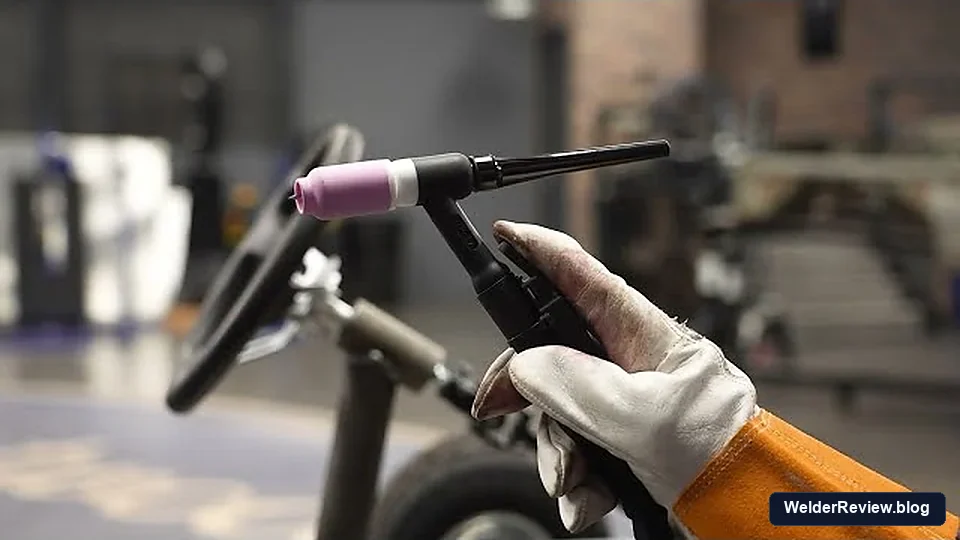
Conversely, Vulcan Welder prioritizes rigid structural integrity, incorporating thick-gauge steel frames and impact-resistant front bezels designed to withstand harsh jobsite environments and accidental drops.
Internal layout configurations also differ significantly across both product lineups. Eastwood arranges circuit boards vertically to maximize airflow, whereas Vulcan utilizes horizontal compartmentalization to isolate sensitive microprocessors from dust.
Eastwood units rely on traditional transformer-rectifier topologies paired with robust steel cabinetry, prioritizing heavy-duty structural integrity over lightweight portability. This design suits stationary fabrication shops needing sustained resistance to mechanical shop impacts and vibrational wear.
Conversely, Vulcan engineering focuses on inverter-based architectures utilizing advanced IGBT modules. This topology drastically reduces overall machine footprint and weight while optimizing electrical conversion efficiency for standard 120V and 240V input power distribution networks.
Internal component layout differs significantly regarding cooling airflow management. Eastwood ducts air directly over heavy-gauge copper windings, whereas Vulcan compartmentalizes sensitive circuit boards away from the main thermal tunnel to prevent premature electronic failure.
- Eastwood features lighter sheet metal enclosures for enhanced mobile transport.
- Vulcan employs reinforced steel chassis for maximum industrial impact resistance.
- Internal airflow paths vary between vertical stacking and horizontal cooling channels.
Chassis Construction and Materials
Material selection directly impacts long-term structural durability in professional fabrication environments. Eastwood utilizes powder-coated carbon steel panels that resist chemical splashes common in automotive restoration shops.
Vulcan integrates heavy composite corner guards directly into the steel frame, effectively absorbing kinetic energy during transport across rough concrete floors or gravel work sites.
- Powder-coated finishes protect Eastwood units against standard automotive fluids.
- Composite corner guards shield Vulcan chassis from severe impact damage.
Real-World Performance and Arc Stability
Arc characteristics determine the overall quality of bead deposition across various joint configurations. Eastwood units excel at maintaining crisp, stable arcs on thin gauge materials without excessive burn-through.
On thicker plate steel, as noted in our vulcan 215 welder review, Vulcan Welder models deliver superior penetration profiles due to aggressive inductance tuning and high open-circuit voltage design parameters.
Fine-tuning arc dynamics during out-of-position welding reveals distinct operational feedback. Eastwood provides immediate audible cues, while Vulcan relies on internal feedback loops to automatically smooth out erratic hand movements.
When striking an arc on thin automotive sheet metal, Vulcan machines employ rapid-response microprocessors that dynamically adjust voltage to minimize spatter and burn-through during initial droplet transfer phases across varied structural joint configurations.
Eastwood units utilize analog inductance tuning knobs, allowing seasoned fabricators to manually dial in arc stiffness and puddle wet-out characteristics for thicker carbon steel plates without relying on preset digital algorithms that limit operator control.
During short-circuit MIG welding operations, maintaining consistent wire feed speed is critical. Both brands integrate closed-loop feedback tachometers, yet Eastwood exhibits slightly higher torque tolerance when feeding stiff aluminum wires through standard conduit liners.
- Eastwood excels at delicate arc control on sheet metal applications.
- Vulcan provides deep root penetration on heavy structural steel sections.
- Inductance tuning varies between manual dials and automated feedback algorithms.
Voltage Regulation and Output Consistency
Consistent voltage delivery prevents porosity and incomplete fusion during extended welding sessions. Eastwood incorporates responsive solid-state inverters that quickly compensate for minor input power fluctuations.
Vulcan utilizes heavy-duty transformer designs and robust smoothing capacitors to maintain rock-solid arc stability even when running on long extension cords in remote locations.
- Solid-state inverters in Eastwood units react swiftly to input surges.
- Heavy capacitors in Vulcan machines stabilize long extension cord runs.
Duty Cycle and Thermal Management Systems
Thermal management dictates how long you can weld continuously before triggering safety shutdowns. Eastwood machines typically feature moderate duty cycles tailored for intermittent fabrication and hobbyist repair tasks.
Heavy-duty Vulcan systems integrate massive aluminum heat sinks and high-velocity cooling fans, allowing extended operation at maximum amperage without thermal overload interruptions.
Monitoring internal temperature sensors prevents premature component degradation under extreme workloads. Both brands incorporate automatic thermal cutoffs, but Vulcan resets noticeably faster thanks to superior airflow.
Thermal management directly dictates how long you can weld continuously at maximum amperage output. Vulcan integrates multi-speed intelligent cooling fans that only ramp up under heavy thermal loads, reducing abrasive dust ingestion in dirty environments.
Eastwood relies on constant-speed heavy-duty fan motors combined with oversized aluminum heat sinks mounted directly to the rectifier bridge. This continuous airflow strategy prevents heat soaking during long structural fillet welding sequences on thick plate.
Overheat protection circuits in both machines trip reliably when internal transformer temperatures exceed safe NEMA operational thresholds, safely cutting output power while keeping the fan running to accelerate internal cool-down cycles before restarting work.
- Eastwood duty cycles suit intermittent garage and hobbyist fabrication.
- Vulcan integrates oversized aluminum heat sinks for sustained high-amperage runs.
- Automated thermal protection safeguards internal rectifiers from burnout.
Cooling Fan Efficiency and Airflow
Airflow design plays a critical role in expelling heat. As highlighted in our eastwood 180 mig review, Eastwood uses variable-speed fans that ramp up dynamically based on current draw.
Vulcan implements continuous high-volume fans that pull ambient air across critical transformer windings, maintaining optimal operating temperatures during relentless structural steel assembly jobs.
- Variable-speed fans in Eastwood welders reduce unnecessary dust accumulation.
- Continuous high-volume fans keep Vulcan internal components consistently cool.
Ease of Setup and Digital Interface Control
User interfaces bridge complex electrical parameters and clean welds. Covered in our eastwood ac dc tig review, Eastwood digital panels display precise voltage and wire feed speed readouts.
Vulcan Welder models frequently utilize synergic control knobs, allowing operators to input material thickness and wire diameter to automatically generate optimal settings.
Navigating menu structures should remain straightforward while wearing heavy welding gloves. Eastwood physical buttons offer tactile confirmation, whereas Vulcan touchscreens require careful navigation in dusty conditions.
Digital interfaces simplify parameter selection for novice welders, but experienced fabricators demand quick manual overrides. Vulcan features bright OLED screens with intuitive synergy menus that automatically calculate wire feed speed based on selected plate thickness.
Eastwood keeps panel layouts deliberately straightforward, favoring tactile dual-knob potentiometers over complex multi-layer menus. This layout ensures operators can adjust voltage and wire speed instantly while wearing heavy welding gloves without interface menu confusion.
Saved memory channels allow users to store preferred parameters for repetitive production runs. While Vulcan offers extensive digital preset storage capacity, Eastwood limits programmable channels, focusing instead on rock-solid analog stability for everyday structural fabrication tasks.
- Eastwood features clear digital readouts for precise parameter adjustments.
- Synergic controls on Vulcan welders automate voltage and wire feed selection.
- Tactile buttons outperform touchscreens in dirty fabrication shop environments.
Parameter Chart Accuracy
Inside the wire drive compartment, quick-reference charts guide operators through common material thicknesses. Eastwood charts provide reliable baselines for mild steel and stainless applications.
Vulcan reference guides account for shielding gas variations, offering detailed recommendations for mixed gases versus pure carbon dioxide shielding setups.
- Inside charts give reliable baselines for standard steel thicknesses.
- Gas variation guidelines help optimize shielding selections for Vulcan users.
Maintenance, Efficiency and Long-Term Longevity
Minimizing downtime requires understanding routine maintenance schedules and component wear patterns. Eastwood prioritizes modular internal designs that simplify DIY board swaps and Eastwood torch replacements.
Vulcan Welder equipment relies on sealed industrial assemblies designed for minimal user intervention, requiring authorized service centers for major electrical component repairs.
Power efficiency is another vital consideration for utility bill management. Both brands utilize modern inverter technology to reduce idle power draw compared to older transformer machines.
Long-term machine longevity depends heavily on preventive maintenance routines such as clearing conductive metal dust from internal circuit boards using dry compressed air during scheduled monthly shop cleanups in professional environments.
Power factor correction technology inside modern inverter systems reduces reactive electrical draw, lowering overall utility costs over years of continuous industrial operation compared to older transformer-based welding machine designs.
Replacing worn internal drive rolls and inlet guides maintains smooth wire delivery, preventing bird-nesting issues that damage internal drive motors and compromise weld integrity during critical structural fabrication assembly projects.
- Eastwood modular components facilitate straightforward user-performed repairs.
- Vulcan industrial assemblies demand professional service for internal faults.
- Inverter technology keeps idle energy consumption remarkably low for both.
Drive Roll Mechanisms and Wire Feeding
Smooth wire delivery prevents bird-nesting and intermittent arc stuttering during long runs. Eastwood utilizes cast aluminum drive assemblies with tool-less tension adjustments for quick changes.
Vulcan integrates heavy-duty dual-drive gearboxes that exert immense pressure, ensuring positive wire feeding even when using rigid aluminum spool gun attachments.
- Cast aluminum drive assemblies provide quick tension adjustments on Eastwood.
- Dual-drive gearboxes on Vulcan ensure positive feed pressure for aluminum.
Consumables Availability and Torch Ergonomics
Ergonomic torch design reduces operator fatigue during extended overhead or vertical welding positions. Eastwood torches feature flexible cable joints and comfortable over-molded rubber grips.
Vulcan Welder equipment typically utilizes standard industrial consumables like Tweco or Bernard styles, making local replacement tips and nozzles exceptionally easy to source.
Balancing torch weight against cable flexibility ensures clean travel angles without straining your wrist muscles over hours of continuous fabrication work.
Torch ergonomics directly influence operator fatigue levels during extended overhead or out-of-position welding tasks. Vulcan handles feature overmolded rubber grips and flexible cable joints that reduce wrist strain significantly during long fabrication shifts.
Eastwood utilizes standard industrial gun connections compatible with widely available contact tips, nozzles, and gas diffusers found in local welding supply stores, ensuring minimal downtime when replacement consumables are urgently needed on site.
Inspecting contact tips for enlargement and spatter buildup prevents erratic arc behavior and maintains proper shielding gas coverage across the molten weld pool during high-amperage structural steel joining operations in the shop.
- Eastwood torches feature flexible cable joints for reduced wrist fatigue.
- Standard industrial consumable compatibility simplifies local replacement sourcing.
- Ergonomic handle grips prevent slipping during intense overhead welding tasks.
Torch Cable Flexibility and Strain Relief
Robust strain relief prevents internal copper wire fracturing near the machine connection point. Eastwood designs secure internal cable supports that withstand frequent coiling and uncoiling.
Vulcan uses heavy rubber boots and spring-loaded strain reliefs to protect the power cable from sharp bends and abrasive shop floor hazards.
- Secure internal supports prevent copper fracturing on Eastwood cables.
- Heavy rubber boots protect Vulcan connections from sharp shop hazards.
Which Option Fits Your Specific Shop Setup
Selecting the correct machine depends entirely on your primary welding tasks and available shop power infrastructure. Eastwood represents an ideal solution for hobbyists, automotive restorers, and custom fabricators needing fine control.
Vulcan Welder units serve professional contractors, mobile repair trucks, and heavy-duty farm shops requiring rugged construction and high duty cycle capabilities under demanding conditions.
Evaluate your typical material thickness and budget constraints before finalizing your purchase decision to ensure maximum long-term satisfaction.
Choosing between these brands requires careful evaluation of your primary input power availability and typical material thicknesses processed daily within your professional fabrication workflow environment to maximize operational efficiency.
If your shop demands highly portable, digitally optimized inverter technology for mobile repair trucks, Vulcan provides exceptional versatility, lightweight construction, and rapid setup capabilities for busy field service technicians operating remotely.
Conversely, stationary fabrication shops focused on heavy structural steel assembly benefit greatly from the rugged analog reliability and straightforward repairability engineered directly into Eastwood welding equipment architectures over decades of production.
- Choose Eastwood for automotive restoration and precise hobbyist fabrication.
- Select Vulcan for heavy-duty farm repairs and professional contractor work.
- Match machine specifications carefully to your daily material thickness needs.
Power Supply and Workshop Infrastructure
Verifying your breaker capacity prevents nuisance tripping during high-amperage welding operations. Eastwood models operate efficiently on standard dual-voltage input circuits found in residential garages.
Vulcan heavy-duty variants demand dedicated high-amperage 240-volt circuits to unlock their full structural welding potential and maximum output capabilities.
- Standard residential dual-voltage circuits power Eastwood units easily.
- Dedicated 240-volt lines unlock maximum output potential for Vulcan.
Frequently Asked Questions
Can both Eastwood and Vulcan welders run on standard household electrical circuits?
Yes, their dual-voltage capabilities allow connection to standard 120-volt outlets for light tasks. However, achieving maximum output amperage always requires a dedicated 240-volt wall receptacle.
Which brand offers better support for aluminum spool gun attachments?
Both manufacturers support dedicated spool guns for aluminum wire feeding applications. Vulcan models typically feature more robust internal drive gearboxes for consistent wire column strength.
Are consumable parts interchangeable between Eastwood and Vulcan welding guns?
Most standard tips, nozzles, and diffusers follow industry-standard guidelines depending on the gun model. Vulcan often utilizes widely available commercial styles that simplify local retail sourcing.
Which welder brand is better suited for automotive restoration and sheet metal work?
Eastwood excels in automotive restoration due to its precise low-amperage arc stability. Eastwood machines minimize burn-through risks on delicate vintage body panels and thin sheet metal.
How do duty cycles compare between comparable Eastwood and Vulcan machines?
Vulcan units generally offer slightly higher duty cycles at maximum amperage ratings. This performance edge stems from their oversized internal heat sinks and continuous high-volume cooling fans.