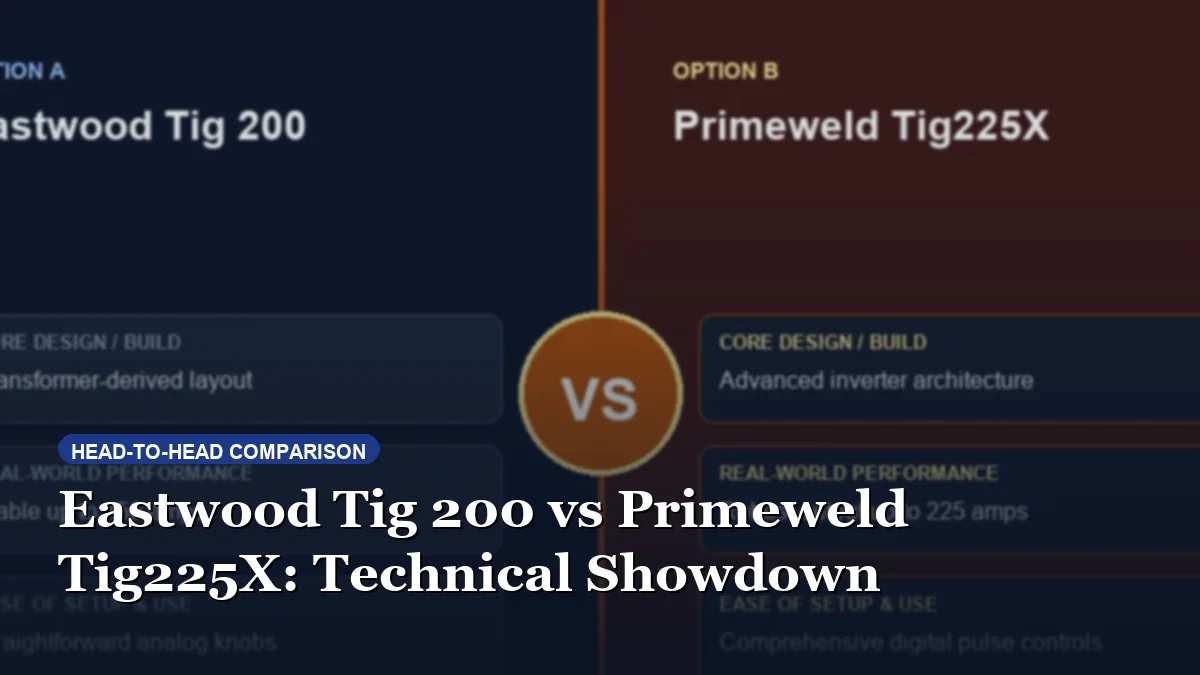
Eastwood Tig 200 vs Primeweld Tig225X: Technical Showdown
Choosing between these popular mid-tier welding systems requires examining internal component quality and real duty cycles. Evaluating power delivery ensures you select the optimal machine for your specific fabrication needs.

Pick the Eastwood unit if you prioritize a compact footprint for light steel repairs. Choose the Primeweld alternative for heavy aluminum fabrication and superior pulse control.
Compare all top models in our Best Welder: Top Home Shop & Jobsite Picks Tested.
Side-by-Side Breakdown
| Criteria | Eastwood Tig 200 | Primeweld Tig225X | Edge |
|---|---|---|---|
| Core Design / Build | Transformer-derived layout | Advanced inverter architecture | Primeweld Tig225X |
| Real-World Performance | Stable up to 150 amps | Robust output up to 225 amps | Primeweld Tig225X |
| Ease of Setup & Use | Straightforward analog knobs | Comprehensive digital pulse controls | Eastwood Tig 200 |
| Durability & Reliability | Standard industrial chassis | Heavy-duty components and CK torch | Primeweld Tig225X |
| Efficiency / Operating Footprint | Moderate electrical draw | High inverter efficiency profile | Primeweld Tig225X |
| Maintenance Requirements | Standard dust cleaning cycles | Routine terminal checks and cooling upkeep | Tie |
| Best Ideal Use Case | Garage hobbyist steel welding | Professional aluminum and alloy work | Primeweld Tig225X |
Core Engineering Architecture and Power Delivery
Analyzing internal layouts reveals distinct manufacturing philosophies between these two popular welding systems. Inverter technology drives modern efficiency by reducing overall transformer weight while maximizing electrical output stability during demanding fabrication sessions.
Electrical engineers design these units to handle standard single-phase input power feeds found in typical home shops. Voltage compensation circuits protect sensitive internal boards from minor grid fluctuations during heavy industrial operations.
As detailed in our Eastwood TIG 200 review, the machine relies on a traditional transformer-inverter design drawing 20 amps on a standard 220V single-phase circuit.
Conversely, the PrimeWeld machine implements advanced IGBT inverter technology, drastically reducing overall cabinet weight. This architecture improves electrical efficiency while maintaining a robust 225-amp ceiling for structural aluminum fabrication tasks.
- Inverter-based topology reduces total machine weight significantly
- Single-phase compatibility matches standard residential workshop outlets
- Overload protection safeguards sensitive solid-state circuit boards
Inverter Topology vs Traditional Layouts
Modern welding demands lightweight portability without sacrificing raw amperage delivery across thick metal plates. Advanced switching transistors allow rapid current modulation that stabilizes the electric arc during delicate root passes.
Transformer designs historically offered rugged reliability but suffered from massive physical weight penalties. Efficient cooling paths now replace heavy copper windings with intelligent fan control modules.
- Rapid transistor switching optimizes current modulation
- Compact cooling fans replace heavy legacy copper coils
Arc Stability and AC/DC Performance Metrics
As evaluated in our Primeweld TIG225X review, achieving a clean arc on aluminum requires precise frequency adjustment and advanced square wave generation to break through stubborn oxide layers.
DC performance on alloy steels relies on smooth arc starts and consistent voltage regulation. High-frequency arc ignition eliminates tungsten contamination risks common with older scratch-start operational methods in professional environments.
During AC execution, frequency controls dictate cleaning action on thick aluminum plates. The PrimeWeld allows adjustable frequency up to 250Hz, narrowing the arc cone significantly for precise tungsten placement.
DC performance remains steady across both units, yet the PrimeWeld delivers superior low-amp arc initiation down to 10 amps. This capability prevents burn-through when joining thin-gauge stainless steel tubing.
- Square wave output effectively strips stubborn aluminum oxides
- High-frequency ignition prevents tungsten fouling during starts
- Consistent voltage regulation ensures smooth carbon steel beads
Aluminum Cleaning and Penetration Dynamics
Welding aluminum demands precise control over the positive and negative current cycles. AC balance adjustments let fabricators fine-tune cleaning action versus deeper base metal weld penetration.
Inadequate frequency control often results in wandering arcs and excessive tungsten balling. Optimized wave parameters keep the arc cone tightly focused on the joint interface.
- Precise AC balance controls oxide removal depth
- Focused arc cones prevent unwanted tungsten balling
Duty Cycle Limits and Thermal Management
Featured in our best 200 amp TIG welder roundup, thermal endurance dictates how long fabricators can weld before requiring cool-down pauses. Internal heat sinks dissipate thermal energy safely.
Exceeding rated duty cycles triggers internal safety switches to prevent catastrophic component failure. Automated thermal protection extends equipment lifespan by forcing temporary idles when operating temperatures climb.
Heavy thermal loads demand efficient internal cooling fans and oversized heat sinks. The PrimeWeld features a 60 percent duty cycle at 225 amps, outperforming smaller baseline configurations during production runs.
Operators must monitor internal temperatures when pushing these budget machines near their limits. Exceeding recommended duty cycles triggers thermal overload protection, safely shutting down the welding output until ambient cooling occurs.
- Thermal sensors monitor critical semiconductor operating temperatures
- Integrated heat sinks manage high-amperage heat buildup
- Automatic shutdowns prevent permanent transformer or inverter damage
Real-World Thermal Load Testing
Pushing machines to their maximum amperage limits exposes differences in cooling efficiency. High-velocity ventilation fans pull ambient air across delicate internal electronics to maintain safe operating thresholds.
Shop environments with high ambient temperatures demand superior cooling capacity from welding equipment. Proper clearance around vents prevents premature thermal overload during heavy summer fabrication jobs.
- High-velocity fans enhance continuous internal airflow
- Strategic vent clearance prevents premature thermal shutdowns
Torch Ergonomics and Foot Pedal Integration
Physical comfort during long welding sessions prevents operator fatigue and maintains steady travel speeds. Flexible torch cable assemblies reduce wrist strain when navigating complex joints inside tight automotive roll cages.
Foot pedal responsiveness dictates precise puddle control during intricate artistic or structural welds. Smooth potentiometer action allows seamless amperage tapering without abrupt current drops altering the molten pool.
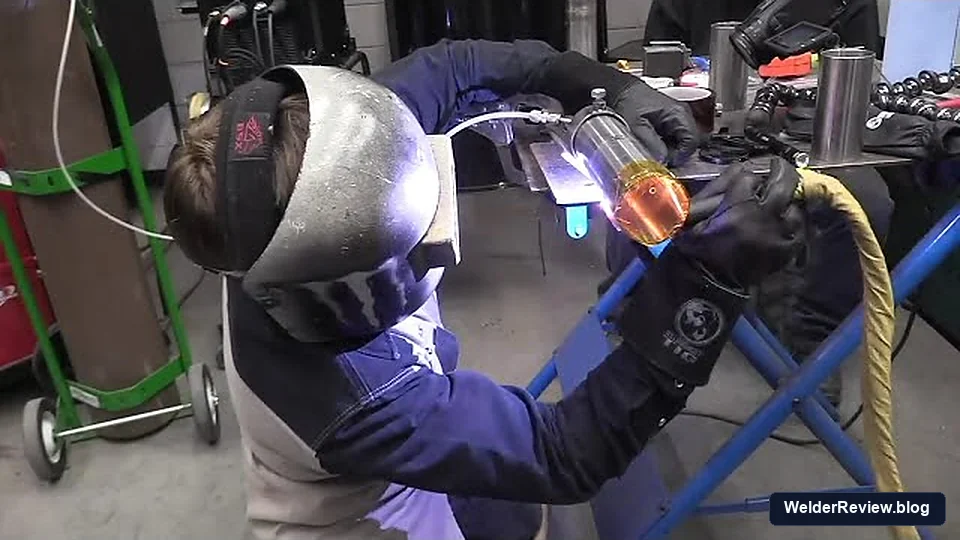
Torch comfort directly impacts bead consistency during lengthy welding sessions. The PrimeWeld ships standard with a flexible flex-head 17-series torch, allowing tight clearance maneuvers without stressing your wrist joints.
Foot pedal integration varies significantly between these two popular machines. A responsive mechanical resistance pedal provides smooth amperage modulation, preventing abrupt current drops that cause craters in the weld pool.
- Flexible torch hoses minimize persistent wrist and arm strain
- Responsive foot pedals enable precise puddle heat control
- Durable connectors withstand frequent workshop floor movement
Consumable Compatibility and Torch Quality
Using standard industry-compatible torch parts simplifies replacement and lowers long-term operational expenses. Standard collet bodies ensure easy access to widespread gas lenses and alumina nozzles.
Upgrading stock torches to flexible aftermarket models enhances overall maneuverability in cramped spaces. Secure gas fittings prevent costly shielding gas leaks during critical stainless steel passes.
- Universal consumable compatibility reduces spare parts costs
- Tight gas fittings eliminate shielding gas leaks
Setup Rigor, Controls, and User Interface
Clear interface layouts help operators dial in correct parameters without guessing settings. Intuitive analog dials provide tactile feedback for quick adjustments while wearing heavy leather welding gloves.
Digital displays offer exact numerical readouts for pulse frequency and post-flow gas timers. Precise control panels eliminate guesswork when repeating specific welding procedures on certified structural projects.
Interface layout dictates how quickly fabricators can adjust parameters mid-job. Digital display screens on modern inverters offer precise amperage readouts, eliminating guesswork associated with traditional analog potentiometer dials.
Pre-flow and post-flow gas timers require careful calibration to protect tungsten electrodes from oxidation. Setting an adequate post-flow duration ensures proper shielding gas coverage while the molten metal solidifies.
- Glove-friendly analog dials allow rapid parameter changes
- Digital parameter displays ensure repeatable weld settings
- Clear graphic legends guide novice operators through setup
Pulse Parameter Tuning for Thin Metals
Controlling heat input on thin sheet metal prevents warping and burn-through defects. Adjustable pulse background current lets the puddle cool momentarily between peak current surges safely.
Mastering pulse frequency controls ripple spacing and aesthetic bead appearance on stainless steel. Dedicated pulse controls provide professional results without requiring advanced metallurgical training.
- Pulse background current prevents sheet metal distortion
- Adjustable frequency creates uniform cosmetic weld ripples
Maintenance, Consumables, and Long-Term Reliability
Routine upkeep keeps welding equipment operating at peak electrical efficiency for years. Compressed air purging removes conductive metal dust from internal circuit boards during scheduled monthly maintenance.
Inspect power terminal connections regularly to prevent resistance heating and electrical arcing faults. Preventative maintenance routines drastically reduce unexpected downtime during urgent commercial fabrication schedules.
Routine maintenance extends equipment lifespan in dusty fabrication environments. Regularly blowing out internal dust prevents electrical short circuits, protecting sensitive circuit boards from premature component failure over years of service.
Consumable compatibility is another crucial factor for workshop efficiency. Utilizing standard industry-proven 17-series torch parts ensures you can quickly source collets, ceramic cups, and gas lenses without specialized supplier delays.
- Monthly dust purging prevents internal electrical short circuits
- Terminal inspections eliminate high-resistance connection heating
- Preventative upkeep maximizes operational lifespan across units
Troubleshooting Common Electrical Faults
Recognizing early warning signs of component wear prevents sudden mid-project machine failures. Stable high-frequency points require periodic gap cleaning to ensure reliable arc initiation every time.
Checking ground clamp integrity ensures proper current return paths during high-amperage sessions. Secure grounding practices protect internal transformers from damaging voltage spikes and feedback loops.
- Periodic spark gap cleaning restores reliable arc starts
- Secure ground clamps prevent destructive electrical feedback
Choosing the Right Machine for Your Shop
Selecting the ideal welder depends entirely on your primary materials and project scope. Hobbyist fabricators working primarily with thin carbon steel will appreciate straightforward controls and compact workshop footprints.
Professional shops tackling heavy aluminum assemblies require higher amperage ceilings and robust duty cycles. Investing in reliable equipment ensures consistent weld quality that meets strict industry standards and structural codes.
Selecting the ideal welding system depends entirely on your specific project demands. Shops focusing heavily on structural aluminum fabrication will benefit immensely from the higher amperage ceiling and advanced AC controls.
Hobbyists working on lighter automotive repairs can easily manage with a lower power output. Evaluating your typical material thickness ensures you invest in a machine matching your exact fabrication requirements.
- Assess primary material thicknesses before making final selections
- Match machine duty cycles to your typical project duration
- Prioritize robust components for demanding commercial shop environments
Final Purchasing Considerations for Fabricators
Balancing upfront equipment costs with long-term utility ensures maximum value for your shop. Quality torch packages included in the box save money on immediate aftermarket accessory upgrades.
As noted in our Lincoln Square Wave review, evaluating warranty support and manufacturer reputation provides peace of mind. Reliable customer service helps resolve unexpected hardware faults quickly.
- Included quality torches reduce initial accessory upgrade expenses
- Strong manufacturer warranties protect your capital equipment investment
Frequently Asked Questions
Can both welders operate on standard 120V household power outlets safely?
Neither machine delivers full rated output without a dedicated 240V input supply. Using step-down adapters restricts maximum amperage limits significantly for light-duty projects.
Which unit is better suited for welding thin automotive sheet metal?
Both systems handle thin materials well when properly dialed in with low amperage settings. Precise pulse controls on the Primeweld give it a slight edge for minimizing distortion.
Are the included foot pedals durable enough for professional daily shop use?
Stock pedals provide reliable service for hobbyists and light commercial fabrication tasks. Heavy industrial users often upgrade to robust aftermarket pedals for enhanced mechanical feedback.
Do these welders require external water coolers for high-amperage aluminum work?
Standard air-cooled torches handle moderate duty cycles without needing external liquid chillers. Running maximum amperage continuously requires switching to a water-cooled torch setup.
How important is high-frequency arc start for TIG welding aluminum successfully?
High-frequency start is essential for initiating arcs without touching tungsten to aluminum. Non-contact ignition prevents tungsten inclusion defects and keeps your weld contamination-free.