Eastwood Mig 180 vs Hobart Handler 190: Technical Duel
Comparing two powerhouse 230V MIG welders designed for serious fabrication. Discover which machine dominates your garage workshop.

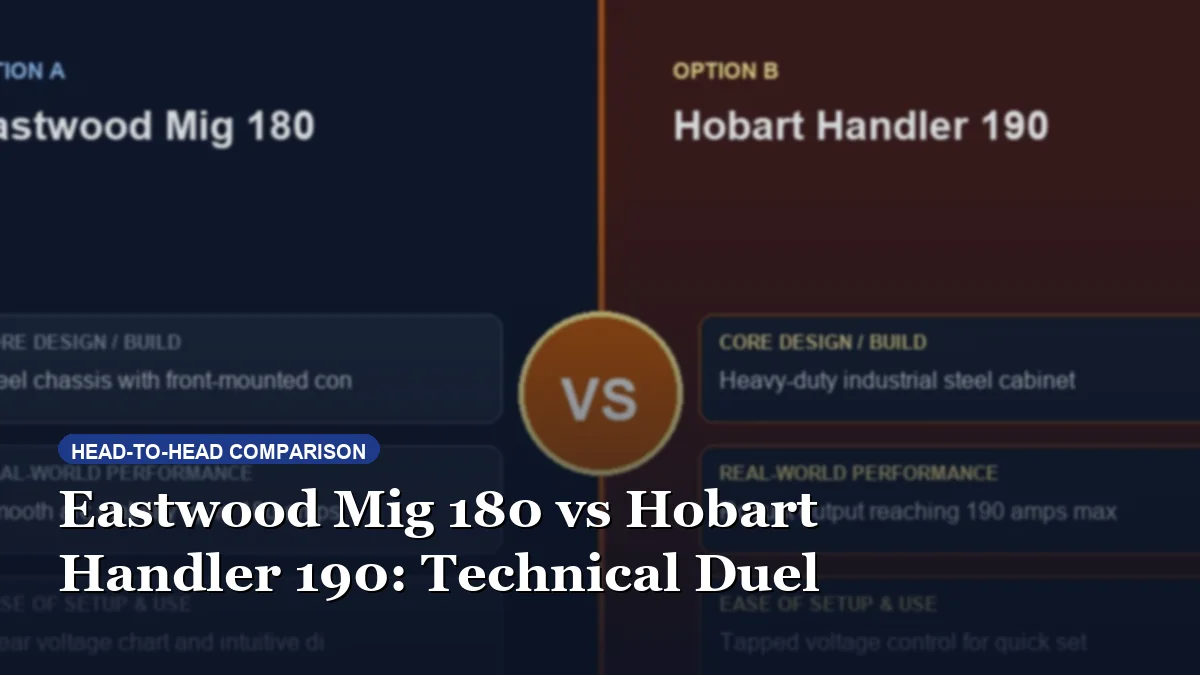
Choose the Eastwood Mig 180 for aluminum spool gun readiness and precise voltage tuning. Select the Hobart Handler 190 for legendary industrial durability and duty cycle reliability.
Compare all top models in our Best Welder: Top Home Shop & Jobsite Picks Tested.
Side-by-Side Breakdown
| Criteria | Eastwood Mig 180 | Hobart Handler 190 | Edge |
|---|---|---|---|
| Core Design / Build | Steel chassis with front-mounted connections | Heavy-duty industrial steel cabinet housing | Hobart Handler 190 |
| Real-World Performance | Smooth arc stability up to 180 amps | Robust output reaching 190 amps max | Hobart Handler 190 |
| Ease of Setup & Use | Clear voltage chart and intuitive dials | Tapped voltage control for quick settings | Eastwood Mig 180 |
| Durability & Reliability | Solid consumer-grade internal components | Industrial-grade transformer and drive assembly | Hobart Handler 190 |
| Efficiency / Operating Footprint | Compact dual-voltage capable footprint | Standard 230V dedicated power requirement | Eastwood Mig 180 |
| Maintenance Requirements | Standard drive roll cleaning and gun service | Minimal upkeep with sealed industrial parts | Hobart Handler 190 |
| Best Ideal Use Case | Versatile hobbyist and automotive sheet metal | Heavy farm repairs and thick steel fabrication | Hobart Handler 190 |
Transformer Architecture and Power Delivery
Evaluating the core power delivery systems reveals distinct design philosophies. Both units operate primarily on dual voltage or dedicated 230V circuits, but their internal electrical topologies handle thermal loads differently during extended fabrication sessions.
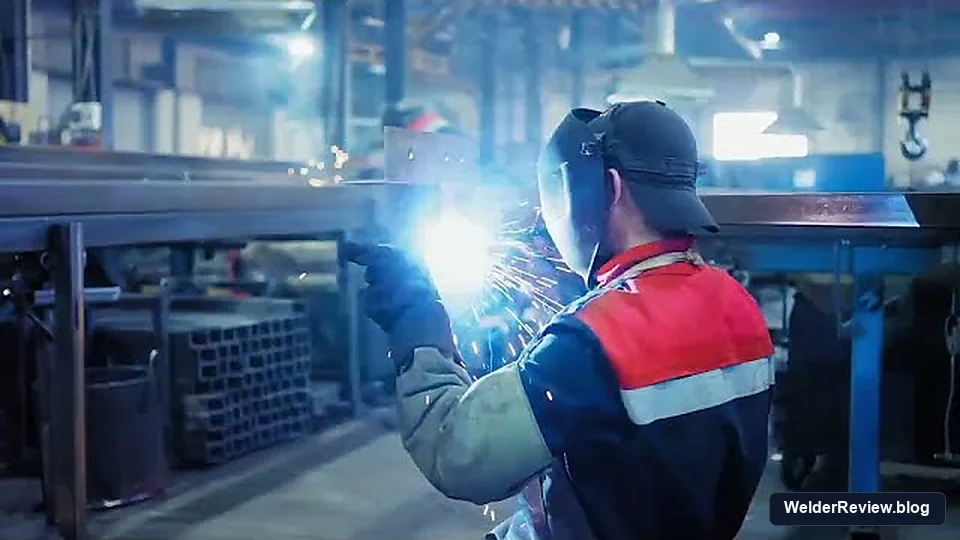
Engineers built the Eastwood Mig 180 focusing on versatile multi-process capabilities. Meanwhile, our comprehensive hobart handler 190 review examines its traditional tapped transformer design for raw arc performance.
Understanding these foundational electrical differences helps fabricators match their typical metal thickness to the machine's actual duty cycle limitations without risking premature thermal overload during heavy structural fabrication projects.
The Hobart Handler 190 utilizes a traditional stepped transformer design, providing rugged reliable voltage output under heavy industrial utility loads. This robust copper winding architecture ensures exceptional long-term durability during continuous high-amperage fabrication cycles.
Conversely, the Eastwood MIG 180 incorporates an inverter-based power source, significantly reducing total machine weight while optimizing electrical efficiency across input ranges. Inverters dynamically adjust arc characteristics instantly, compensating for minor fluctuations in incoming line voltage.
When evaluating duty cycles at maximum output, stepped transformers generally exhibit predictable thermal thresholds governed by heavy steel laminations. In contrast, solid-state inverter circuits rely heavily on forced air cooling to manage internal semiconductor temperatures efficiently.
- Eastwood features continuous voltage control for fine-tuning arcs.
- Hobart utilizes a robust tapped transformer for extreme reliability.
- Both units demand proper 230V breaker sizing for maximum output.
Input Voltage Versatility
Power supply flexibility remains a crucial factor for mobile fabricators. The Eastwood model offers strong multi-voltage adaptability, whereas Hobart keeps its focus strictly on high-powered workshop electrical setups.
Selecting the correct input power configuration ensures your circuit breaker will not trip when pushing these welders toward their maximum amperage thresholds on thick steel weldments.
- Eastwood accommodates standard household circuits via adapters.
- Hobart requires a dedicated high-amperage 230V wall receptacle.
Duty Cycle Performance
Thermal ratings dictate how long you can weld continuously. The Hobart machine generally maintains superior thermal endurance during long production runs in professional repair shops.
Operators welding thick plate steel must monitor duty cycle limits closely to prevent internal transformer overheating and ensure long-term machine longevity across demanding industrial tasks.
- Hobart excels in sustained high-amperage output intervals.
- Eastwood provides adequate duty cycles for standard garage projects.
Wire Drive Systems and Feeding Mechanics
A reliable wire feeding mechanism prevents birdnesting and ensures consistent weld bead geometry. Both brands incorporate robust internal assemblies, yet their tension adjustment components differ significantly in daily operation.
The Eastwood Mig 180 utilizes a smooth aluminum casting drive mechanism. As noted in our hobart 190 mig welder review, competing models rely on industrial gear-driven systems to prevent wire slip.
Proper maintenance of these drive rolls remains essential regardless of your chosen brand to guarantee steady shielding gas coverage and optimal wire feed speed during critical structural welding tasks.
Reliable wire delivery remains vital for preventing birdnesting and erratic arc conditions during long welding passes. The Hobart unit features a robust cast aluminum drive mechanism engineered to maintain consistent tension on solid steel electrodes.
Eastwood equips its MIG platform with a comparable dual-track drive roll system, utilizing precision-machined grooves to handle both flux-cored and solid wires smoothly. Proper tension adjustment prevents wire deformation, ensuring uninterrupted electrical contact inside the contact tip.
Maintaining proper drive roll pressure is essential for minimizing friction along the welding torch liner. Operators must regularly inspect the inlet guide tubes and drive gear teeth to eliminate premature mechanical wear during high-volume shop tasks.
- Cast aluminum housings resist cracking under heavy tension.
- Quick-release tension arms simplify wire spool changes.
- Knurled drive rolls support flux-cored wire feeding.
Spool Gun Compatibility
Welding aluminum requires specialized feeding setups to prevent birdnesting. Eastwood integrates direct spool gun plug-ins easily, giving hobbyists an affordable pathway into clean aluminum fabrication work.
Hobart also supports specialized aluminum spool guns, though their proprietary connections often require purchasing brand-specific accessories that can increase your total upfront tooling investment significantly.
- Eastwood features straightforward direct-connect spool gun ports.
- Hobart requires specific adapter kits for auxiliary guns.
Drive Roll Maintenance
Keeping drive rolls clean prevents feeding friction and erratic arc behavior. Regular inspection of the grooved tension wheels ensures smooth wire delivery from the internal cabinet to the gun tip.
Operators should inspect tension settings periodically to accommodate different wire diameters without crushing softer aluminum or specialized stainless steel welding wires during extended fabrication sessions.
- Remove metal shavings from drive grooves weekly.
- Adjust tension thumb screws to prevent wire deformation.
Arc Stability and Bead Appearance
Achieving clean, spatter-free welds depends heavily on arc stability. The Eastwood Mig 180 delivers a remarkably smooth arc on thin sheet metal due to its fine voltage adjustments.
Conversely, heavier units excel when fusing thick steel plates together. For lighter applications, exploring our hobart handler 140 mig welder review reveals alternative options for achieving deep penetration profiles.
Both machines respond well to proper gun angle and travel speed techniques, allowing skilled fabricators to lay down uniform stacking dimes with minimal post-weld cleanup requirements.
Achieving optimal puddle wetting requires precise voltage tuning and stable inductance curves throughout the transfer cycle. The Hobart machine delivers a soft, buttery arc that minimizes spatter when running mixed shielding gas on structural steel.
Inverter circuitry allows the Eastwood alternative to offer exceptional arc initiation characteristics, reducing initial stubbing on cold base metals. Welders can easily dial in fine parameter adjustments to achieve uniform toe fusion on thin sheet metal.
Bead profile consistency directly reflects the underlying power source capability to maintain steady current delivery under varying arc lengths. Both units produce structurally sound welds when operators maintain correct gun angle and travel speed continuously.
- Eastwood minimizes spatter on low-voltage automotive settings.
- Hobart provides exceptional root penetration on heavy steel.
- Shielding gas selection dictates overall bead wetting action.
Sheet Metal Performance
Thin auto body panels demand delicate heat input to prevent burn-through. The Eastwood Mig 180 excels in this application, offering precise control over lower amperage ranges.
Hobart can also handle thin sheet metal effectively, though its tapped voltage steps require careful wire speed balancing to avoid excessive penetration on fragile surfaces.
- Lower amperage thresholds protect delicate automotive steel.
- Fine-tuning prevents unsightly distortion on body panels.
Thick Plate Penetration
Structural repairs require deep weld penetration for maximum joint strength. The Hobart Handler 190 delivers powerful energy transfer that fuses heavy steel sections with confidence.
Operators tackling thick farm implements or structural brackets will appreciate the raw thermal output and dependable fusion characteristics provided by the Hobart transformer architecture.
- High maximum output handles multi-pass structural joints.
- Deep fusion zones ensure high tensile joint strength.
Chassis Construction and Portability
Workshop mobility matters when you need to maneuver around bulky projects. The Eastwood Mig 180 features a relatively lightweight steel cabinet that stores easily on standard welding carts.
Hobart builds the Handler 190 with heavy-gauge steel panels designed to withstand harsh industrial environments, resulting in a slightly heavier overall physical footprint inside the shop.
Lifting handles and internal component layouts are optimized for secure transport, ensuring vital internal electronics remain protected against accidental impacts during busy fabrication workdays.
Heavy-gauge stamped steel panels form the rugged outer shell of the Hobart cabinet, protecting internal electrical components from jobsite impacts. This substantial build quality increases overall mass, creating a very stable shop platform that resists tipping.
Eastwood utilizes a lighter-weight polymer and steel composite chassis layout to maximize mobility for mobile service technicians. Reducing total equipment poundage makes loading the welder into service trucks significantly easier during daily field operations.
Carrying handles and internal running gear mounting points must withstand rigorous transport conditions over rough terrain. Ensuring secure gas cylinder storage on the rear tray is critical for maintaining safe mobile transit compliance.
- Eastwood offers a compact layout for small garages.
- Hobart features rugged steel panels for heavy job sites.
- Secure handle placement aids safe workshop transport.
Cabinet Durability
Outer shell construction protects sensitive internal rectifiers and transformers from dust and moisture. Hobart utilizes thick powder-coated steel panels that resist scratching and corrosion.
Eastwood employs a durable painted finish as well, though care should be taken to keep the unit clean and dry during outdoor or damp fabrication projects.
- Powder coating prevents rust in humid environments.
- Sturdy doors protect internal wire spool compartments.
Cart Integration
Mounting these welders onto rolling carts improves shop ergonomics significantly. Both machines fit comfortably on standard multi-tier utility carts equipped with dedicated gas cylinder racks.
Securing the gas bottle properly prevents tipping hazards while moving the heavy equipment across uneven concrete floors within your primary fabrication workspace.
- Universal cart mounting holes simplify installation.
- Chain restraints keep shielding gas cylinders secure.
Controls and User Interface Ergonomics
An intuitive control panel reduces setup errors and boosts productivity. The Eastwood Mig 180 utilizes clear parameter charts alongside infinite dials for precise voltage and wire feed adjustments.
Hobart relies on a proven multi-step selector switch system that lets operators quickly dial in tested factory settings without guessing correct parameters for common steel thicknesses.
Both interfaces serve their target audiences effectively, balancing ease of use for beginners with the exact control demanded by experienced professional welders.
Operator interface design dictates how quickly fabricators can transition between different material thicknesses and wire diameters. Hobart employs an intuitive multi-tap voltage selector paired with a smooth infinite wire feed speed dial.
The Eastwood control panel features clearly marked voltage tap guidelines, helping novice users select appropriate starting parameters quickly. Ergonomic knobs provide tactile feedback even when operators wear heavy leather welding gloves in cold environments.
Clear reference charts mounted inside the wire compartment doors eliminate guesswork when switching between shielding gases and electrode types. Well-designed legends enhance workflow efficiency and reduce setup errors during tight project deadlines.
- Eastwood provides infinite voltage tuning dials.
- Hobart uses straightforward tapped selector switches.
- Clear charts guide initial wire and gas settings.
Parameter Tuning
Fine parameter adjustment allows operators to dial in the exact arc characteristics needed for unique joint configurations and custom metal thicknesses encountered during repairs.
Tapped switches offer rapid, repeatable settings that eliminate guesswork, making them ideal for busy fabrication shops where speed and consistency matter most.
- Infinite dials allow micro-adjustments to arc voltage.
- Tapped switches ensure repeatable factory-tested outputs.
Torch Ergonomics
The included MIG gun heavily influences overall welding comfort during long sessions. Both units come equipped with ergonomic torches featuring flexible cable liners.
Maintaining proper consumable contact tips inside these torches ensures reliable electrical pickup and prevents frustrating wire burnback issues during extended fabrication runs.
- Ergonomic handle grips reduce hand fatigue.
- Standard consumables simplify replacement parts sourcing.
Maintenance, Consumables, and Long-Term Care
Routine upkeep preserves equipment value and ensures consistent weld quality over years of operation. Both machines require basic cleaning of drive rolls, liner blowouts, and contact tip replacements.
Sourcing replacement parts for Eastwood and Hobart remains straightforward through standard welding supply distributors, minimizing costly equipment downtime during critical fabrication deadlines.
Adhering to manufacturer recommended service intervals protects transformers and circuit boards from premature thermal degradation caused by excessive dust accumulation inside the chassis.
Preventive maintenance routines extend equipment lifespan and ensure consistent electrical conductivity throughout the entire welding circuit. Operators should regularly blow out accumulated metal dust from internal transformer windings using dry compressed air.
Consumable lifecycle management involves inspecting contact tips, nozzles, and gas diffusers for excessive spatter buildup and thermal erosion. Keeping standard replacement parts on hand prevents costly downtime during critical fabrication schedules.
Drive roll grooves require periodic cleaning with a wire brush to remove brass shavings shed by copper-coated steel wires. Proper liner maintenance prevents erratic feeding issues and guarantees steady wire delivery performance.
- Blow out internal dust with compressed air regularly.
- Inspect gun liners for wear and metal shavings.
- Replace worn contact tips to maintain arc stability.
Consumable Availability
Standard MIG consumables like nozzles, tips, and diffusers wear out during normal operation. Both machines accept common industry-standard components that are widely available locally.
Keeping spare consumables on hand prevents project delays when spatter buildup eventually causes erratic wire feeding or poor shielding gas coverage during critical welds.
- Standard contact tips fit popular torch designs.
- Gas nozzles resist high welding temperatures effectively.
Troubleshooting Common Issues
Quickly diagnosing feeding hiccups or erratic arcs keeps your workshop running smoothly. Checking ground clamp connections and drive tension resolves most everyday operational challenges.
Consulting the owner manual diagnostic charts helps isolate electrical faults safely before contacting customer support for replacement component inquiries.
- Check ground clamp connectivity for voltage drops.
- Verify shielding gas flow rates using a flowmeter.
Ideal Buyer Profile and Final Value Assessment
Choosing between these capable welders ultimately depends on your specific project demands and workshop environment. Hobbyists and automotive restorers will appreciate the versatile control offered by Eastwood.
Professional fabricators and agricultural repair workers needing industrial-grade durability will find the rugged construction of the Hobart Handler 190 hard to surpass in daily service.
Evaluating your typical material thickness, electrical availability, and frequency of use ensures you invest in the ideal machine for long-term fabrication success.
Selecting the right welding machine depends heavily on specific application requirements, power availability, and workspace constraints. Professional fabricators prioritizing traditional transformer durability often gravitate toward the robust industrial heritage of Hobart equipment.
Hobbyists and independent restoration specialists frequently prefer the lightweight inverter design and advanced arc control offered by Eastwood platforms. Evaluating duty cycle needs against available 240V circuits ensures optimal long-term equipment satisfaction.
Understanding your primary fabrication materials helps determine whether a stepped transformer or an inverter power source matches your workflow. Careful analysis of electrical infrastructure guarantees safe, compliant, and reliable welding operations.
- Eastwood suits automotive restoration and hobbyist fabrication.
- Hobart targets heavy farm repairs and structural building.
- Match power requirements to your available workshop circuits.
When to Choose Eastwood
Select the Eastwood Mig 180 if your work involves frequent aluminum projects requiring a spool gun and fine infinite voltage adjustments for thin sheet metal tasks.
Its approachable feature set and strong multi-voltage adaptability make it a stellar addition to home garages and custom automotive fabrication shops.
- Ideal for custom automotive sheet metal fabrication.
- Great entry point for aluminum MIG welding.
When to Choose Hobart
Choose this heavy-duty machine based on insights from our hobart handler 190 review when your workload demands structural steel welding, exceptional durability, and reliable industrial duty cycles.
Its legendary transformer reliability provides peace of mind for professional mechanics and agricultural repair technicians tackling demanding high-amperage projects.
- Built for heavy farm and structural steel repairs.
- Provides legendary industrial-grade transformer durability.
Frequently Asked Questions
Can the Eastwood Mig 180 weld aluminum effectively right out of the box?
The Eastwood Mig 180 includes direct spool gun compatibility, but you must purchase a separate spool gun attachment to weld aluminum properly. This modular approach provides an affordable path into non-ferrous fabrication work.
Does the Hobart Handler 190 require a dedicated 230V electrical circuit?
Yes, the Hobart Handler 190 demands a dedicated 230V power supply to deliver its maximum output safely without tripping household breakers. Proper breaker sizing ensures stable arc performance during heavy fabrication sessions.
How do the voltage control systems differ between these two welders?
The Eastwood unit utilizes infinite voltage control dials for precise arc tuning, while the Hobart features stepped tapped switches. Both designs serve distinct user preferences for fine control versus rapid setup.
Which welder is better suited for beginner hobbyists working in a home garage?
The Eastwood Mig 180 is often favored by hobbyists due to its infinite parameter adjustments and easy sheet metal capability. However, beginners tackling heavy steel will also appreciate Hobart dependability.
Are replacement parts and consumables easy to source for both machines?
Both welders accept standard industry-compliant consumables like contact tips and nozzles that are widely available at local welding supply stores. Routine maintenance parts require minimal specialized ordering effort.