E6011 vs E6013: Choosing the Right Arc Electrode
Understanding the fundamental differences between these cellulosic and rutile electrodes ensures optimal weld integrity. Choosing correctly prevents common structural fabrication defects on carbon steel.

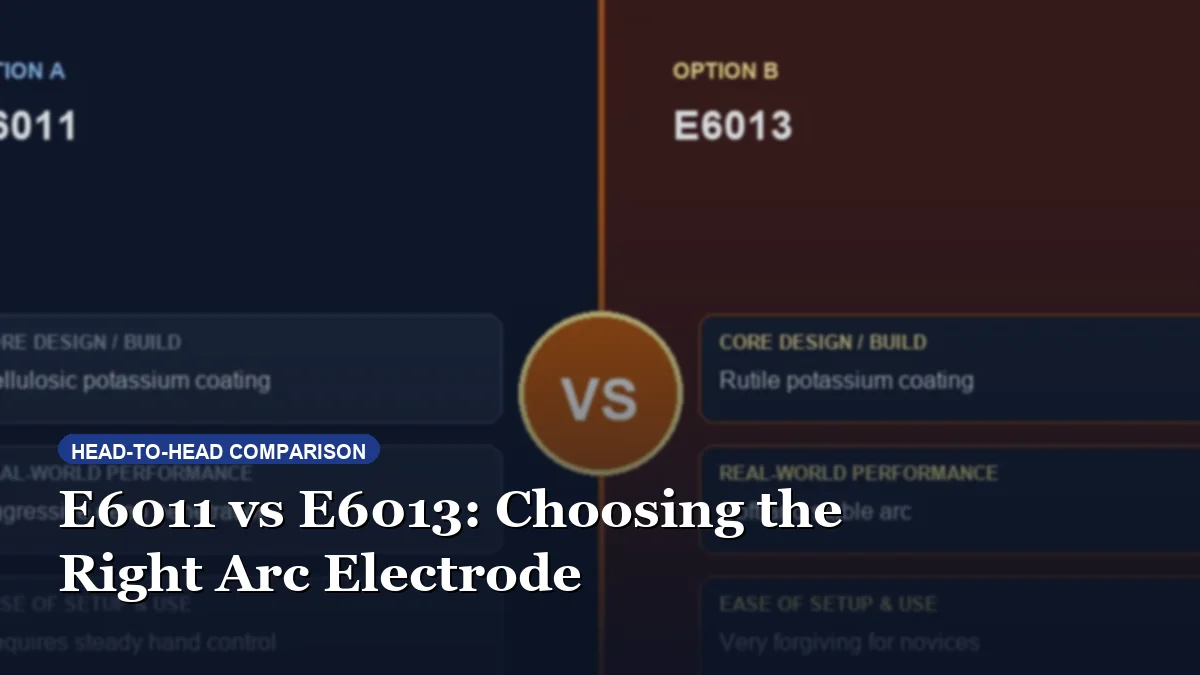
Choose E6011 for deep penetration on rusty metal and heavy pipeline work. Select E6013 for smooth, clean cosmetic welds on thin sheet metal projects.
Compare all top models in our Best Welder: Top Home Shop & Jobsite Picks Tested.
Side-by-Side Breakdown
| Criteria | E6011 | E6013 | Edge |
|---|---|---|---|
| Core Design / Build | Cellulosic potassium coating | Rutile potassium coating | Split |
| Real-World Performance | Aggressive deep penetration | Soft and stable arc | Split |
| Ease of Setup & Use | Requires steady hand control | Very forgiving for novices | E6013 |
| Durability & Reliability | Excels on dirty, painted steel | Requires clean base metals | E6011 |
| Efficiency / Operating Footprint | High spatter production rate | Low spatter with clean cleanup | E6013 |
| Maintenance Requirements | Store in sealed moisture containers | Standard dry electrode storage | Split |
| Best Ideal Use Case | Structural repair and field maintenance | Light fabrication and sheet metal | Split |
Flux Chemistry and Electrode Design
Selecting the proper welding rod requires a deep understanding of flux chemistry. The cellulosic coating on an E6011 electrode generates a forceful arc designed to burn through heavy contaminants.
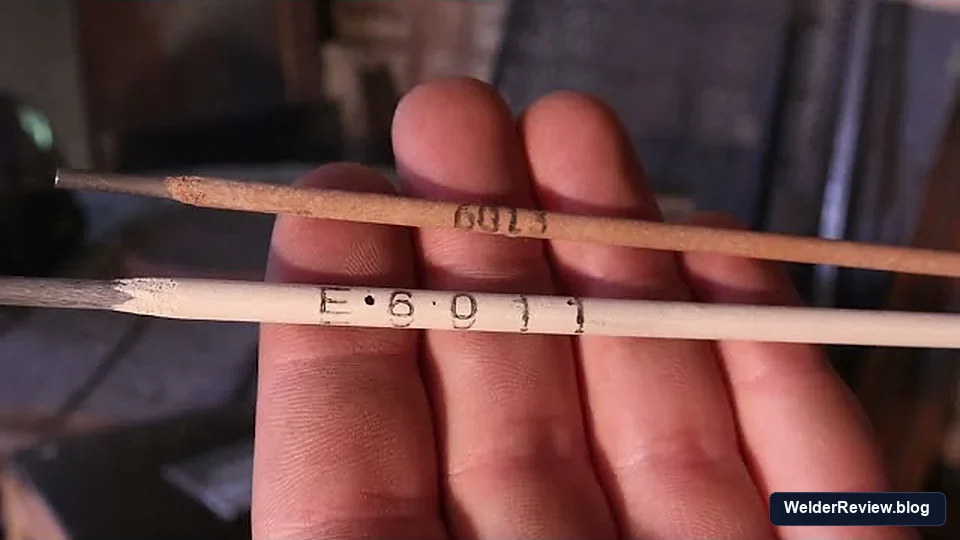
Conversely, the rutile formulation on an E6013 rod introduces potassium compounds to stabilize the arc. This smooth metal transfer features prominently in our best starter welder guide for garage fabricators.
Understanding these chemical differences helps fabricators match the electrode to specific joint configurations. Improper coating selection often leads to poor arc stability and excessive weld defects.
The E6011 electrode utilizes a cellulosic potassium coating designed for rapid gas shielding and deep digging arcs. This formulation contains high amounts of organic materials that generate a powerful, protective carbon dioxide atmosphere.
Conversely, the E6013 rod features a rutile-based potassium coating optimized for smooth operation and minimal spatter. This formulation incorporates substantial amounts of titanium dioxide, producing a stable arc and an easily manageable, fluid slag pool.
Both electrodes feature a mild steel core wire providing the baseline 60,000 psi tensile strength. However, their distinct flux coatings dictate completely different moisture sensitivities, storage requirements, and overall operational behaviors in demanding shop environments.
- E6011 uses high cellulose potassium for deep digging arcs.
- E6013 utilizes rutile coatings for smooth arc operation.
- Moisture sensitivity varies significantly between both rod types.
Cellulosic vs Rutile Coatings
Cellulosic coatings produce a large volume of shielding gas during combustion. This rapid gas expansion drives the molten pool deeper into the base metal joint interface.
Rutile coatings produce a thin, easily removable slag layer that protects the bead. Operators appreciate this formulation for its clean appearance and minimal post-weld cleanup requirements.
- Cellulosic coatings generate forceful shielding gases.
- Rutile coatings produce fluid, manageable slag pools.
Arc Characteristics and Power Compatibility
Operating characteristics define how an electrode behaves under various electrical current settings. An E6011 rod demands a responsive power source to maintain stability during rapid freezing.
AC and DC power compatibility varies across different electrode classifications. Welders must consult machine manuals to verify proper amperage ranges before striking an arc.
Voltage drops can easily extinguish sensitive cellulosic arcs if machine settings are too low. Maintaining proper arc length remains critical for consistent bead deposition.
Operating an E6011 rod requires careful matching with power sources capable of delivering high open-circuit voltage. It performs exceptionally well on alternating current and direct current electrode positive, producing a forceful, aggressive arc stream.
The E6013 electrode offers extreme versatility with low-amperage AC buzz boxes and inverter machines. Its rutile coating ensures smooth restarts and stable arc columns even when paired with budget-friendly, low open-circuit voltage power sources.
Voltage drops during long extension cord runs affect these electrodes differently. While E6011 arcs tend to extinguish easily under voltage starvation, E6013 maintains a softer arc that tolerates minor power fluctuations during field repairs.
- E6011 operates effectively on AC and DC reverse polarity.
- E6013 performs exceptionally well on low-amperage alternating current.
- Arc stiffness dictates overall puddle manipulation techniques.
AC versus DC Performance
Direct current electrode positive provides maximum penetration for heavy structural repairs. Alternating current setups help eliminate arc blow in tight corner joints.
Selecting appropriate polarity ensures smooth droplet transfer and reduces spatter. Modern inverter welders handle both electrode types with excellent arc control features.
- DCEN and DCEP alter penetration profiles dramatically.
- AC output minimizes magnetic arc blow in corners.
Penetration Profiles and Joint Preparation
Penetration depth dictates the structural integrity of welded steel fabrications. The E6011 electrode delivers deep, aggressive root penetration even through heavy mill scale.
Light penetration makes the E6013 rod ideal for thin automotive sheet metal. Excessive amperage with E6013 frequently causes destructive burn-through on thin materials.
Joint preparation standards change depending on which electrode is chosen for fabrication. Clean joint interfaces improve success rates when utilizing rutile welding consumables.
Welders rely on E6011 for deep penetration into thick, dirty, or rusted base metals without extensive grinding. The aggressive digging force undercuts surface contaminants, fusing directly into the structural root pass of joints efficiently.
The E6013 electrode provides shallow to medium penetration, making it ideal for thin sheet metal fabrication. Excessive amperage with this rod frequently causes burn-through on materials under an eighth of an inch thick.
Proper joint preparation differs significantly between these two classifications. While E6011 forgives tight, uncleaned fit-ups, E6013 joints demand cleaner edges, precise gap tolerances, and proper beveling to ensure adequate structural fusion and strength.
- E6011 penetrates thick rust and painted surfaces reliably.
- E6013 avoids blow-through on thin sheet applications.
- Bevel angles require adjustment based on expected penetration.
Handling Contaminated Metals
Field repairs often involve welding over rusted or galvanized steel surfaces. The forceful arc of an E6011 electrode blasts through surface impurities efficiently.
Using an E6013 on dirty steel results in severe porosity and trapped slag inclusions. Proper grinding is mandatory before striking an arc with rutile electrodes.
- Cellulosic rods tolerate residual mill scale successfully.
- Rutile rods demand clean, prepared base metals.
Bead Appearance and Slag Management
Visual inspection standards require clean weld beads with uniform ripple patterns. An E6011 bead appears coarser with a slightly more pronounced crown profile.
Welders favoring aesthetics typically choose the E6013 electrode for final pass work. The resulting weld profile is flat, smooth, and visually appealing.
Slag removal characteristics impact overall shop productivity and project turnaround times significantly. Evaluating these cleaning traits helps when comparing units found in our best multi process welder overview.
The E6011 weld profile typically displays a coarser, flatter ripple pattern with heavy slag coverage. Operators must chip aggressively between passes to remove the brittle, self-peeling residue from tight corners and deep joint grooves.
In contrast, the E6013 produces an exceptionally smooth, aesthetically pleasing bead with finely spaced ripples. Its fluid slag freezes rapidly, supporting the molten weld pool during vertical down progressions without excessive sagging or running.
Slag inclusion risks vary depending on manipulation techniques and amperage settings. Maintaining a tight arc with E6013 prevents slag entrapment, whereas E6011 requires a whipping motion to clear the heavy slag behind the advancing puddle.
- E6011 produces heavy, dark slag that locks tightly.
- E6013 creates self-peeling slag in optimal conditions.
- Weld ripple consistency reflects operator skill level.
Post-Weld Cleanup Efficiency
Cleaning up after welding consumes valuable time in commercial fabrication environments. E6013 slag cracks and lifts away from the cooling bead with minimal effort.
Operators working with E6011 must spend extra time grinding stubborn slag pockets. Wire brushing is usually required to achieve a clean finished surface.
- E6013 minimizes post-weld grinding and cleanup labor.
- E6011 demands aggressive mechanical slag removal methods.
Positional Welding and Operator Technique
Mastering all-position welding requires understanding metal freeze rates and gravity. An E6011 electrode freezes rapidly, making vertical and overhead welding much easier.
The fluid puddle of an E6013 rod requires careful manipulation in vertical positions. Operators must use short whips or weaving motions to prevent sagging.
Training novice welders often begins with rutile electrodes due to forgiveness. Experienced pipe welders rely on cellulosic rods for critical out-of-position joints.
Mastering the E6011 whip-and-pause technique is essential for controlling puddle freeze-up in vertical and overhead positions. This specialized manipulation allows the molten metal to solidify briefly, preventing dangerous sag on out-of-position weldments.
The E6013 rod allows straightforward drag or slight weave techniques, making it exceptionally beginner-friendly. Operators can easily manipulate the puddle in flat, horizontal, and vertical down configurations without requiring advanced manipulation skills or wrist movements.
Overhead welding tests operator endurance and equipment stability with both electrodes. Experienced welders prefer E6011 for overhead structural repairs due to its rapid freezing characteristics, whereas E6013 demands stricter travel speed control to avoid dripping.
- E6011 solidifies quickly in vertical and overhead joints.
- E6013 demands precise travel speeds on vertical downs.
- Whip and pause techniques control puddle heat effectively.
Vertical Up Versus Down Techniques
Welding vertical up with an E6011 requires a distinct stepping motion. This prevents the molten puddle from overwhelming the underlying weld metal deposit.
E6013 rods excel at vertical down progression on light gauge steel projects. These accessible rods are frequently highlighted in any best welder for beginners roundup for easy arc starts.
- Vertical up progression maximizes structural penetration depth.
- Vertical down techniques increase speed on thin gauges.
Mechanical Properties and Metallurgy
Tensile strength ratings ensure welded structures withstand specified operational loads safely. Both electrodes provide minimum tensile strengths around sixty thousand pounds per square inch.
Ductility and impact resistance vary slightly based on the specific flux formulation. Structural engineers specify electrode classifications based on calculated load requirements.
Proper storage prevents hydrogen embrittlement and maintains optimal mechanical property performance consistently. Exposing electrodes to high humidity degrades weld metal quality over time.
Both classifications guarantee a minimum tensile strength of sixty thousand psi in the as-welded condition. However, internal microstructures differ due to the varying deoxidizers and chemical elements present within their respective flux formulations.
Impact toughness at sub-zero temperatures generally favors cellulosic coatings like E6011 over rutile alternatives. The rapid solidification rate produces a finer grain structure, enhancing resistance to brittle fracture under heavy dynamic structural loads.
Ductility and elongation percentages remain comparable, meeting standard structural steel code requirements. Fabricators must evaluate heat-affected zone hardness when welding higher carbon steels to prevent micro-cracking and premature joint fatigue failures.
- Minimum tensile strength meets structural code requirements.
- Elongation percentages ensure adequate joint flexibility under stress.
- Impact toughness varies across low-temperature operating environments.
Tensile Strength and Ductility
The initial digits in electrode classifications designate minimum tensile strength capabilities. High-quality weld deposits withstand significant bending stress without cracking.
Ductility prevents catastrophic joint failure under sudden dynamic impact loading conditions. Metallurgical testing confirms compliance with established AWS standards.
- Classification numbers indicate exact tensile strength limits.
- Ductility safeguards joints against sudden shock loads.
Practical Shop Applications and Maintenance
Choosing the correct electrode influences daily shop productivity and profitability. Maintenance departments stock E6011 rods for emergency field repairs on heavy equipment.
Fabrication shops utilize E6013 electrodes for constructing clean machinery guards and brackets. Proper inventory management ensures rods remain dry and usable.
Storing electrodes in heated cabinets prevents moisture absorption and coating degradation. Using the right machine from our best welder recommendations guarantees consistent arc performance on every project.
Industrial maintenance crews rely on E6011 for repair work on farm equipment, structural frames, and heavy machinery. Its ability to cut through paint, grease, and rust saves valuable prep time in emergency field scenarios.
Sheet metal shops and automotive fabricators choose E6013 for light structural frames and ornamental ironwork. The clean cosmetic appearance reduces post-weld grinding labor, accelerating production timelines for non-critical aesthetic assemblies.
Proper electrode storage prevents moisture absorption that causes porosity and unstable arcs. Storing electrodes in heated electrode ovens maintains flux integrity, ensuring reliable ignition and consistent mechanical performance across all shop welding operations.
- E6011 is indispensable for heavy machinery maintenance repairs.
- E6013 dominates light structural shop fabrication tasks.
- Proper storage ovens protect electrode coatings from humidity.
Storage and Handling Protocols
Cellulosic electrode coatings require specific moisture levels to function correctly. Drying them out completely ruins their unique deep-penetrating arc characteristics.
Rutile rods must remain dry to prevent porosity and unstable arc behavior. Sealed containers protect consumable inventory from environmental moisture damage.
- E6011 needs controlled moisture to burn correctly.
- E6013 requires dry storage to avoid weld porosity.
Frequently Asked Questions
Can I use an E6011 electrode on standard alternating current welding machines?
Yes, many cellulosic rods run smoothly on AC power sources. Selecting an E6011 electrode rated for AC output ensures stable arcs.
Why does my E6013 electrode stick constantly when striking an arc?
This usually indicates your welding amperage is set too low for the rod size. Increasing current slightly provides the energy needed for easy arc starts.
Is E6011 suitable for welding thin automotive sheet metal panels?
No, the aggressive penetration will likely burn holes right through thin steel. An E6013 electrode is much better suited for thin automotive sheet metal.
How should I store my welding electrodes to prevent moisture damage?
Keep your welding rods inside sealed containers or dedicated electrode ovens. Proper storage prevents moisture absorption and ensures consistent arc stability during use.
What is the primary difference in slag cleanup between these two rods?
The slag from an E6011 rod is heavy and stubborn, requiring chipping. Conversely, an E6013 electrode produces a self-peeling slag that cleans up quickly.