Dual Shield vs Self Shielded Flux Core: Technical Matchup
Selecting the right wire process defines your shop productivity. We analyze deposition rates, shielding mechanisms, and structural integrity.

Choose Dual Shield for maximum deposition rates in controlled fabrication settings. Opt for Self Shielded Flux Core when handling outdoor jobs requiring portability and wind resistance.
Compare all top models in our Best Welder: Top Home Shop & Jobsite Picks Tested.
Side-by-Side Breakdown
| Criteria | Dual Shield | Self Shielded Flux Core | Edge |
|---|---|---|---|
| Core Design / Build | Tubular wire filled with flux plus external shielding gas | Tubular wire containing internal flux compounds only | Split |
| Real-World Performance | High deposition rates and deep structural penetration | Excellent wind resistance for outdoor site work | Split |
| Ease of Setup & Use | Requires gas cylinders, regulators, and precise flow meters | Runs straight from machine without exterior gas lines | Self Shielded |
| Durability & Reliability | X-ray quality welds with minimal slag inclusions | Prone to porosity if electrical stickout varies | Dual Shield |
| Efficiency / Operating Footprint | Bulkier equipment setup restricted to stationary shops | Compact field footprint ideal for mobile service trucks | Self Shielded |
| Maintenance Requirements | Regular contact tip cleaning and gas line checks | Consistent drive roll tension adjustments for soft wire | Split |
| Best Ideal Use Case | Heavy heavy-duty structural steel and shop fabrication | Field repairs, maintenance, and windy outdoor erection | Split |
Fundamental Process Mechanics and Shielding Dynamics
Understanding how these two wire processes function requires examining their chemical shielding methods. Both utilize a tubular metal sheath packed with specific flux ingredients that stabilize the welding arc.
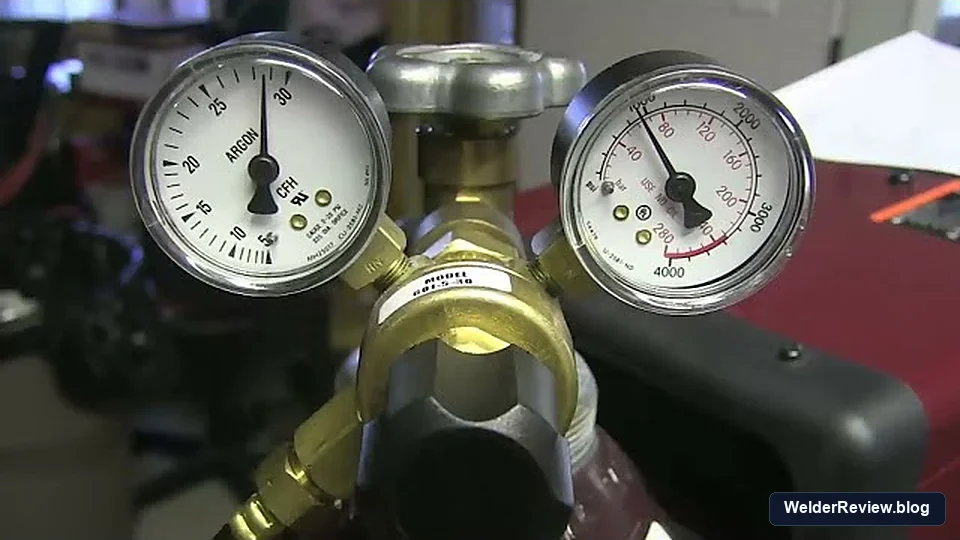
Dual Shield relies on both internal flux vaporization and an external shielding gas delivered through the gun nozzle. This double layer protects molten metal from atmospheric contamination during transfer.
Conversely, Self Shielded Flux Core generates its own protective gas shield entirely from internal compounds. Reviewing our best flux core welder for beginners guide helps users select suitable gear.
Dual shield welding relies on an external shielding gas cylinder alongside the internal flux core. This dual protection stabilizes the arc and provides superior deoxidization for carbon structural steels.
Self shielded flux core wires generate their own gaseous shield entirely from internal flux ingredients. Vaporized compounds protect the molten weld pool against atmospheric contamination without needing external gas lines.
The chemical reactions inside this specialized wire create specific slag formulations that solidify rapidly. This fast freezing slag supports the molten puddle during positional welding applications on thick plates.
- External gas supplies 75/25 Argon/CO2 mixes typically.
- Internal flux produces slag covering the bead.
- Both wires demand specific voltage and amperage ranges.
Chemical Reactions Inside the Arc
The intense heat of the welding arc initiates complex metallurgical reactions inside the core. Deoxidizers scavenge oxygen and nitrogen to prevent brittle welds and dangerous structural cracking.
Flux ingredients also form a protective slag layer over the solidifying bead. This slag slows cooling rates, allowing trapped gases to escape before final solidification occurs.
- Deoxidizers improve overall toughness.
- Slag controls weld bead profile.
Deposition Rates and Productivity Metrics
Shop efficiency heavily depends on how much filler metal transfers into the joint per hour. Dual Shield consistently achieves superior deposition rates compared to traditional solid or self-shielded wires.
The presence of external gas allows higher current densities without destabilizing the arc. Welders can push higher wire feed speeds while maintaining excellent bead morphology and penetration.
Self Shielded wires operate at restricted parameters to prevent overheating internal flux compounds. Selecting a reliable 110v flux core welder review model ensures optimal power delivery for these applications.
Dual shield processes frequently achieve higher deposition rates due to the optimal current density possible with external gas. Welders can push higher wire feed speeds while maintaining excellent bead profiles.
Flux core wires without external gas have lower maximum deposition efficiencies because excessive heat breaks down internal deoxidizers. Operators must balance voltage parameters carefully to prevent porosity and incomplete fusion defects.
Productivity gains heavily favor dual shield setups in heavy fabrication shops where continuous high output runs reduce arc downtime. Minimizing slag chipping intervals directly improves overall daily operational efficiency.
- Higher deposition reduces overall pass counts.
- Gas support permits aggressive parameter tuning.
- Self shielded requires managed heat inputs.
Analyzing Travel Speeds in Production
Faster travel speeds directly translate to reduced labor costs on large structural projects. Dual Shield allows operators to move quickly while depositing thick layers of weld metal.
Field welders using self-shielded variants must balance travel speed with puddle control. Moving too fast risks slag entrapment and lack of fusion defects along the toes.
- Production shops favor high-speed wire.
- Field operators prioritize defect avoidance.
Equipment Portability and Shop Footprints
Equipment mobility dictates where a welding process can be deployed. Pairing portable machines with our best flux core wire recommendations guarantees solid field performance and bead integrity.
Eliminating gas cylinders, regulators, and hoses removes significant logistical weight from service trucks. Welders can easily climb ladders or access remote structural steel components without tethering.
Dual Shield systems demand a stationary or semi-portable setup centered around shielding gas cylinders. Moving heavy gas bottles across uneven construction terrain creates safety hazards and slows progress.
Open air flux core operations require minimal shop infrastructure since heavy gas cylinders are completely eliminated. This portability makes field repairs significantly easier for mobile welding service trucks.
Dual shield setups demand dedicated shielding gas regulators, hoses, and gas storage management systems. These components increase the overall shop footprint and restrict mobility around tight structural assemblies.
Switching between processes requires evaluating your primary workspace constraints and gas cylinder rental logistics. Mobile contractors usually prioritize portable gear for remote outdoor construction sites without infrastructure.
- Gasless setups reduce jobsite clutter.
- Cylinders restrict movement in tight spaces.
- Service trucks benefit from lightweight configurations.
Managing Gas Supply Logistics
Operating Dual Shield requires careful management of gas cylinder inventories and rental agreements. Running out of gas mid-weld halts production and ruins the joint integrity.
Field operations face added challenges when wind gusts blow away external shielding gas. Self Shielded wire avoids this vulnerability entirely through its self-contained gas generation.
- Cylinder exchanges consume valuable work time.
- Wind disruption ruins external gas shielding.
Weld Quality, Cleanliness, and Post-Processing
Weld cleanliness determines how much labor must be invested in post-weld cleanup and inspection. Dual Shield produces remarkably smooth beads with minimal spatter and easily removable slag.
The external gas shielding stabilizes transfer droplets, preventing violent explosions that cause annoying spatter. Welders spend less time grinding away stray BBs before painting or coating.
Self Shielded wires often generate heavier spatter and more aggressive slag coatings. Operators must chip and grind extensively between multiple passes to ensure sound interpass fusion.
Dual shield welds produce exceptionally smooth surface finishes with minimal spatter and thin, easily removable slag layers. Post weld cleanup times drop drastically compared to older wire formulations.
Open air flux core processes often generate heavier spatter requiring mechanical chipping. Checking our best budget flux core welder options assists DIYers in finding clean running machines.
Internal radiographic soundness remains high for both methods when parameters match material thicknesses. However, external gas shielding inherently reduces the risk of trapped gas pores in critical joints.
- Lower spatter reduces cleanup labor.
- Slag removal demands chipping hammers.
- X-ray quality favors gas-shielded options.
Inspecting for Internal Porosity
Structural codes require rigorous non-destructive testing to verify internal weld soundness. Dual Shield consistently passes ultrasonic and X-ray inspections due to stable shielding dynamics.
Self Shielded wires are more sensitive to improper electrical stickout length. Incorrect stickout disrupts the internal gas shield, causing wormholes and localized gas porosity.
- Stickout control prevents internal defects.
- X-ray standards require precise technique.
Environmental Conditions and Jobsite Variables
Environmental factors frequently dictate which welding process can be utilized on location. Outdoor construction sites expose welding zones to unpredictable wind gusts and moisture.
Dual Shield suffers dramatically when wind speeds exceed standard thresholds. Even mild breezes displace external shielding gas, instantly introducing porosity and brittleness into the joint.
Self Shielded Flux Core thrives in harsh outdoor environments where weather cannot be controlled. The intense localized gas cloud generated by the core resists moderate winds effectively.
External shielding gas used in dual shield setups is extremely sensitive to ambient crosswinds exceeding five miles per hour. Wind gusts blow away the gas shield, causing severe porosity.
Open air flux core excels outdoors because the generated gas envelope originates directly at the arc point. High winds cannot easily disrupt this localized shielding mechanism during field erection.
Jobsite environmental factors dictate procedural qualifications for structural steel welding codes. Contractors must utilize wind screens when operating dual shield systems outdoors on bridge or building frames.
- Wind screens required for shop gas setups.
- Field erection favors gasless flux core.
- Moisture affects consumable storage quality.
Consumable Storage and Moisture Control
Flux-cored wires contain hygroscopic compounds that readily absorb atmospheric moisture over time. Storing spools in climate-controlled environments prevents moisture-induced porosity during welding.
Damaged or damp wire compromises structural integrity regardless of the shielding method chosen. Proper spool management ensures consistent arc stability across every single weld.
- Hygroscopic flux absorbs ambient humidity.
- Dry storage protects weld integrity.
Economic Considerations and Consumable Costs
Financial factors influence operational budgeting for both hobbyists and industrial fabrication facilities. Dual Shield consumables involve purchasing both specialized tubular wire and bulk shielding gases.
While initial setup costs are higher, the increased productivity often offsets expenses quickly. Higher deposition rates mean projects are completed faster, saving substantial labor dollars.
Self Shielded wire spools can appear cost-effective initially due to eliminated gas rentals. However, lower deposition speeds and increased cleanup time can balance out savings.
Dual shield consumables feature higher upfront costs due to continuous shielding gas cylinder rentals and purchase expenses. However, reduced labor hours spent on cleanup offset these initial material investments.
Gasless wire options reduce overhead by eliminating gas supply logistics, making them attractive for smaller fabrication shops. The wire spool itself costs more per pound than standard solid wire.
Total operational expenses depend heavily on duty cycles, joint designs, and available shop ventilation systems. Calculating true cost per foot helps managers select the ideal process for production runs.
- Gas rentals add ongoing overhead costs.
- Labor efficiency drives overall profitability.
- Consumable pricing varies by alloy grade.
Balancing Upfront and Long-Term Expenses
Fabricators must analyze total project costs rather than focusing solely on consumable prices. Factoring in cleanup labor and setup time reveals true operational expenditures.
Choosing the right process depends entirely on your specific work environment and volume. Matching equipment to application guarantees optimal financial return on investment.
- Total cost includes labor and cleanup.
- Application matching ensures maximum savings.
Frequently Asked Questions
Can I run Dual Shield without an external gas cylinder?
No, Dual Shield specifically requires an external shielding gas supply to function properly. Removing the gas results in extreme porosity.
Why does Self Shielded Flux Core produce so much spatter?
The intense reactions inside the core create explosive droplet transfer. Maintaining proper electrical stickout helps minimize this spatter.
Which process is better for outdoor construction work?
Self Shielded Flux Core is vastly superior for outdoor jobs. It resists wind interference that instantly disrupts external gas shields.
Do I need a special wire feeder for flux-cored welding?
You need knurled drive rolls to feed tubular wire properly. Standard smooth rollers will crush the soft wire structure.
Is Dual Shield capable of passing X-ray inspection standards?
Yes, Dual Shield regularly produces X-ray quality welds. The double shielding method ensures superior structural soundness in heavy fabrication.