Mig vs Flux Core vs Standard Welder Guide
Understanding shielding gas processes versus standard multi-process setups clarifies fabrication choices. This guide evaluates core shielding methods against standard machine topologies.

Choose shielding gas variants for clean sheet metal work and aesthetic automotive finishes. Select standard units for versatile multi-process adaptability in heavy structural fabrication.
Compare all top models in our Best Welder: Top Home Shop & Jobsite Picks Tested.
Side-by-Side Breakdown
| Criteria | Difference Between Mig And Flux | Standard Welder | Edge |
|---|---|---|---|
| Core Design / Build | Utilizes external shielding gas tanks | Encompasses multi-process transformer architecture | Standard Welder |
| Real-World Performance | Excels on clean, thin automotive sheet steel | Handles diverse structural fabrication demands | Standard Welder |
| Ease of Setup & Use | Requires precise gas regulator calibration | Features preset factory synergic curves | Difference Between Mig And Flux |
| Durability & Reliability | Sensitive to external wind interference | Robust internal copper wound transformers | Standard Welder |
| Efficiency / Operating Footprint | Compact portable unit with bottled gas | Heavier chassis requiring dedicated shop space | Difference Between Mig And Flux |
| Maintenance Requirements | Routine contact tip and liner replacement | Extensive drive roll and circuit board checks | Difference Between Mig And Flux |
| Best Ideal Use Case | Indoor sheet metal and autobody repair | General heavy farm and structural shop work | Standard Welder |
Core Shielding Mechanics And Gas Delivery
Evaluating the primary technical difference requires examining how atmospheric protection is achieved during the weld puddle formation. Shielding gas systems rely on bottled inert gases to displace oxygen completely from the molten weld zone.
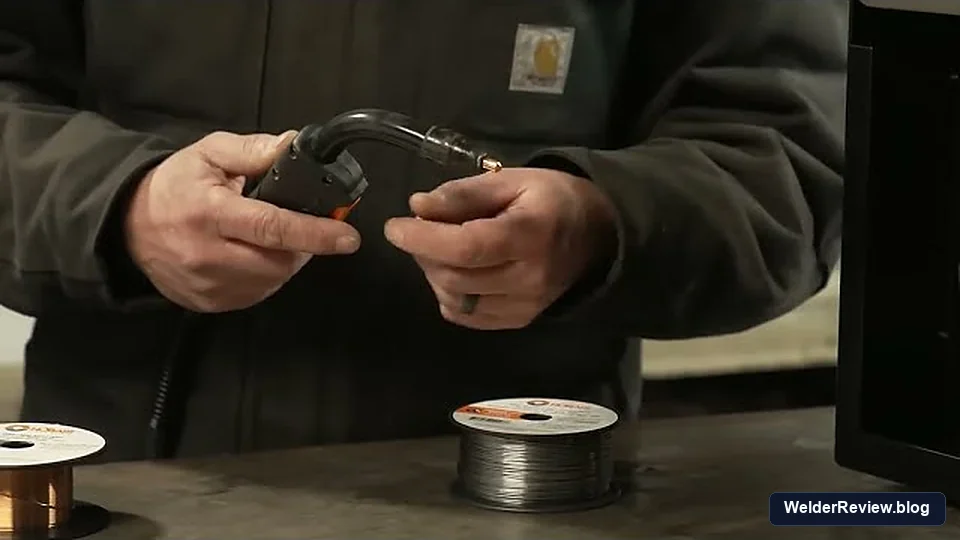
Conversely, self-shielded configurations utilize specialized tubular wires packed with fluxing compounds. These compounds burn inside the electric arc to generate a protective gaseous cloud that shields the solidifying metal from atmospheric contamination.
Welders must understand that external gas setups demand precise flow meter adjustments measured in cubic feet per hour. Neglecting proper shielding pressure inevitably results in severe porosity and structural weld failures across carbon steel joints.
MIG welding relies on an external shielding gas cylinder and proper flow rates. Correct settings help prevent erratic arc behavior detailed in our troubleshooting mig welder popping guide.
Flux-cored arc welding eliminates external gas tanks by utilizing specialized tubular wires. These electrodes contain internal chemical flux compounds that thermally decompose during the arc cycle, generating an effective protective gas shield automatically.
Gas delivery systems require precise flow meter calibration measured in cubic feet per hour. Operators must inspect regulator diaphragms and delivery hoses regularly to eliminate pressure drops that compromise weld bead integrity on job sites.
- External argon and carbon dioxide blends prevent oxidation effectively.
- Flux cored wires produce a protective slag layer requiring chipping.
- Wind interference easily displaces external shielding gas outdoors.
Atmospheric Protection Physics
Molten steel reacts violently with atmospheric nitrogen and oxygen, forming brittle oxides that compromise joint integrity. Maintaining adequate shielding pressure ensures structural ductility meets American Welding Society safety standards.
Operators working in drafty environments often switch to flux core wires to prevent destructive gas displacement. This chemical shielding mechanism remains vastly superior for unpredictable outdoor construction sites.
- Oxygen contamination leads to internal micro-cracks.
- Chemical flux cleans dirty or slightly rusted steel surfaces.
Power Source Topologies And Electrical Output
Modern fabrication equipment relies heavily on advanced inverter technology to deliver stable arc characteristics. Standard industrial machines utilize heavy-duty transformer designs built for continuous high-amperage duty cycles.
When comparing electrical delivery, shielding gas processes operate smoothly on direct current electrode positive configurations. This specific polarity ensures optimal heat input distribution directly into the base metal plate.
Standard multi-process units offer adjustable inductance controls to fine-tune arc stiffness and spatter levels. Experienced fabricators leverage these electrical adjustments to accommodate varying joint fit-ups and plate thicknesses.
Modern welding machines utilize advanced inverter-based topologies to regulate voltage output. These electronic circuits deliver superior arc stability compared to legacy transformer units while maintaining constant voltage characteristics essential for smooth wire deposition.
Electrical polarity configuration changes significantly based on wire requirements. Beginners learning these foundational settings can evaluate various options inside our best beginner mig welders guide for optimal machine selection.
Self-shielded flux-cored procedures frequently demand reverse polarity setups to maximize thermal input. Operating on direct current electrode negative helps prevent burn-through on thinner structural steel components during demanding fabrication workflows.
- Inverter power sources reduce overall machine weight dramatically.
- Transformer units provide rugged longevity in harsh shop environments.
- Polarity switching capability dictates fundamental process versatility.
Duty Cycle And Thermal Management
Heavy structural fabrication demands high duty cycle ratings to prevent thermal overload shutdowns. Standard industrial power sources incorporate internal cooling fans and oversized aluminum heat sinks.
Compact portable machines often feature lower thermal thresholds suitable primarily for light maintenance tasks. Operators must monitor internal temperature indicators during extended welding sessions to avoid premature failure.
- Thermal protection switches prevent catastrophic transformer burnout.
- Forced air cooling accelerates internal component heat dissipation.
Consumable Selection And Wire Feed Dynamics
Consumable performance dictates overall bead appearance and cleanup time in everyday shop operations. Lightweight machines built for these tasks feature prominently within our best 110v mig welder review.
Tubular flux cored consumables feature complex internal metallurgy that stabilizes the arc without external gas assistance. However, these specialized wires demand knurled drive rolls to prevent crushing the soft tubular casing.
Feed motor torque must remain consistent to prevent bird-nesting issues at the drive assembly. Regular inspection of drive tension prevents erratic wire feeding and ensures uniform deposition rates.
Selecting appropriate filler metals dictates overall structural performance in welded assemblies. Fabricators must match wire classifications to base metal tensile strengths while maintaining strict control over electrode diameter dimensions for proper feeding.
Drive roll tension adjustment remains critical for preventing wire deformation inside the feed mechanism. Using knurled drive rolls for softer flux-cored wires prevents crushing, whereas smooth U-groove rollers suit solid aluminum filler materials.
Contact tip wear directly impacts electrical transfer efficiency during continuous welding operations. Operators should replace copper tips immediately when the orifice enlarges, preventing erratic arc behavior and inconsistent wire feed speed delivery.
- Knurled drive rolls prevent slippage on tubular flux wires.
- Smooth U-groove rollers suit softer aluminum solid wire feeds.
- Contact tip wear causes erratic arc voltage fluctuations.
Liner Maintenance And Friction Reduction
Welders must periodically clean and replace internal gun liners to minimize wire feeding friction. Accumulated copper shavings or flux residue can severely restrict smooth wire passage during extended runs.
Using incorrect liner diameters causes erratic feeding and premature arc termination during critical structural passes. Routine preventative maintenance ensures optimal wire delivery speed and stable arc length.
- Teflon liners reduce friction for soft aluminum wires.
- Steel spiral liners handle abrasive flux cored consumables.
Joint Penetration And Material Thickness Limits
Achieving proper root penetration is essential for structural integrity across diverse metal thicknesses. Shielding gas processes excel on thin sheet metal by minimizing excessive heat distortion and burn-through risks.
Self-shielded flux core wires generate deeper arc penetration profiles due to higher current densities. This makes them exceptionally popular for welding thick structural steel plates in heavy equipment repair.
Fabricators must balance travel speed and voltage settings to avoid lack of fusion defects. Proper joint preparation, including beveling thick plates, guarantees complete structural load distribution.
Material thickness capabilities vary significantly between gas-shielded and flux-cored welding configurations. High-energy flux-cored processes excel at deep joint penetration, making them ideal for heavy structural steel plates exceeding quarter inch dimensions.
Conversely, standard MIG welding excels on sheet metal fabrication projects. Selecting affordable equipment for these tasks is easy when you review our best budget mig welder selections for home workshops.
Joint preparation standards dictate overall structural integrity regardless of the chosen welding methodology. Welders must grind contaminated surfaces thoroughly and maintain precise root opening tolerances to achieve full penetration welds reliably.
- High current density produces deep structural penetration profiles.
- Controlled heat input prevents warping on thin auto panels.
- Plate beveling is mandatory for joints exceeding quarter-inch thickness.
Heat Affected Zone Management
Excessive heat input broadens the heat affected zone, potentially embrittling high-strength alloy steels. Operators should utilize stringer beads rather than wide weaves to control thermal expansion.
Standard machines with pulse capabilities offer superior control over thermal input thresholds. This advanced waveform control minimizes metallurgical degradation in sensitive structural applications.
- Stringer beads limit cumulative interpass temperature buildup.
- Pulsed waveforms reduce total heat energy delivered.
Setup Ergonomics And Workspace Footprint
Workspace design and equipment portability heavily influence daily productivity in commercial fabrication shops. Compact units utilizing bottled gas require secure cylinder storage carts to prevent dangerous tipping hazards.
Standard multi-process machines often feature heavier footprints but eliminate frequent cylinder exchanges. Ergonomically designed gun handles reduce operator fatigue during long positional welding shifts.
Clearing adequate workspace around the welding table ensures safe cable routing and unobstructed ventilation. Proper ergonomics directly correlate with improved weld quality and reduced physical strain.
Workspace layout requires careful consideration of equipment placement and cylinder storage safety. Positioning heavy shielding gas cylinders on dedicated cart platforms prevents accidental tipping while maintaining clear access to machine control panels.
Flux-cored setups often offer superior portability because they eliminate the need for heavy gas cylinders. This distinct advantage allows fabricators to navigate cramped outdoor job sites without managing restrictive gas delivery hoses.
Ergonomic torch positioning reduces operator fatigue during extended production welding shifts. Technicians should utilize balanced cable supports and maintain comfortable wrist angles to minimize repetitive strain injuries during high output fabrication.
- Cylinder safety chains prevent accidental high-pressure tank tipping.
- Balanced welding gun angles improve operator wrist comfort.
- Generous cable lengths enhance mobility around large assemblies.
Torch Design And Cable Flexibility
High-amperage welding torches require robust cooling jackets and flexible coaxial cable assemblies. Stiff cables increase operator fatigue and restrict smooth gun movement during intricate joint maneuvers.
Ergonomic handle grips featuring rubber overmolds provide superior traction and thermal insulation. Selecting premium torch consumables extends operational lifespan and reduces unexpected downtime.
- Flexible cable covers resist abrasive workshop floor damage.
- Ergonomic trigger switches reduce repetitive strain injuries.
Maintenance Protocols And Long-Term Reliability
Rigorous maintenance schedules extend the operational lifespan of expensive welding machinery significantly. Technicians must inspect internal power connections and clear accumulated metal dust using compressed air.
Drive mechanisms require periodic lubrication and alignment checks to ensure smooth wire feeding performance. Neglecting basic upkeep frequently results in erratic arcs and expensive component replacements.
Protecting electronics from moisture and extreme temperature fluctuations prevents premature circuit board failure. Investing in protective equipment covers safeguards your investment against harsh workshop environments.
Routine maintenance extends the operational lifespan of industrial welding machines significantly. Technicians must inspect internal electrical connections and clean dust accumulation from cooling fans regularly to prevent premature component failure.
Drive mechanism maintenance requires periodic cleaning of accumulated debris from wire feed rolls. Applying lightweight machine oil to gear shafts prevents binding and ensures smooth wire feeding consistency throughout daily tasks.
Post-weld cleanup protocols differ depending on whether solid or flux-cored wire was deployed. Flux applications produce a hardened slag layer that demands thorough mechanical removal using chipping hammers and wire brushes.
- Compressed air clearing removes conductive metal dust safely.
- Drive gear lubrication prevents premature mechanical wear.
- Moisture barriers protect sensitive inverter circuit boards.
Electrical Safety And Grounding
Ensuring a secure work clamp connection is vital for preventing electrical resistance and arc instability. Damaged work return cables must be replaced immediately to eliminate potential fire hazards.
Routine insulation resistance testing verifies that internal wiring meets strict occupational safety guidelines. Proper grounding protects both the operator and the sensitive electronic control modules.
- Secure work clamps eliminate dangerous high-resistance hotspots.
- Insulation testing prevents accidental electrical shock incidents.
Frequently Asked Questions
What is the primary operational difference between shielding gas processes and standard units?
Shielding gas processes rely on bottled inert gases for atmospheric protection, while standard multi-process setups offer versatile electrical configurations for diverse fabrication tasks. This fundamental distinction dictates your workshop setup and consumable costs.
Can self-shielded wire be used outdoors effectively?
Yes, self-shielded flux core wire excels outdoors because internal chemical compounds generate protective gases that resist strong wind interference. This makes it the preferred choice for field construction projects.
Why is proper shielding gas pressure critical?
Adequate gas flow prevents atmospheric oxygen from contaminating the molten weld pool during solidification. Incorrect pressure settings inevitably cause porosity defects and structural joint failures.
How do drive rolls differ between solid and tubular wires?
Solid wires require smooth V-groove rollers to prevent surface damage, whereas tubular flux wires demand knurled drive rolls for positive feeding traction without crushing.
What maintenance steps ensure long-term machine reliability?
Regularly cleaning internal dust, inspecting drive mechanisms, and replacing worn contact tips prevents erratic arc behavior. Maintaining these components ensures consistent wire feed speed across all welding projects.