DC Welder vs AC Welder: Technical Guide
Understanding current polarity is essential for professional fabrication shops. This technical guide contrasts direct current and alternating current welding systems.

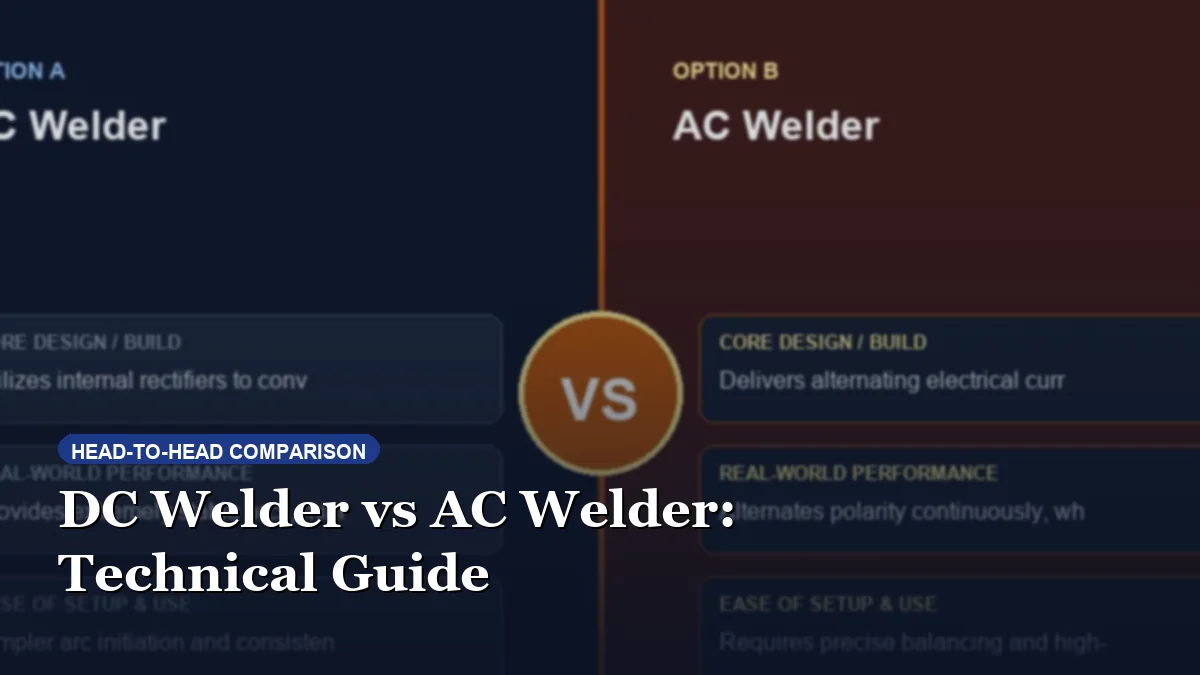
Choose a DC welder for smooth, stable steel fabrication and positional versatility. Opt for an AC welder when battling magnetic arc blow on heavy aluminum projects.
Compare all top models in our Best Welder: Top Home Shop & Jobsite Picks Tested.
Side-by-Side Breakdown
| Criteria | DC Welder | AC Welder | Edge |
|---|---|---|---|
| Core Design / Build | Utilizes internal rectifiers to convert alternating current into direct current polarity. | Delivers alternating electrical current directly from the transformer to the welding electrode. | DC Welder |
| Real-World Performance | Provides extremely stable arcs, minimal spatter, and superior puddle control across most metals. | Alternates polarity continuously, which effectively eliminates magnetic arc blow in tight joints. | DC Welder |
| Ease of Setup & Use | Simpler arc initiation and consistent bead profiles make it ideal for beginners and pros. | Requires precise balancing and high-frequency stabilization to maintain a steady arc stream. | DC Welder |
| Durability & Reliability | Solid-state electronic components require clean internal operating environments to prevent thermal overload. | Heavier copper transformer windings offer exceptional long-term resistance to harsh shop conditions. | AC Welder |
| Efficiency / Operating Footprint | Higher electrical efficiency due to advanced inverter topology and lighter housing footprints. | Bulkier transformer architecture consumes more idle power and requires dedicated circuit breakers. | DC Welder |
| Maintenance Requirements | Frequent dusting of circuit boards and cooling fan checks are necessary for longevity. | Minimal electronic maintenance beyond inspecting heavy-duty power cables and terminal connections. | AC Welder |
| Best Ideal Use Case | General structural steel fabrication, pipeline welding, and precision TIG applications. | Heavy aluminum fabrication and welding inside magnetic heavy joints. | DC Welder |
Core Design and Engineering Principles
Welding machine engineering dictates how electrical power transfers from the main utility source to the actual weld puddle. Direct current machines rely on rectifiers to transform raw alternating voltage into a unidirectional current flow.
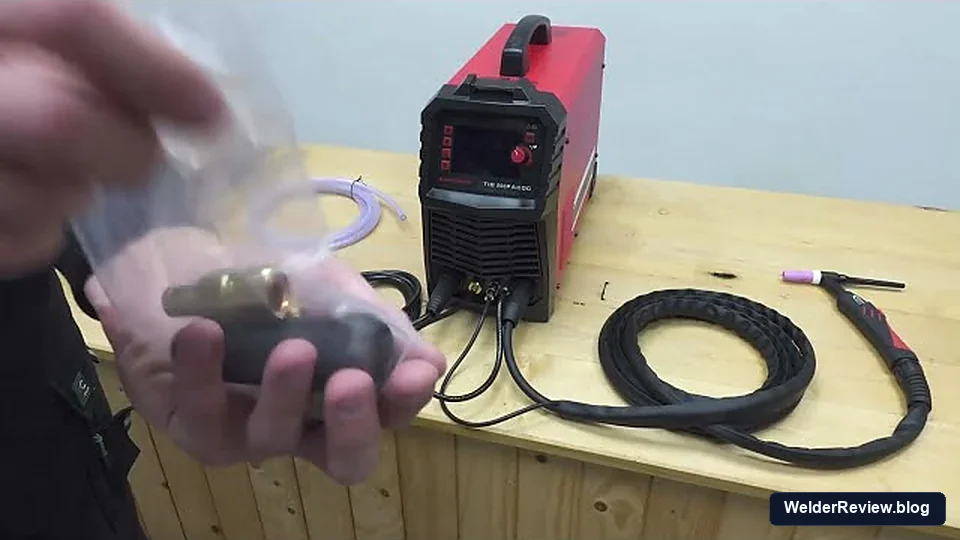
Alternating current units bypass complex rectification circuits, sending transformer output straight to the torch. This fundamental hardware difference creates distinct electrical behaviors that directly influence your daily metal fabrication results.
Engineers design direct current power sources around modern inverter modules that reduce overall weight. Traditional alternating current machines often utilize heavy copper wound transformers that prioritize raw durability over portable shop mobility.
- Rectifiers convert incoming alternating voltage into steady direct current.
- Inverter technology drastically reduces physical machine weight and footprint.
- Transformer designs offer rugged reliability for demanding industrial environments.
Understanding Current Polarity Mechanics
Current polarity determines electron flow direction between the electrode and the metal workpiece. Straight polarity concentrates heat on the electrode, while reverse polarity shifts thermal energy toward the base metal surface.
Alternating current cycles between positive and negative polarities seventy times every second. This continuous shifting prevents heat accumulation on either side, which you can evaluate across our best welder recommendations for tight weld joints.
- Direct current allows precise electrode negative or positive selection.
- Alternating current balances heat distribution evenly across both materials.
Transformer Versus Inverter Architecture
Modern fabrication shops frequently debate the merits of inverter power sources versus classic transformers. Inverters offer superior arc control through rapid microprocessor adjustments and high switching frequencies.
Classic transformer machines lack delicate microchips, making them virtually immune to power surges. Welders operating in remote outdoor environments often favor this simpler, highly reliable hardware design approach.
- Microprocessors in inverters provide instantaneous arc response adjustments.
- Transformer units withstand severe voltage spikes without component failure.
Real-World Arc Performance and Stability
Evaluating real-world arc performance requires examining how smoothly metal transfers across the welding gap. Direct current systems produce a quiet, highly concentrated arc that minimizes annoying spatter and reduces cleanup time.
Alternating current introduces slight arc interruptions as the electrical waveform crosses the zero point. Skilled operators must compensate for this natural fluctuation by maintaining strict arc length and steady travel speeds.
When welding thick plate steel, direct current delivers deep, reliable penetration profiles. Alternating current spreads heat wider, reducing penetration depth but excelling at breaking up tough surface oxides on aluminum alloys.
- Direct current delivers quiet arcs with minimal weld spatter.
- Alternating current requires careful technique during zero-crossing phases.
- Penetration profiles vary significantly based on chosen electrical currents.
Conquering Magnetic Arc Blow
Magnetic arc blow occurs when residual magnetism deflects the welding arc away from the joint. This frustrating phenomenon causes severe lack of fusion defects in deep groove structural steel welds.
Switching to an alternating current power source instantly neutralizes magnetic arc blow. The constantly reversing polarity prevents magnetic fields from accumulating around the welding joint, ensuring flawless bead placement.
- Arc blow causes erratic filler metal deposition and weak joints.
- Alternating current eliminates directional magnetic interference completely.
Puddle Control and Bead Profile
Controlling the molten weld pool is essential for achieving professional cosmetic finishes. Direct current provides predictable puddle fluidity, allowing operators to stack consistent ripples on carbon steel plates.
Alternating current creates a wider, more fluid puddle that demands rapid hand coordination. Mastering this dynamic pool behavior is vital for producing sound welds on specialized non-ferrous metal components.
- Predictable puddle fluidity simplifies positional welding tasks.
- Wide cleaning action on aluminum requires practiced torch manipulation.
Maintenance, Efficiency, and Longevity
Equipment maintenance schedules dictate how long your welding investment remains operational in a busy shop. Direct current inverter machines demand clean internal electronics, requiring frequent compressed air dusting to prevent dust short circuits.
Alternating current transformer welders feature fewer sensitive circuit boards, reducing electronic failure rates significantly. Routine maintenance involves simply inspecting heavy-duty power cables and tightening internal copper bus bars.
Electrical efficiency heavily favors modern inverter-based direct current power sources. They draw significantly less idle current from the wall, lowering monthly utility overhead for high-volume fabrication facilities.
- Inverters require clean environments and regular cooling fan checks.
- Transformers feature rugged mechanical builds with minimal electronic failure points.
- Operating efficiency reduces long-term facility power consumption costs.
Thermal Management and Duty Cycles
Duty cycle ratings define how long a machine can weld continuously before requiring a cooling break. Advanced thermal sensors in direct current units protect internal semiconductors from damaging heat levels.
Heavy-duty alternating current machines absorb massive thermal loads into thick copper windings. This robust thermal capacity allows prolonged welding sessions on thick plates without triggering internal thermal protections.
- Thermal sensors protect sensitive semiconductors from overheating.
- Copper windings absorb massive operational heat loads safely.
Consumable Wear and Tear
Electrical current type directly influences how quickly your torch consumables degrade during operation. Direct current processes often wear tungsten electrodes unevenly, requiring frequent pointed grinding.
Alternating current splits heat evenly across the tungsten tip, promoting a symmetrical ball shape. This balanced thermal transfer extends consumable service life during extended aluminum TIG welding runs.
- Uneven heat in direct current accelerates tungsten tip wear.
- Balanced current flow maintains clean tungsten ball formations.
Material Compatibility and Process Versatility
Choosing the right welding machine depends heavily on the specific metals you fabricate daily. Direct current handles carbon steel, stainless steel, and alloy steels with unmatched versatility and precision.
Aluminum and magnesium present unique challenges due to refractory surface oxide layers. Alternating current provides the essential cleaning action required to strip away these stubborn oxides during GTAW welding processes.
Professional fabricators often invest in multi-process machines that offer switchable current outputs. This flexibility ensures the shop can tackle any incoming metal repair job without purchasing specialized standalone equipment.
- Carbon and stainless steel perform best under direct current.
- Oxide removal on aluminum requires alternating current capabilities.
- Multi-process welders provide ultimate shop versatility.
Precision Steel and Stainless Fabrication
Precision sheet metal fabrication demands tight control over heat input to prevent warping. Direct current electrode negative settings reduce distortion, making it the industry standard for thin stainless steel.
The stable arc characteristics of direct current allow painless out-of-position welding. Fabricators can easily execute overhead and vertical joints without fighting an erratic electrical arc.
- Controlled heat input prevents warping on thin sheet metal.
- Out-of-position welding remains manageable due to arc stability.
Heavy Aluminum and Alloy Joining
Aluminum welding requires specialized electrical waveforms to achieve structural integrity. Alternating current strips surface contaminants while the electrode is positive, safeguarding the underlying metal base.
Advanced machines allow operators to adjust the AC balance and frequency. Options featured in our best welder for beginners list help optimize cleaning action and penetration profiles for aluminum fabrication projects.
- Surface cleaning action removes stubborn aluminum oxides.
- Adjustable waveforms optimize penetration and bead appearance.
Operational Footprint and Workspace Integration
Integrating a new welding machine into your shop layout requires evaluating space and power requirements. Direct current inverter welders are compact and lightweight, easily fitting on small carts or service truck beds.
Alternating current transformer machines demand dedicated floor space due to their substantial physical bulk. Their heavy copper coils and robust steel housings create a significantly larger shop footprint.
Electrical supply demands also differ markedly between these two equipment categories. Inverters often operate efficiently on standard workshop circuits, while transformers frequently require heavy-duty industrial drops.
- Compact inverter footprints enhance mobile service truck utility.
- Transformer bulk requires dedicated floor space in the shop.
- Electrical supply needs dictate circuit breaker installations.
Shop Electrical Requirements
Power supply compatibility determines whether your machine will operate without tripping breakers. Models highlighted in our best multi process welder guide feature multi-voltage plugs for seamless shop power adaptation.
Traditional transformer units draw high initial amperage during arc striking. Ensuring your electrical panel can handle these surges is crucial for safe daily shop operations.
- Multi-voltage capabilities simplify shop power integration.
- High inrush current demands robust facility electrical panels.
Mobility and Field Service Use
Field service technicians require reliable equipment that travels easily to job sites. Lightweight direct current welders fit comfortably in service vehicles and connect smoothly to portable engine generators.
Transporting heavy alternating current transformer units requires mechanical lifting equipment and sturdy trailers. Consequently, field contractors rarely select heavy transformers for remote mobile repair work.
- Lightweight inverter designs facilitate easy transport to job sites.
- Portable generators power direct current machines efficiently.
Ergonomics, Safety, and User Experience
Operator fatigue directly impacts weld quality and overall shop productivity during long shifts. Direct current machines offer smooth arc starts that reduce frustration and minimize eye strain.
Working with alternating current often produces an audible transformer hum that increases noise fatigue. Modern inverter-based alternating current machines mitigate this issue through high-frequency digital control.
Safety considerations include open circuit voltage levels and electrical shock hazards. Both machine types incorporate robust safety features, but operators must always follow established personal protection protocols.
- Smooth arc starts reduce operator fatigue during long shifts.
- Digital waveform controls minimize obnoxious transformer hum noises.
- Safety protocols remain mandatory regardless of chosen current.
Arc Initiation and Control Comfort
Easy arc striking prevents electrode sticking and improves overall workflow efficiency. Direct current lift-arc and high-frequency starts deliver reliable, instantaneous arc ignition.
Beginner welders often struggle with the softer arc initiation of traditional alternating current. Modern square-wave technology has largely resolved this issue, improving overall user confidence.
- Reliable arc ignition eliminates frustrating electrode sticking.
- Square-wave technology improves beginner learning curves significantly.
Acoustic Noise and Shop Environment
Shop noise levels affect communication and long-term operator hearing health. Classic alternating current transformers emit a loud electromagnetic hum that can prove distracting in quiet workshop settings.
Inverter-powered systems operate at ultrasonic frequencies, making them noticeably quieter during active welding. This acoustic improvement creates a more pleasant environment for fabrication shop personnel.
- Electromagnetic hum creates distracting noise in closed shops.
- Inverter units operate at quieter ultrasonic switching frequencies.
Making the Final Selection for Your Setup
Selecting the ideal welding machine requires balancing your specific fabrication needs against your budget. Reviewing our best starter welder guide helps ensure that a direct current machine matches your workshop requirements.
Shops dedicated to marine fabrication, aerospace components, or motorcycle repair cannot survive without alternating current. Evaluating your primary metal inventory will instantly reveal which power source aligns with your business goals.
Many professional fabrication operations eventually purchase both machine types to cover every possible scenario. Understanding these technical nuances ensures you invest wisely in reliable equipment that maximizes production efficiency.
- Steel fabrication demands reliable direct current power sources.
- Aluminum and specialized alloys require alternating current capabilities.
- Diverse shops benefit from owning both machine categories.
Matching Machine to Project Demands
Reviewing your typical project backlog highlights essential equipment specifications. General repair shops thrive with versatile direct current multi-process units handling carbon and stainless steel.
Specialized fabricators working with non-ferrous metals must prioritize alternating current TIG capability. Assessing joint geometry and material thickness prevents costly purchasing mistakes and ensures operational success.
- Repair shops prioritize versatile multi-process steel capabilities.
- Non-ferrous fabricators require dedicated alternating current systems.
Future-Proofing Your Workshop Investment
Future-proofing your shop involves anticipating upcoming industry trends and client demands. Investing in a digital multi-process machine covers both current and future fabrication requirements.
Evaluate available shop power and workspace constraints before finalizing your equipment purchase. Selecting the correct welder guarantees years of reliable service and exceptional weld quality output.
- Digital multi-process units future-proof modern fabrication shops.
- Facility power limits guide optimal equipment purchasing decisions.
Frequently Asked Questions
Can a direct current welder weld aluminum successfully?
Yes, you can weld aluminum using direct current electrode positive with helium shielding gas. However, this method lacks the cleaning action of alternating current, making alternating current preferred for quality aluminum work.
Why does alternating current eliminate magnetic arc blow?
Alternating current continuously reverses its electrical polarity seventy times every second. This rapid polarity shift prevents magnetic fields from accumulating around the weld joint, ensuring flawless bead placement.
Are inverter-based welding machines reliable in dirty shops?
Modern inverter machines feature enclosed circuit boards designed to withstand typical shop environments. Regular compressed air dusting is necessary to prevent conductive dust buildup and thermal overload issues.
What makes transformer welders heavier than inverter units?
Transformer welders rely on massive copper wire coils and heavy steel laminations to step down voltage. This traditional mechanical architecture creates a heavy physical footprint compared to lightweight electronic inverters.
Which machine type is better for beginner welding students?
Direct current welders are generally better for beginners due to their stable arcs and minimal spatter. The predictable puddle fluidity helps students master fundamental hand-eye coordination and proper torch manipulation.