Arc Welder vs Stick Welder: Choosing the Right Machine
Comparing versatile multi-process arc systems against rugged dedicated stick power sources for structural and field fabrication projects.

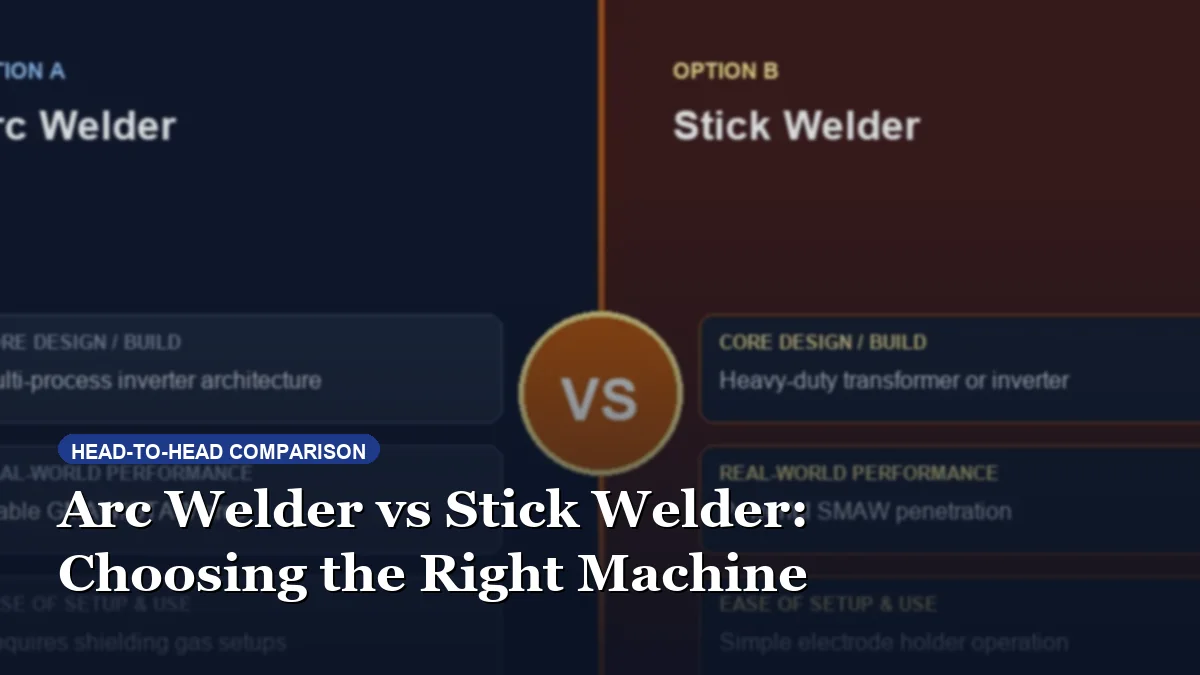
Choose an arc welder for versatile multi-process shop fabrication, or select a stick welder for maximum penetration outdoors.
Compare all top models in our Best Welder: Top Home Shop & Jobsite Picks Tested.
Side-by-Side Breakdown
| Criteria | Arc Welder | Stick Welder | Edge |
|---|---|---|---|
| Core Design / Build | Multi-process inverter architecture | Heavy-duty transformer or inverter | Tie |
| Real-World Performance | Stable GMAW/GTAW arcs | Powerful SMAW penetration | Stick Welder |
| Ease of Setup & Use | Requires shielding gas setups | Simple electrode holder operation | Stick Welder |
| Durability & Reliability | Sensitive circuit boards | Rugged industrial casing | Stick Welder |
| Efficiency / Operating Footprint | Compact inverter footprint | Heavier transformer models | Arc Welder |
| Maintenance Requirements | Regular torch and liner service | Minimalist stinger replacement | Stick Welder |
| Best Ideal Use Case | Clean indoor sheet metal | Rusty structural steel outdoors | Depends |
Core Design and Engineering Differences
Modern multi-process arc systems utilize sophisticated inverter technology to regulate voltage output precisely. This engineering approach allows operators to switch between shielding methods rapidly while maintaining optimal arc stability across varied metal thicknesses.
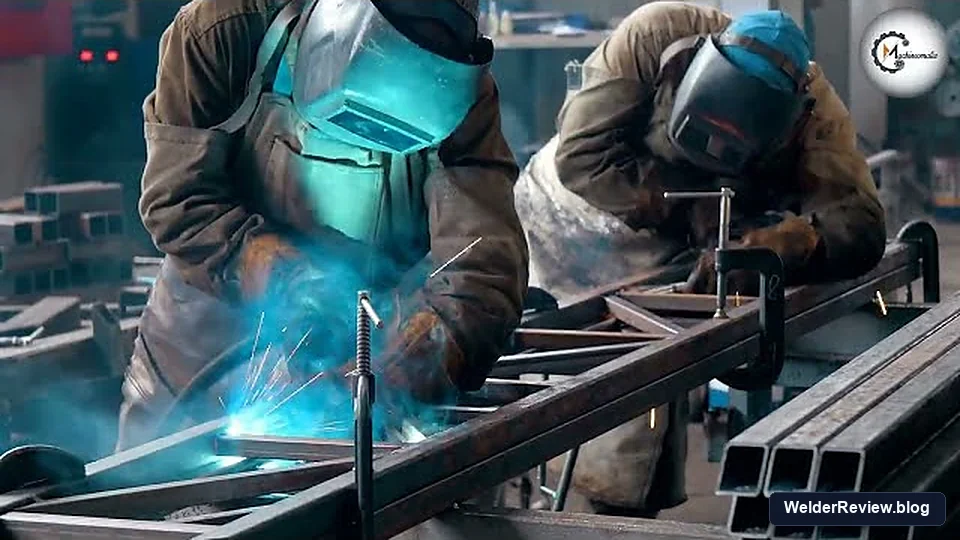
Conversely, dedicated stick machines focus heavily on producing high open-circuit voltage designed specifically for SMAW electrodes. Their internal transformers and robust rectifiers withstand severe electrical surges common on harsh industrial construction job sites.
Understanding internal architecture reveals that all stick welders are technically arc machines, though they utilize shielded metal arc processes. Reviewing our guide to arc force helps optimize puddle control during difficult root passes.
Traditional transformer units rely on copper or aluminum windings to step down line voltage. These heavy units deliver robust duty cycles suited for industrial fabrication floors, contrasting sharply with lightweight portable circuit boards.
- Inverter boards versus heavy copper wound transformers
- Multi-process capability for MIG, TIG, and flux-core
- Dedicated constant current output optimized for heavy flux coatings
Internal Circuitry and Power Delivery
Internal architecture dictates how efficiently electrical power converts into weld energy. Arc units prioritize digital microprocessors for wave control, whereas stick units rely on brute force electrical output.
Selecting the correct internal topology ensures your equipment survives continuous industrial duty cycles without overheating or tripping shop breakers unexpectedly during heavy fabrication tasks.
- Microprocessor wave control vs analog transformer taps
- Thermal overload protection standards
Real-World Performance and Arc Stability
Performance in the field hinges on how well a machine handles voltage drops and wind interference. Arc systems excel indoors where shielding gas remains undisturbed, producing clean welds on thin materials effortlessly.
When confronting dirty or rusted structural steel outdoors, stick machines deliver unmatched arc penetration. Checking our starter stick welder reviews helps beginners find reliable equipment that fights contaminants without external bottled gas.
Maintaining a stable arc requires precise voltage regulation under fluctuating loads. Stick welding relies heavily on the operator maintaining a tight arc length, typically matching the core wire diameter to prevent dangerous stubbing.
Advanced digital signal processors inside modern power sources constantly monitor short-circuit conditions. This rapid feedback loop delivers superior arc stability, minimizing spatter and automatically adjusting amperage during complex positional structural steel welding.
- Wind resistance during outdoor structural erection
- Weld puddle visibility and slag management
- Arc starting reliability on oxidized base metals
Penetration Profiles on Thick Steel
Heavy plate welding requires deep root penetration to satisfy strict structural engineering standards. Stick electrodes like seventy-eighteen provide exceptional mechanical properties and deep fusion into thick carbon steel joints.
Multi-process arc setups often require multi-pass techniques with flux-core wire to match the singular deep-penetration capability of a well-tuned stick electrode on heavy structural members.
- Root pass fusion on heavy structural plate
- Tensile strength matching for structural codes
Material Compatibility and Versatility
Material versatility remains a primary selling point for advanced multi-process arc welding machines. Operators can weld thin aluminum body panels or stainless steel exhaust tubing by simply changing the torch configuration.
Traditional stick welders specialize primarily in carbon steel, cast iron, and low-alloy plates. Consulting our beginner stick welder picks ensures novices avoid catastrophic burn-through when handling high heat on thin sheet metal.
When evaluating material versatility, shielded metal arc welding excels on dirty, rusted, or painted structural steel plates. Selecting the correct E7018 electrode ensures high tensile strength and superior impact toughness in demanding environments.
Generic arc systems often struggle with ultra-thin sheet metal due to excessive heat input causing burn-through. Fabricators must carefully balance heat affected zones to prevent structural warping and metallurgical degradation across delicate joints.
- Thin gauge sheet metal capability down to twenty-gauge
- Exotic alloy welding using TIG or MIG modes
- Cast iron repair using specialized nickel electrodes
Handling Contaminated and Rusted Surfaces
Job site repairs frequently involve old, rusted agricultural equipment or corroded bridge beams. Stick welding excels in these challenging conditions because the flux aggressively cleans impurities from the weld pool.
Arc systems using gas shielding struggle immediately when rust or mill scale is present, resulting in severe porosity unless the joint is thoroughly ground down to bare shiny metal first.
- Tolerance for mill scale and atmospheric rust
- Porosity prevention via flux decomposition
Setup Complexity and Operator Ergonomics
Setting up a modern arc welder involves managing gas cylinders, regulators, drive rolls, and contact tips. This complexity increases preparation time but rewards the operator with cleaner finished welds and zero slag cleanup.
Stick welding offers unmatched operational simplicity requiring only an electrode holder, ground clamp, and matching rods. Operators spend less time troubleshooting wire feeds and more time laying down structural beads.
Operational ergonomics depend heavily on cable weight, torch flexibility, and overall machine placement in the workspace. Heavy whip cables can induce operator fatigue quickly during overhead joint configurations and lengthy multi-pass production runs.
Setting up a dedicated stick welding station requires proper grounding, dry electrode storage, and adequate ventilation. Compliance with OSHA safety standards protects technicians from hazardous hexavalent chromium fumes generated during routine industrial steel fabrication.
- Shielding gas management versus flux coating self-shielding
- Torch weight and cable stiffness considerations
- Post-weld cleanup involving chipping hammers and wire brushes
Workspace Footprint and Portability
Portability often dictates which machine makes it into the back of a service truck. Lightweight inverter-based arc and stick units both offer excellent mobility for remote field repair operations.
However, transporting pressurized shielding gas cylinders required for advanced arc welding adds logistical hazards and vehicle space limitations that stick welding completely avoids in the field.
- Cylinder safety and transport regulations
- Shoulder strap mobility for remote ladder work
Maintenance, Efficiency and Longevity
Equipment longevity depends heavily on routine preventative maintenance schedules and operating environments. Arc welding machines require regular liner replacements, contact tip changes, and drive roll cleaning to prevent wire feeding issues.
Stick welders feature remarkably minimalist maintenance requirements since they lack complex mechanical wire drive assemblies. Operators simply inspect electrode holders and cable connections for thermal degradation and wear.
Long-term equipment longevity relies on proactive maintenance schedules, including regular interior dust removal using compressed air. Inspecting internal cooling fan motors prevents catastrophic thermal overload during high-amperage structural welding applications.
Energy efficiency varies significantly between older transformer rectifiers and modern inverter-based power sources. Inverters draw fewer amps under load, translating directly to lower utility bills and reduced strain on standard residential garage circuits.
- Drive roll and gun liner preventative maintenance
- Stinger and ground clamp thermal inspection
- Internal dust clearing using compressed air
Electrical Efficiency and Duty Cycles
Electrical efficiency impacts daily utility costs and generator fuel consumption on remote job sites. Modern inverter arc and stick machines boast high power factors that minimize wasted electrical draw.
Evaluating manufacturer duty cycle ratings at specific amperage outputs ensures your chosen machine will not overheat during extended structural fabrication sessions under heavy industrial workloads.
- Inverter power factor correction technology
- Duty cycle calculations at maximum amperage
Determining Your Ideal Shop Setup
Choosing between these technologies requires an honest assessment of your typical projects, workspace environment, and budget. Automotive restoration shops benefit immensely from the clean versatility of multi-process arc systems.
Heavy equipment repair facilities, pipeline contractors, and farm maintenance sheds rely on the unyielding durability and weather resistance of dedicated stick welding machines for structural integrity.
Choosing the right machine demands careful analysis of metal thickness and project environments. Exploring our budget stick welder roundup identifies affordable options capable of tolerating heavy wind and rough field transport conditions.
Indoor fabrication shops focusing on clean carbon steel often benefit more from multi-process units. Assessing your specific duty cycle requirements ensures your investment handles daily production demands without unexpected thermal shutdowns.
- Shop environment versus outdoor job site exposure
- Project material thickness and joint configuration
- Operator experience level with different processes
Making Your Final Purchasing Decision
Prioritize your purchase based on the primary materials you fabricate most frequently each week. Investing in quality safety gear and proper electrical infrastructure matters just as much as the machine itself.
Consult equipment specifications carefully to match your available input power breakers with the maximum current draw required by your selected welding machine model.
- Input power requirements matching shop breakers
- Long-term consumable availability and brand support
Frequently Asked Questions
Can a stick welder be used for thin sheet metal?
Stick welding thin sheet metal is extremely difficult due to high heat input. Operators should select an arc welder with MIG capability instead.
Do I need shielding gas for stick welding?
No external shielding gas is required for stick welding. The electrode flux melts to create its own protective gas shield automatically.
Which machine is better for outdoor construction work?
Stick welders perform much better outdoors in windy conditions. Their robust arc handles atmospheric breezes without losing weld shielding integrity.
What maintenance does an arc welding machine need?
Arc welders require periodic cleaning of drive rolls and replacement of contact tips. Keeping internal electronics free of conductive metal dust is crucial.
Are multi-process arc welders difficult for beginners?
Multi-process machines have a steeper learning curve regarding setup variables. Beginners can quickly master basics using a straightforward stick welding setup.