Analog vs Digital Welding Machine Technical Guide
Choosing between traditional analog systems and advanced digital architecture changes how you manage arc stability. Understanding these foundational circuit differences protects your daily weld quality.

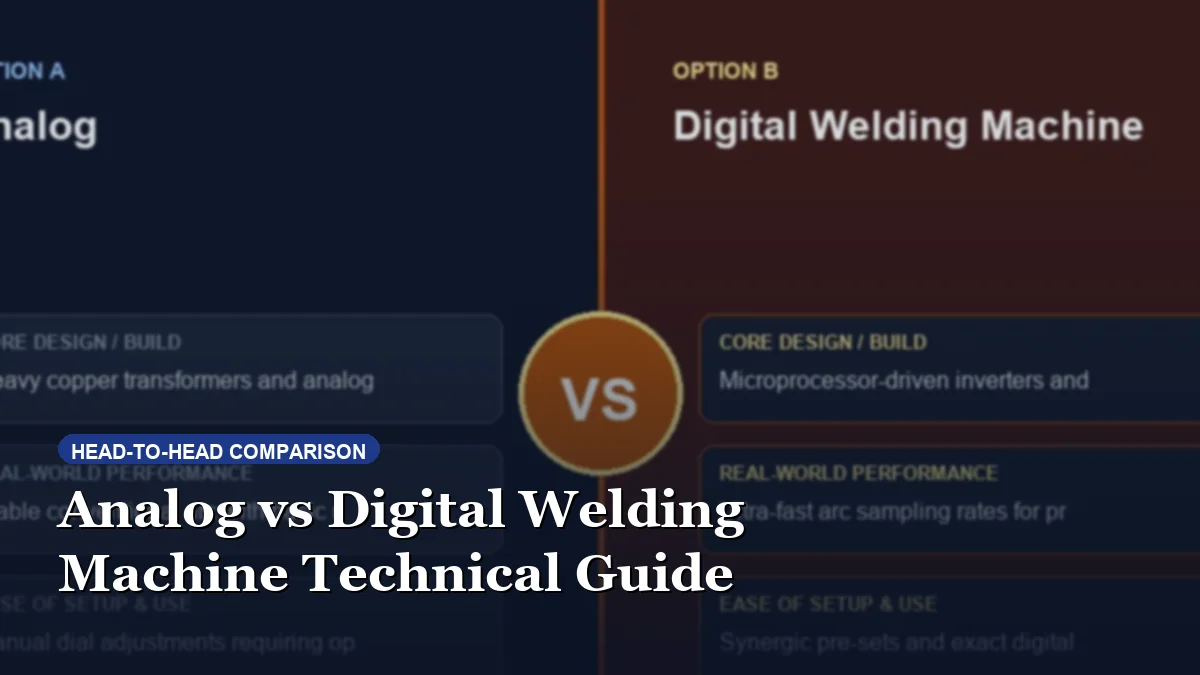
Choose analog systems for rugged reliability and straightforward transformer repairs in harsh field environments. Select digital welding machines for precise microprocessor arc control and repeatable synergic parameter storage.
Compare all top models in our Best Welder: Top Home Shop & Jobsite Picks Tested.
Side-by-Side Breakdown
| Criteria | Analog | Digital Welding Machine | Edge |
|---|---|---|---|
| Core Design / Build | Heavy copper transformers and analog potentiometers. | Microprocessor-driven inverters and digital signal processors. | Digital Welding Machine |
| Real-World Performance | Stable conventional arc with basic reactive damping. | Ultra-fast arc sampling rates for precise puddle control. | Digital Welding Machine |
| Ease of Setup & Use | Manual dial adjustments requiring operator experience. | Synergic pre-sets and exact digital parameter readouts. | Digital Welding Machine |
| Durability & Reliability | Exceptional mechanical resilience against harsh jobsite abuse. | Sensitive circuit boards requiring cleaner operating environments. | Analog |
| Efficiency / Operating Footprint | Heavier transformer chassis with lower electrical conversion rates. | Compact inverter architecture maximizing energy efficiency. | Digital Welding Machine |
| Maintenance Requirements | Simple component swaps using standard electrical hand tools. | Complex firmware updates and specialized board diagnostics. | Analog |
| Best Ideal Use Case | Rugged structural steel fabrication and heavy field maintenance. | Precision aerospace welding and automated robotic production. | Digital Welding Machine |
Core Design and Engineering Differences
Traditional analog welding machines rely on heavy copper transformers and mechanical potentiometers to regulate output current. These robust mechanical components offer extreme resilience against severe voltage drops and airborne metal dust contamination.
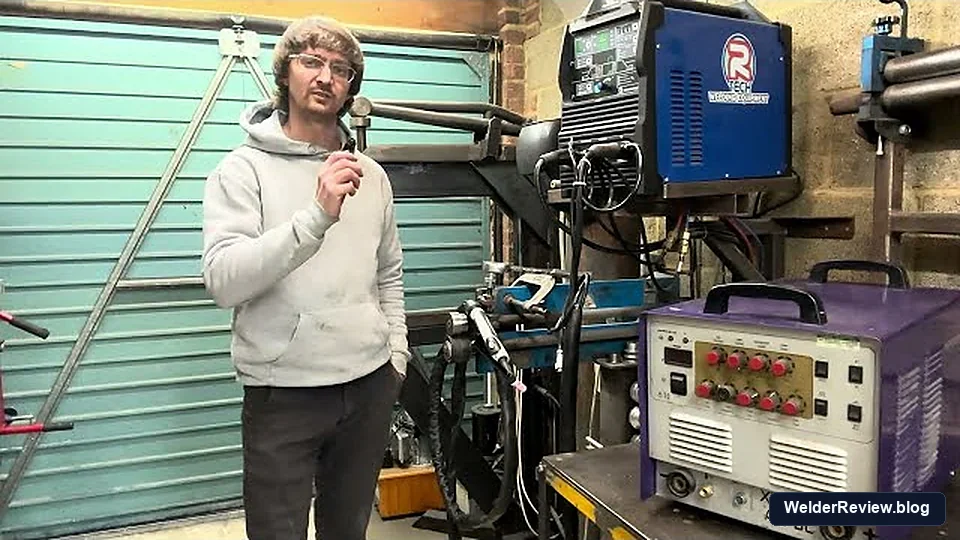
When choosing a reliable best starter welding machine, modern digital models utilize advanced microprocessors to manipulate electrical waveforms dynamically and optimize metal droplet transfer.
Engineering tolerances differ dramatically between these two distinct categories of modern industrial welding power sources. Understanding transformer saturation versus solid-state switching helps fabricators evaluate long-term equipment reliability in demanding production environments.
Traditional analog machines rely heavily on copper-wound transformers and magnetic amplifiers to regulate output current, generating robust physical mass and inherent electrical durability for heavy industrial fabrication environments.
Digital architecture replaces heavy iron cores with high-frequency inverters utilizing insulated-gate bipolar transistors, dramatically reducing overall equipment weight while increasing electrical switching speeds for precision arc control.
Engineers design analog circuits with discrete analog components, whereas digital systems depend on microprocessor boards executing firmware algorithms to sample voltage feedback thousands of times per second.
- Analog systems feature copper-wound magnetic amplifiers and physical dials.
- Digital units run on high-speed embedded software and printed circuit boards.
- Inverter power sources drastically reduce overall unit weight and physical dimensions.
Transformer Physics and Waveform Shaping
Analog circuits shape welding arcs through passive inductive and capacitive filter networks. These physical components provide natural arc damping without requiring complex algorithmic calculations or external software patches.
Digital architectures manipulate electrical frequencies actively through high-frequency pulse-width modulation algorithms. This allows engineers to program custom waveform profiles tailored specifically to unique aluminum or stainless alloys.
- Passive filters smooth out raw electrical current naturally.
- Active modulation creates custom frequencies for specialty metal fabrication.
Real-World Performance and Arc Stability
Analog systems often match the forgiving arc feel of a traditional best welding machine for beginners. The natural inductance of heavy copper coils softens puddle freezing during manual stick operations.
Digital welding machines excel at maintaining precise arc length consistency through high-speed digital feedback loops. The internal processor instantly adjusts output parameters to compensate for hand tremor or joint gap variations.
Arc initiation behaviors also vary significantly when striking an electrode across contaminated base metals. Digital units often provide superior hot-start routines to eliminate initial sticking on cold steel plates.
Analog power sources deliver a smooth, continuous arc, but dynamic response times are limited by physical magnetic lag when striking on oxidized metal surfaces.
Digital processors analyze short-circuit events instantly, modifying output amperage in microseconds to minimize spatter and maintain optimal arc length during manual welding variations.
Welders notice superior puddle control on thin aluminum alloys when using digital waveform shaping, preventing burn-through by controlling heat input precisely throughout the entire weld cycle.
- Analog arcs offer smooth, predictable puddle wet-out on heavy plates.
- Digital arcs minimize spatter through instantaneous short-circuit current control.
- Processing speeds exceed conventional analog response times by several orders.
Evaluating Spatter Generation and Penetration Profiles
Minimizing weld spatter directly reduces post-weld cleanup time in high-throughput fabrication facilities. Digital control over droplet detachment keeps spatter levels exceptionally low during gas metal arc welding processes.
Penetration profiles remain deep and consistent when digital machines automatically adjust for cable length resistance. Analog setups require manual inductance tuning to achieve comparable root penetration results.
- Digital algorithms reduce droplet expulsion during high-speed transitions.
- Analog systems demand manual choke adjustments for optimal wet-out.
Usability, Interface, and Parameter Control
Operating an analog welder involves turning mechanical dials to approximate amperage and voltage settings visually. Welders rely on visual puddle observation and acoustic feedback to verify correct parameters during passes.
A modern best 3 in 1 welding machine features bright LCD screens and precise numeric keypads for exact parameter input. Operators can program specific voltage and inductance values down to decimal precision.
Synergic control modes on digital platforms simplify training for apprentices entering the fabrication workforce. Selecting the base metal thickness automatically configures optimal voltage and amperage parameters without guesswork.
Analog interfaces feature physical potentiometers and rotary dials, offering tactile feedback that operators prefer when wearing heavy leather welding gloves in cold weather.
Digital control panels utilize LCD screens and push-buttons to store memory presets, allowing fabricators to recall exact amperage settings for repetitive production welding tasks efficiently.
While analog dials provide instantaneous adjustments without menu navigation, digital displays show exact numerical measurements, ensuring compliance with strict welding procedure specifications.
- Mechanical dials provide tactile feedback but lack precise digital recall.
- Digital screens store job libraries for repeatable multi-pass welding sequences.
- Synergic programs reduce setup errors across varying material thicknesses.
Calibrating Volt-Ampere Curves in Daily Production
Setting up traditional equipment requires manual reference to laminated chart tables pasted on machine doors. Welders must manually calculate wire feed ratios based on theoretical formulas and practical experience.
Advanced digital menus guide operators through step-by-step joint configuration prompts on graphic displays. This eliminates human calculation errors and ensures adherence to strict welding procedure specifications.
- Door charts offer basic starting points for analog parameter selection.
- Graphic displays streamline complex multi-pass weld parameter entry.
Maintenance, Efficiency, and Thermal Longevity
Heavy copper and steel construction makes analog machines exceptionally durable against accidental drops and impacts. Maintenance typically involves blowing out accumulated grinding dust and replacing worn mechanical contactors periodically.
Unlike a rugged best engine driven welding machine, digital units contain delicate circuit boards that demand cleaner environments to prevent failures. However, their inverter designs consume significantly less electrical power.
Thermal management systems protect critical internal components through variable-speed cooling fans and temperature sensors. Digital units instantly shut down or throttle output when internal ambient thresholds exceed safe limits.
Analog machines feature fewer sensitive electronic components, making them exceptionally resistant to voltage spikes and conductive metallic dust found in heavy fabrication yards.
Digital units require advanced cooling fan management and clean circuit boards to prevent premature failure of microprocessor chips operating in high-temperature industrial settings.
Transformer-based analog welders generally offer higher baseline electrical durability, whereas digital inverters deliver superior energy efficiency by drawing less current under idle load conditions.
- Analog welders survive harsh outdoor conditions with minimal protective housing.
- Inverter efficiency lowers monthly electricity utility bills in production shops.
- Solid-state electronics require protection from excessive moisture and metal dust.
Diagnosing Electrical Faults and Component Failure
Troubleshooting analog equipment involves using a standard multimeter to check continuity across transformers and diodes. Most electrical repairs can be performed locally using replacement parts sourced from standard distributors.
Digital machine diagnostics rely on proprietary error codes displayed on internal microprocessors. Repairing modern digital inverters often requires swapping entire printed circuit board assemblies rather than individual components.
- Multimeters easily trace electrical faults in simple analog circuits.
- Error codes guide technicians toward specific digital board replacements.
Power Quality and Electrical Tolerances
Generator power compatibility remains a critical factor for contractors working on remote construction sites. Analog transformer machines tolerate fluctuating generator frequencies and dirty input power without sustaining internal damage.
Sensitive digital power sources require stable input voltage ranges to prevent microprocessors from locking up. Many high-end digital units incorporate power factor correction circuitry to handle fluctuating generator outputs safely.
Understanding input power requirements protects your equipment investment against catastrophic electrical surges and brownouts.
Analog power sources reliably tolerate unstable generator power, handling dirty input voltage fluctuations without damaging internal magnetic control components during harsh field operations.
Modern digital inverters incorporate active power factor correction circuits to stabilize performance when connected to long extension cords or jobsite portable generators operating under heavy commercial electrical loads.
Electrical technicians must monitor input voltage tolerances closely, as severe brownouts can corrupt firmware on digital boards while analog systems simply experience reduced output capacity.
- Transformer machines handle rough generator power without auxiliary protection.
- Inverters need clean input voltage to protect internal microprocessors.
- Power factor correction helps stabilize draw on long extension cords.
Managing Voltage Drops on Long Extension Cords
Running long primary power leads causes noticeable voltage drop that affects welding performance. Analog units absorb minor voltage sags gracefully due to their massive magnetic core reserves.
Digital power sources actively monitor input voltage and adjust internal switching frequencies to compensate. This maintains stable arc characteristics even when operating near the end of long power drops.
- Magnetic reserves help transformers push through line voltage drops.
- Active feedback loops regulate inverter output during input sags.
Jobsite Ergonomics and Portability
Traditional transformer welders are notoriously heavy, often requiring dedicated carts or crane lifts for transport. This lack of mobility limits their use primarily to fixed workshop fabrication bays and heavy shipyards.
Digital inverter technology enables remarkably lightweight machine designs that easily fit over a worker's shoulder. Mobile repair technicians benefit tremendously from carrying a high-capacity digital welder directly to remote service calls.
Ergonomic handle placement and robust housing materials further enhance daily usability across diverse industrial settings.
Heavy copper transformers make traditional analog welders exceptionally cumbersome, requiring overhead cranes or dedicated wheeled carts for safe transport across busy shop floors during daily manufacturing operations.
Inverter-based digital machines boast compact footprints and significantly reduced equipment weight, enabling mobile repair technicians to carry lightweight units easily into confined work spaces without physical strain.
Ergonomic housing designs on digital units often include integrated handles and protective composite bumpers, safeguarding sensitive displays against accidental impact damage on site.
- Transformer weight makes frequent jobsite repositioning physically exhausting.
- Inverter portability allows easy transport up scaffolding and ladders.
- Compact footprints save valuable floor space in crowded fabrication shops.
Evaluating Shop Floor Layout and Crane Access
Permanent heavy machinery placement dictates efficient material flow throughout a structural fabrication facility. Stationary analog power sources anchor specific work cells where weight is not an operational penalty.
Flexible digital units can be repositioned rapidly to accommodate changing product lines and assembly layouts. This adaptability optimizes workflow efficiency in modern lean manufacturing environments.
- Stationary bays suit heavy transformer machines in fixed locations.
- Flexible layouts benefit from lightweight, easily moved inverter systems.
Which Option Fits Your Shop Setup
Choosing the right technology depends heavily on your specific operating environment and metallurgical requirements. Heavy structural steel fabrication shops facing harsh conditions lean heavily toward reliable analog transformer systems.
Precision aerospace workshops, automotive restoration facilities, and automated production lines require digital versatility. Evaluating your daily duty cycles and power infrastructure clarifies which machine type will maximize productivity.
Investing in the appropriate welding architecture ensures long-term operational success and consistent weld quality.
Fabrication shops tackling heavy structural steel outdoors often prefer rugged analog equipment for its proven structural resilience against harsh environmental working conditions found in heavy industrial construction sites.
Operations requiring strict quality documentation, multi-process versatility, and rapid parameter changes benefit immensely from investing in advanced digital welding systems designed for precision manufacturing standards and repeatability.
Assessing your facility electrical infrastructure, duty cycle requirements, and budget constraints carefully ensures you select the optimal machine architecture for long-term operational productivity across all upcoming fabrication projects.
- Match analog systems to harsh outdoor structural fabrication sites.
- Deploy digital welders for precision alloy work and automated cells.
- Assess local power stability before purchasing sensitive inverter units.
Balancing Capital Investment and Operational Value
Initial equipment acquisition costs vary widely between basic transformer setups and sophisticated digital systems. Balancing upfront expenses against potential productivity gains guides smart purchasing decisions for growing businesses.
Long-term maintenance costs and energy efficiency also factor significantly into the true cost of ownership.
- Weigh initial purchase costs against long-term operational efficiency.
- Consider maintenance overhead when planning your equipment budget.
Frequently Asked Questions
Are analog welders better for harsh jobsite environments?
Yes, analog machines withstand severe vibration and dust better because they lack delicate microprocessors. Their heavy copper transformers offer superior mechanical resilience against rough field handling.
Do digital welding machines consume less electricity?
Yes, digital inverter technology operates at much higher switching frequencies than traditional transformers. This design achieves greater electrical efficiency and lowers daily utility power costs.
Can analog welders perform pulsed MIG welding?
No, true pulsed waveforms require rapid micro-second adjustments that only digital signal processors can deliver. Analog circuits lack the high-speed calculation power needed for pulsing.
How does input power quality affect digital units?
Digital machines require relatively stable input voltage to prevent computer lockups during operation. Unstable generator power can trigger error code shutdowns on sensitive inverter boards.
Which machine type is easier for apprentice training?
Digital machines simplify the learning curve with pre-programmed synergic welding parameters. Operators enjoy exact digital readouts that eliminate guesswork during initial machine setup.