Air Cooled vs Water Cooled TIG Torch Comparison
Selecting the right TIG torch dictates your operational limits. Balance thermal capacity against shop floor mobility carefully.

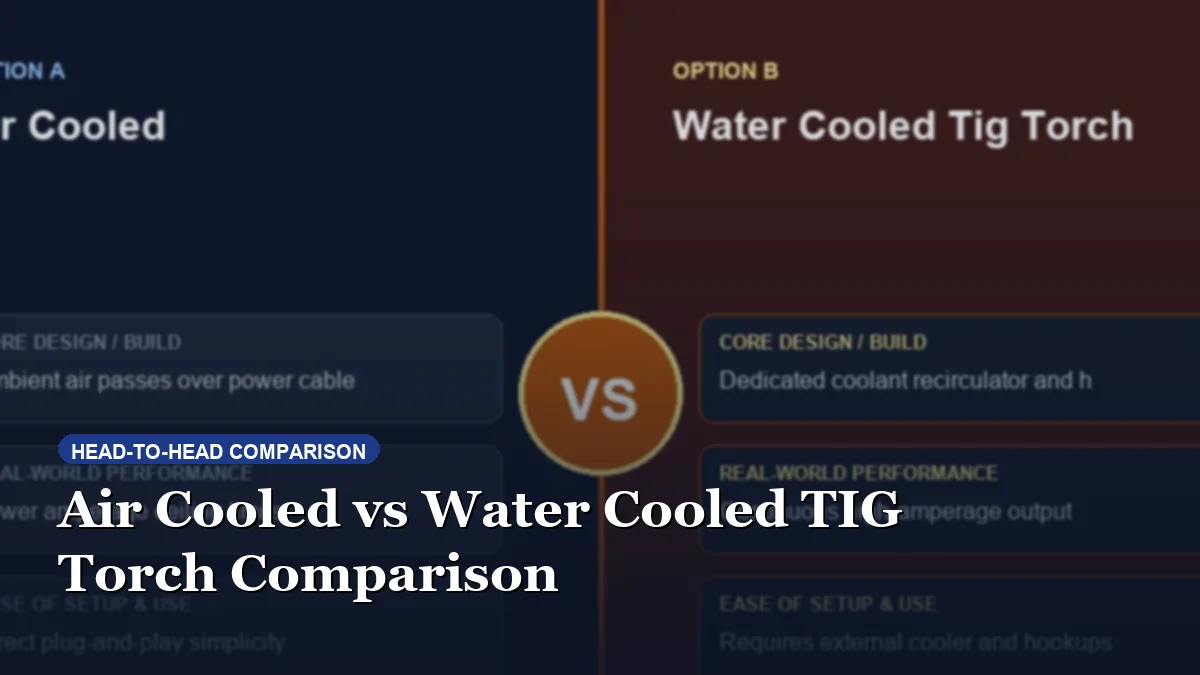
Choose air-cooled torches for mobile repair work and low amperage tasks. Select water-cooled systems for heavy industrial production and high amperage welding.
Compare all top models in our Best Welder: Top Home Shop & Jobsite Picks Tested.
Side-by-Side Breakdown
| Criteria | Air Cooled | Water Cooled Tig Torch | Edge |
|---|---|---|---|
| Core Design / Build | Ambient air passes over power cable | Dedicated coolant recirculator and hoses | Water Cooled |
| Real-World Performance | Lower amperage ceiling limits | Continuous high-amperage output | Water Cooled |
| Ease of Setup & Use | Direct plug-and-play simplicity | Requires external cooler and hookups | Air Cooled |
| Durability & Reliability | Fewer points of potential failure | Vulnerable to pump or flow failure | Air Cooled |
| Efficiency / Operating Footprint | Compact with zero auxiliary footprint | Bulky setup with extra equipment | Air Cooled |
| Maintenance Requirements | Minimal consumable upkeep only | Regular fluid and filter checks | Air Cooled |
| Best Ideal Use Case | Field repairs and light fabrication | Continuous heavy plate welding | Split |
Core Design & Engineering Differences
Air-cooled torches rely entirely on ambient air passing over the power cable to dissipate heat. This passive cooling approach keeps the overall design remarkably simple and highly portable for field technicians.
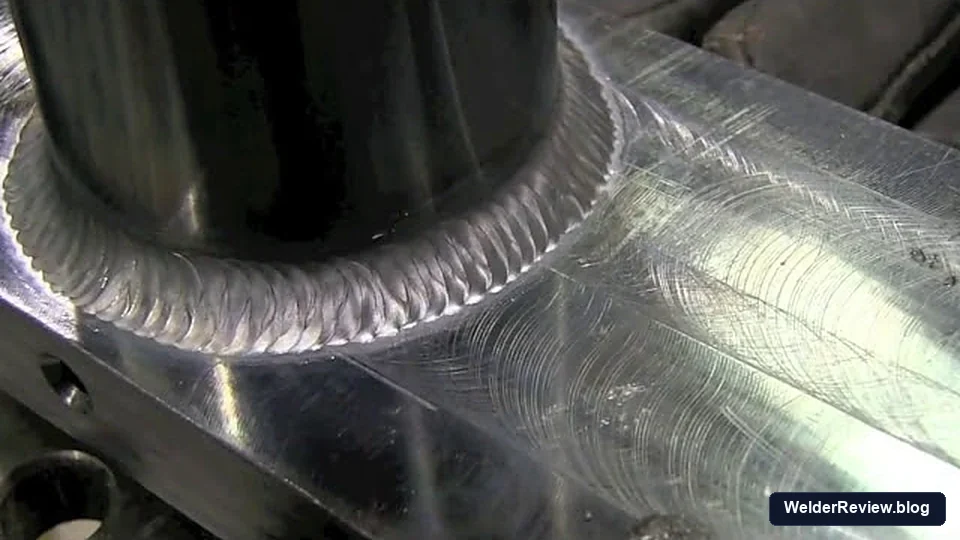
Conversely, water-cooled configurations utilize a dedicated coolant recirculator and specialized hoses. Many fabricators upgrading their setup consult our best tig torch for aluminum guide to select the right heavy-duty equipment for production.
Air-cooled torches rely entirely on ambient airflow and shielding gas passing through the flexible power cable to dissipate extreme welding heat during high-amperage operations without mechanical pumps.
Conversely, water-cooled variants circulate specialized coolant fluid through dedicated internal channels inside the compact torch body, actively carrying thermal energy away from the tungsten electrode rapidly.
- Ambient airflow reliance
- Passive thermal dissipation
- Active liquid circulation
- Internal fluid channels
Internal Fluid Dynamics and Coolant Flow
Water-cooled models require precise flow rates to maintain optimal operating temperatures under heavy loads. A sudden drop in coolant pressure can instantly destroy internal rubber components and ruin expensive torch bodies.
- Minimum flow requirements
- Pressure switch safety integration
Real-World Performance Comparison
Operating an air-cooled torch at maximum rated amperage generates rapid heat buildup in the handle. Welders must monitor their duty cycle strictly to prevent premature consumable degradation and operator discomfort.
Water-cooled systems maintain stable operating temperatures regardless of how long the arc remains lit. This thermal stability allows fabricators to push maximum amperage continuously without risking sudden equipment failure or downtime.
When tackling heavy production steel fabrication, water-cooled setups maintain steady arc stability by preventing internal components from swelling or degrading under prolonged high heat loads.
For mobile field repair jobs or brief maintenance tasks, air-cooled torches offer unmatched operational freedom since you avoid dragging heavy coolant hoses across cramped workspaces.
- Amperage ceiling limitations
- Continuous arc stability
- Thermal fatigue resistance
Amperage Thresholds and Duty Cycle Realities
Standard air units usually top out around two hundred amps. When pairing them together, checking our best aluminium tig welder review helps ensure your machine output matches your torch capability safely.
- Two hundred amp ceiling
- Continuous operation limits
Duty Cycles and Thermal Management
Duty cycle ratings dictate how many minutes out of a ten-minute window a torch can operate safely. Air models drop drastically in performance as ambient shop temperatures rise during hot summer months.
Liquid-cooled alternatives maintain a one hundred percent duty cycle during heavy plate work. Reviewing our best tig welder for aluminum recommendations provides additional insight into matching high-output machines with proper cooling systems.
Standard air-cooled torches typically max out at a sixty percent duty cycle near two hundred amps, requiring mandatory cooling breaks to prevent consumable destruction and cable melting.
Water-cooled systems easily achieve a one hundred percent duty cycle at three hundred amps or higher, ensuring continuous industrial production without unexpected thermal shutdown delays.
- Ten minute test windows
- Ambient temperature influence
Managing Extreme Heat Loads Safely
Heavy fabrication demands continuous arc time without thermal interruptions slowing down your production schedule. Water cooling efficiently transfers intense heat away from the tungsten electrode straight to your external radiator.
- Continuous arc operation
- Efficient heat transfer
Ergonomics, Weight, and Cable Flexibility
Air-cooled torches feature thick power cables because shielding gas and welding current share an internal conduit. Exploring our best cheapest ac dc tig welder guide helps hobbyists weigh torch ergonomics against budget constraints.
Water-cooled setups utilize much smaller power cables because coolant lines handle the heavy thermal load independently. The resulting coaxial hose assembly offers vastly superior cable flexibility and reduced wrist strain.
Heavy rubber power cables on air-cooled units stiffen significantly, increasing wrist fatigue during overhead welding because the heavy outer jacket absorbs intense radiated arc heat.
Water-cooled torches utilize much slimmer, highly flexible coaxial lines because circulating fluid continuously carries away internal heat, improving overall operator comfort during extended welding shifts.
- Coaxial hose bundles
- Reduced wrist fatigue
Handling High-Purity Position Welds
Tight spaces demand lightweight torches that do not fight your wrist movements during complex joint passes. Water-cooled designs provide the necessary dexterity for intricate aerospace and sanitary stainless steel fabrications.
- Positional maneuverability
- Sanitary fabrication access
Maintenance, Efficiency, and Longevity
Air-cooled systems require minimal routine upkeep beyond occasional consumable replacement and cable inspection. Without pumps or fluids to monitor, operators spend more time welding and less time troubleshooting equipment.
Water-cooled torches demand regular checks of coolant levels, filter screens, and pump motor brushes. Using distilled water mixed with proper coolant additives prevents mineral buildup and extends overall system longevity significantly.
Air-cooled designs feature fewer mechanical failure points, requiring basic periodic checks of threaded connections and collet bodies to maintain optimal shielding gas coverage over time.
Water-cooled torches demand rigorous monitoring of coolant fluid levels, filter screens, and pump seals to prevent destructive overheating and costly premature equipment failure in service.
- Minimal upkeep routines
- Coolant level monitoring
Preventative Care for Liquid Systems
Neglecting your fluid cooler can lead to clogged passages and catastrophic torch burnout over time. Routine flushing keeps coolant flowing freely and protects your investment against mineral scale accumulation.
- Coolant flushing schedules
- Filter screen inspections
Setup Complexity and Equipment Footprint
Setting up an air-cooled torch is completely straightforward and plugs directly into standard welding machine outputs. You never have to worry about routing water lines or dealing with electrical cooler interlocks.
Water-cooled torches require an external cooler unit, dedicated power supplies, and specialized hose quick-disconnects. This complex infrastructure increases your shop footprint and restricts on-site mobility during field installation projects.
Installing a water-cooled system requires an auxiliary cooler, specialized hoses, and secure plumbing connections, expanding your total equipment footprint inside the professional weld shop significantly.
Air-cooled systems connect directly to standard welding machines, offering immediate plug-and-play simplicity that reduces initial setup time and eliminates complex mechanical troubleshooting steps completely.
- Direct plug simplicity
- External cooler requirements
Portability Versus Shop Integration
Field service technicians favor air systems because they eliminate auxiliary equipment hauled to job sites. Stationary fabrication shops easily accommodate coolant recirculators as a permanent benchtop fixture.
- Field service mobility
- Permanent benchtop integration
Which Option Fits Your Specific Setup
Choose an air-cooled torch if your daily work involves automotive repair, mobile maintenance, or hobbyist fabrication. These systems offer unbeatable simplicity and eliminate the need for heavy auxiliary cooling equipment.
Invest in a water-cooled torch if you run continuous production welds above two hundred amps on thick materials. The enhanced thermal management and lighter cable bundle will quickly justify the added infrastructure.
Hobbyists and mobile fabricators should prioritize air-cooled torches for their inherent portability, straightforward installation, and minimal ancillary equipment requirements on remote industrial job sites.
Heavy industrial fabrication shops must invest in water-cooled systems to handle thick metals safely while maximizing daily production output without ever facing thermal interruption risks.
- Mobile repair applications
- High-amperage production shops
Making Your Final Purchasing Decision
Evaluate your typical amperage range and joint thickness before committing to a specific torch configuration. Matching your equipment to real project demands ensures maximum productivity and operator comfort.
- Amperage range analysis
- Project demand matching
Frequently Asked Questions
Can I run a water-cooled torch without turning on the water cooler?
Never operate a water-cooled torch without active coolant flow, because the intense heat will instantly melt the internal power cable.
What type of fluid should I use in my welding cooler?
Always use distilled water mixed with specialized coolant or antifreeze to prevent mineral scale deposits and algae growth inside the pump system.
Are air-cooled torches completely unusable for aluminum welding?
Air-cooled units handle aluminum welding well at lower amperages, but alternating current welding generates high reflected heat that rapidly degrades standard torches.
Why are water-cooled torch cables significantly more flexible?
Separate internal channels for power, gas, and coolant allow manufacturers to use much smaller copper strands inside a slender outer sheath.
Can I convert my existing air-cooled machine to water cooling?
Conversion requires purchasing an external coolant recirculator, specialized power cables, and compatible gas valves to safely route the required liquid loops.