7018 vs 6010 Welding Rod: Concise Verdict
Comparing these two structural electrodes reveals distinct trade-offs in arc stability and penetration depth. Choosing the right rod dictates overall weld quality on demanding carbon steel projects.

Choose the 7018 rod for smooth low-hydrogen welds on clean structural joints requiring high tensile strength. Opt for the 6010 electrode when tackling dirty, rusty steel with deep arc penetration.
Compare all top models in our Best Welder: Top Home Shop & Jobsite Picks Tested.
Side-by-Side Breakdown
| Criteria | 7018 | 6010 Welding Rod | Edge |
|---|---|---|---|
| Core Design / Build | Low-hydrogen iron powder flux coating | Cellulosic sodium flux coating | Depends on Joint |
| Real-World Performance | Smooth beads and high tensile strength | Aggressive digging arc and fast freeze | Tie |
| Ease of Setup & Use | Requires dry storage and steady hand | Forgiving on dirty metal positions | 6010 |
| Durability & Reliability | Excellent crack resistance under load | Trusted root pass penetration standard | 7018 |
| Efficiency / Operating Footprint | Higher deposition rates with iron powder | Lower deposition with heavy slag loss | 7018 |
| Maintenance Requirements | Must be kept in heated rod ovens | Standard atmospheric storage suffices | 6010 |
| Best Ideal Use Case | Heavy structural fabrication and bridges | Pipeline root passes and field repairs | Depends on Project |
Core Design and Metallurgical Engineering
Understanding the metallurgical foundations of these two electrodes helps clarify their specific industrial applications. Each rod utilizes a fundamentally different flux coating chemistry designed for unique operational challenges.
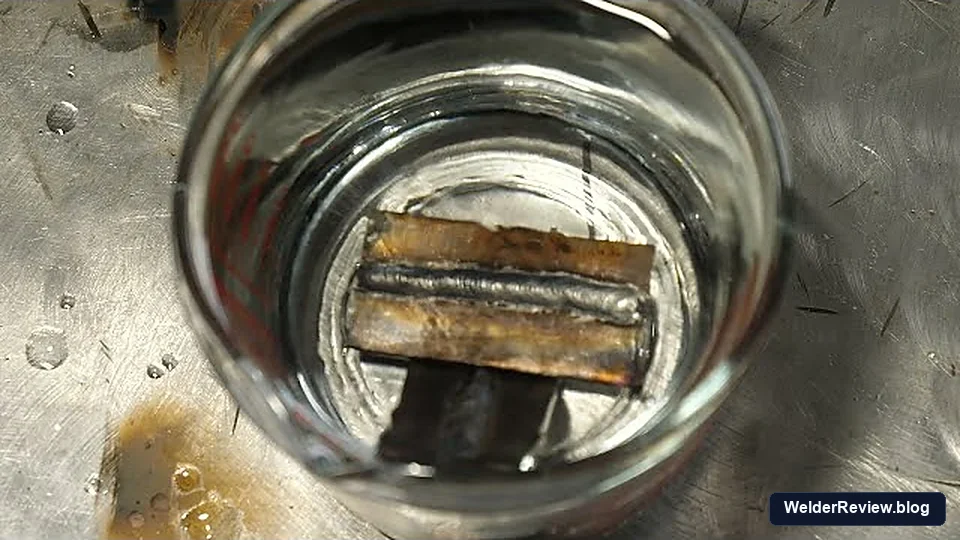
The 7018 electrode features a heavy potassium-based, low-hydrogen iron powder coating. This chemical makeup significantly minimizes weld metal cracking and guarantees superior mechanical properties under extreme structural stress.
Conversely, the 6010 rod relies on a cellulosic sodium coating that generates a forceful gaseous shield. This organic coating creates a highly aggressive arc capable of burning through mill scale effortlessly.
- Low-hydrogen iron powder flux reduces internal weld porosity.
- Cellulosic sodium coating produces high gas volume for cleaning.
- Tensile strength ratings reflect seventy and sixty ksi respectively.
Flux Chemistry and Moisture Management
Flux composition dictates how each rod interacts with atmospheric moisture during storage and welding. Reviewing how to read stick welding rod numbers helps operators prevent moisture damage in structural electrodes.
Operators must store 7018 rods inside specialized electrode ovens to prevent hydrogen-induced cracking. Meanwhile, the organic cellulosic coating on 6010 actually requires a certain moisture level to function correctly.
- Heated rod ovens preserve low-hydrogen integrity.
- Cellulosic coatings require ambient moisture to maintain arc stability.
Alloy Additions and Mechanical Properties
Iron powder embedded within the 7018 flux increases overall deposition efficiency and smoothing bead appearance. Welders benefit from higher metal recovery rates per electrode consumed during production.
The 6010 rod prioritizes penetration over high deposition rates, trading smooth aesthetics for maximum root fusion. This design satisfies strict pipeline code requirements for root pass integrity.
- Iron powder boosts metal recovery and deposition rates.
- Cellulosic elements drive deep root penetration without modern alloys.
Real-World Arc Performance and Penetration
Arc dynamics separate these two electrodes during everyday fabrication and field repair operations. Welders must evaluate how each rod handles joint gaps, out-of-position work, and fluctuating arc lengths.
The 6010 rod delivers a forceful, digging arc that cuts through rust, paint, and heavy mill scale. This aggressive characteristic allows fabricators to achieve complete joint penetration even with imperfect fit-ups.
- Digging arc burns through surface contaminants effectively.
- Fast-freeze puddle supports all-position pipe welding effortlessly.
Penetration Profiles on Thick Steel
Deep arc penetration makes the 6010 the undisputed champion for open-root pipe joints. Finding the best welding machine for beginners helps fabricators manipulate electrodes to bridge gaps and tie in root passes.
The 7018 produces a softer, more controlled arc profile that minimizes spatter and undercut risks. While penetration is adequate, it lacks the aggressive digging force of cellulosic electrodes.
- Deep root fusion characterizes cellulosic electrode performance.
- Controlled arc profile prevents burn-through on thin sections.
Out-of-Position Control and Manipulation
Vertical-up welding requires distinct manipulation techniques depending on the selected electrode type. The fast-freezing nature of 6010 allows for aggressive whipping motions to control puddle size.
Operating 7018 out of position demands a tight arc length and weaving motion without excessive whipping. The slag freezes slower, requiring skilled manipulation to prevent sagging weld beads.
- Fast-freeze puddle aids vertical-up pipe progression.
- Slower-freezing slag demands precise arc length control.
Slag Control, Clean-Up, and Bead Profile
Managing slag deposition directly impacts total project turnaround time and post-weld clean-up labor. Different flux formulations yield contrasting slag characteristics that require distinct removal techniques.
Selecting the best welding rods for beginners ensures a heavy, glassy slag layer that peels away cleanly. Welders enjoy smooth, ripple-free weld face aesthetics that rarely require extensive grinding.
- Glassy slag layer often self-peels from the weld face.
- Smooth bead aesthetics minimize post-fabrication grinding labor.
Slag Removal Efficiency on Multi-Pass Welds
Multi-pass structural welds demand thorough interpass slag removal to prevent internal slag inclusions. The brittle slag generated by 7018 chips away easily with standard chipping hammers.
Cellulosic electrodes like the 6010 produce a thin, tight slag that can wedge firmly in deep weld toes. Operators must scrape diligently between passes to ensure defect-free structural layers.
- Brittle slag chips off smoothly between structural passes.
- Tight cellulosic slag requires careful interpass cleaning.
Surface Finish and Ripple Uniformity
Aesthetics matter significantly when delivering visible structural weldments to demanding commercial clients. The iron powder in 7018 fills minor imperfections, creating a polished, professional finish profile.
The 6010 produces a coarser, more distinct ripple pattern due to its aggressive cellulosic arc action. While structurally sound, the weld face often requires cleaning or capping.
- Iron powder enhances final weld face smoothness.
- Coarser ripple patterns reflect aggressive cellulosic arc dynamics.
Power Source Compatibility and Electrical Demands
Matching your power output characteristics to the chosen electrode prevents frustrating arc outages. Upgrading to a quality starter welding machine ensures stable arc performance across various cellulosic and low-hydrogen rods.
The 7018 electrode generally prefers direct current electrode positive connections for optimal arc stability. However, some specialized versions operate effectively on alternating current power sources.
- Direct current electrode positive maximizes 7018 arc stability.
- Alternating current variants exist for specific transformer machines.
Arc Voltage and Machine Open-Circuit Voltage
Sufficient open-circuit voltage is mandatory to start and maintain a stable low-hydrogen arc. Older engine drives or underpowered machines may struggle to ignite 7018 rods reliably.
The 6010 electrode demands a machine with high arc voltage capabilities and strong digging inductance. Motor generators and engine-driven welders excel at powering cellulosic pipeline electrodes.
- High open-circuit voltage prevents 7018 sticking issues.
- Strong machine inductance supports continuous cellulosic arcs.
Polarity Selection and Operational Versatility
Selecting the correct electrical polarity ensures proper heat distribution between the electrode and workpiece. Operating 6010 on direct current electrode positive ensures deep, concentrated heat input.
Reversing polarity settings incorrectly leads to unstable arc characteristics and excessive spatter generation. Operators must verify machine settings before striking an arc with either electrode.
- Correct polarity guarantees proper heat distribution ratios.
- Incorrect settings cause severe spatter and arc instability.
Joint Preparation and Surface Contamination Tolerance
Job site realities rarely provide pristine, grit-blasted steel for everyday fabrication and repair tasks. Welders often encounter rust, oil, mill scale, and moisture on structural repair projects.
The 6010 electrode acts as a reliable problem solver when dealing with contaminated or rusty steel. Its aggressive cellulosic arc burns through surface layers without causing major porosity.
- Aggressive arc tolerates moderate rust and mill scale.
- Cellulosic gases blast away surface contaminants during welding.
Porosity Risks on Dirty Carbon Steel
Attempting to weld dirty metal with 7018 often results in severe internal weld porosity. Low-hydrogen coatings demand clean, prepped joint surfaces to achieve certified structural X-ray quality.
Cellulosic rods tolerate impurities much better, making them ideal for field maintenance and repair. Field service technicians rely heavily on this forgiveness when working outdoors.
- Low-hydrogen rods demand clean metal to prevent porosity.
- Cellulosic electrodes excel in dirty field repair scenarios.
Fit-Up Tolerances and Gap Bridging
Wide joint gaps present major structural challenges for inexperienced and professional welders alike. The fast-freeze characteristics of 6010 help bridge awkward root openings during assembly.
Bridging gaps with 7018 requires exceptional manipulative skill and precise amperage adjustments to avoid melt-through. Clean joint fit-up remains the preferred standard for low-hydrogen electrodes.
- Fast-freeze puddle bridges wide root gaps successfully.
- Precise amperage control prevents melt-through on gaps.
Maintenance, Storage, and Moisture Sensitivity
Proper electrode storage protocols protect your investment and guarantee compliance with structural codes. Ignoring moisture control guidelines introduces dangerous hydrogen embrittlement risks into critical joints.
The 7018 electrode requires strict adherence to temperature-controlled storage and baking procedures. Exposing these rods to humid air ruins their low-hydrogen certification rapidly.
- Strict oven storage preserves low-hydrogen weld integrity.
- Humidity exposure destroys structural code compliance quickly.
Handling Low-Hydrogen Storage Requirements
Facility managers must invest in dedicated portable rod ovens for job site deployment. Maintaining constant heat prevents moisture reabsorption in humid workshop environments.
Sealed hermetic containers offer temporary protection, but opened cans require proper oven storage. Welders should discard compromised electrodes to avoid costly structural weld failures.
- Portable rod ovens maintain heat on active job sites.
- Hermetic cans protect electrodes prior to initial opening.
Cellulosic Storage Simplicity in the Field
Cellulosic electrodes offer superior storage convenience compared to moisture-sensitive low-hydrogen options. These rods tolerate ambient atmospheric conditions without losing their unique operational capabilities.
Field crews appreciate not needing heated scabbards or ovens while performing general outdoor repairs. Standard cardboard boxes or basic plastic holders suffice for daily transport.
- Cellulosic rods resist ambient atmospheric moisture damage.
- Basic storage containers suffice for rugged field work.
Operational Efficiency and Structural Integrity
Maximizing productivity while meeting strict engineering codes drives modern industrial fabrication decisions. Balancing deposition speed with ultimate tensile strength determines overall project profitability.
The 7018 electrode delivers exceptional tensile strength and impact toughness at sub-zero temperatures. Heavy equipment manufacturers rely on these properties for critical structural load-bearing frames.
- High impact toughness suits heavy machinery fabrication.
- Superior tensile strength meets strict structural engineering codes.
Balancing Deposition Rate and Penetration Depth
Choosing between high deposition rates and deep root penetration defines project workflows. Fabricators often use 6010 for the root pass and cap with 7018.
This combination leverages the deep root fusion of cellulosic rods and the strength of low-hydrogen fills. Professional pipelines and structural projects utilize this dual-electrode strategy.
- Combining both electrodes optimizes structural weld efficiency.
- Root passes utilize 6010 while fill passes use 7018.
Code Compliance and Structural Certification
Structural steel codes frequently mandate low-hydrogen electrodes for certified building construction. Engineers specify 7018 to prevent cracking under dynamic loading conditions.
Pipeline standards often mandate 6010 for initial passes due to superior root penetration. Understanding applicable welding codes ensures structural safety and legal compliance.
- Building codes mandate low-hydrogen electrodes for framing.
- Pipeline standards require cellulosic root penetration.
Frequently Asked Questions
Can you weld dirty metal with a 7018 rod?
Welding dirty metal with 7018 causes severe porosity. Always clean joint surfaces thoroughly to ensure proper low-hydrogen weld integrity.
Why do 7018 rods need to be stored in an oven?
Moisture ruins low-hydrogen coatings and causes cracking. Heated ovens prevent atmospheric humidity from compromising structural weld quality.
What makes 6010 better for pipe welding?
The aggressive digging arc burns through gaps and scale easily. This creates deep root penetration required by pipeline codes.
Can 6010 run on alternating current power sources?
Traditional 6010 requires direct current polarity for stability. Specialized cellulosic variants exist for alternating current transformer machines.
What is the main difference in tensile strength?
The 7018 offers seventy thousand pounds per square inch strength. Meanwhile, the 6010 provides sixty thousand pounds of tensile capacity.