6011 vs 7014 Stick Electrodes: Technical Comparison
Choosing between cellulosic and iron powder electrodes dictates your weld penetration and deposition rate. This guide evaluates performance across structural fabrication tasks.

Choose 6011 for deep penetration on dirty, rusty steel in repair work. Select 7014 when you need high deposition rates and smooth cosmetic finishes on clean plates.
Compare all top models in our Best Welder: Top Home Shop & Jobsite Picks Tested.
Side-by-Side Breakdown
| Criteria | 6011 | 7014 | Edge |
|---|---|---|---|
| Core Design / Build | Cellulosic potassium coating for deep arc digging | Rutile coating with heavy iron powder addition | Split |
| Real-World Performance | Excels on painted, rusty, or contaminated metals | Delivers high deposition rates on clean joints | Side B |
| Ease of Setup & Use | Requires aggressive whip-and-pause manipulation skills | Allows easy drag technique with smooth arc action | Side B |
| Durability & Reliability | Resists moisture absorption better in field settings | Requires dry storage to prevent porosity issues | Side A |
| Efficiency / Operating Footprint | Lower deposition efficiency with heavy spatter loss | High iron powder content boosts filler efficiency | Side B |
| Maintenance Requirements | Demands diligent chipping of stubborn slag layers | Self-peeling slag simplifies post-weld cleanup tasks | Side B |
| Best Ideal Use Case | Heavy structural repair and field maintenance work | Shop fabrication of clean carbon steel plates | Split |
Electrode Metallurgy and Flux Coating Chemistry
Understanding the chemical composition of shielding fluxes helps operators select the correct rod for specific joint designs. The formulation dictates arc stability, slag characteristics, and mechanical integrity.
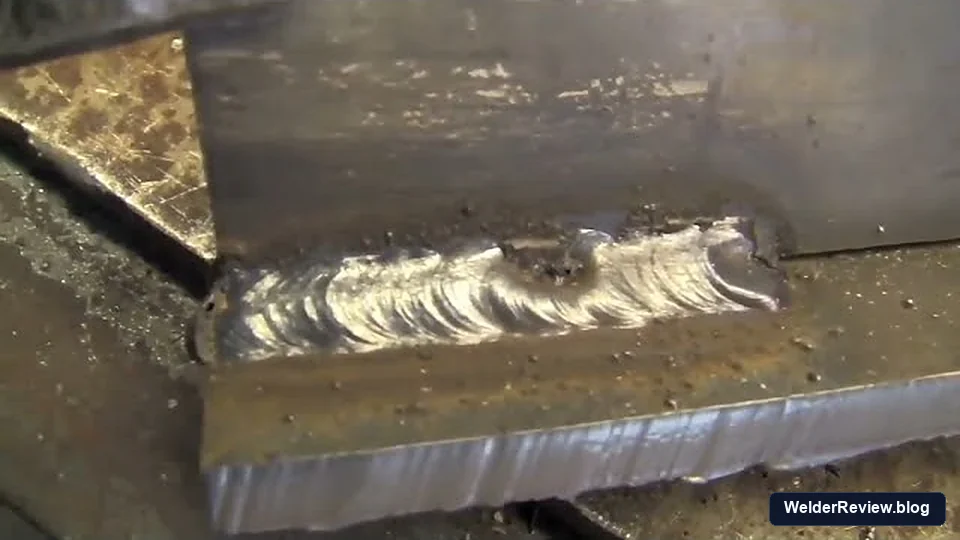
Cellulosic potassium coatings on the first electrode burn rapidly to create a gaseous shield. Selecting our best welder recommendation ensures efficient power delivery and deep arc penetration.
Conversely, iron powder additions in the second electrode enhance deposition efficiency significantly. The metallic powder melts into the pool, increasing total filler metal volume per pass.
The AWS 6011 electrode features a cellulosic potassium coating designed for rapid gas generation. This formulation creates a forceful, digging arc that cuts through heavy surface contaminants like rust, mill scale, and paint.
In contrast, the AWS 7014 electrode utilizes a rutile-iron powder coating. This specific chemical composition adds substantial deposition efficiency by incorporating iron powder directly into the flux, resulting in smoother beads and faster fill rates.
Metallurgically, the weld metal deposit from a 6011 rod yields lower alloy content with higher hydrogen potential. Meanwhile, the 7014 provides increased fluidity and slightly higher manganese levels to enhance overall tensile strength performance.
- Cellulosic fluxes generate high hydrogen volumes for deep penetration.
- Iron powder coatings increase deposition rates up to fifty percent.
- Potassium elements ensure stable arc performance on alternating current.
Flux Formulation Impacts
Coating chemistry directly influences moisture sensitivity and storage requirements in humid environments. Field technicians must monitor electrode condition closely before striking an arc.
Cellulosic rods tolerate minor moisture fluctuations better than heavy iron powder variants. Improperly stored iron powder electrodes often suffer from severe weld porosity.
- Cellulosic coatings tolerate mild atmospheric moisture exposure.
- Iron powder fluxes demand strict rod oven storage protocols.
Penetration Depth and Joint Preparation Realities
Penetration capabilities dictate how much joint preparation is necessary prior to welding structural assemblies. Choosing the right best starter welder model reduces the need for extensive mechanical beveling on plates.
The first option provides deep penetration that cuts through heavy mill scale, rust, and paint layers effortlessly. Welders rely on this digging action during urgent field repairs.
The second option offers shallow penetration characteristics designed specifically for clean, tightly fitted joints. Excessive surface contamination will instantly cause inclusions and lack of fusion.
Operating with a 6011 electrode delivers deep, aggressive penetration into the base metal. This characteristic minimizes required joint preparation, making it exceptional for fit-ups with inconsistent gaps or oxidized structural steel surfaces.
Conversely, the 7014 electrode offers a much shallower penetration profile due to its shielding mechanism. Welders must maintain proper joint fit-up, as excessive root gaps will easily cause burn-through with this iron-powder-heavy rod.
When welding thick plate configurations using multi-pass techniques, utilizing 6011 for the root pass ensures structural fusion. You can then switch to 7014 for subsequent fill passes to maximize overall deposition speed.
- Deep digging arcs minimize preparation time on dirty structural steel.
- Shallow penetration prevents burn-through on thin material sections.
- Surface contaminants obstruct fusion when using iron powder coatings.
Managing Joint Fit-Up Tolerances
Fit-up gaps present unique challenges depending on the selected electrode type and machine amperage settings. Deep penetrating rods bridge small gaps effectively through rapid freezing.
Shallow penetrating options struggle when excessive root openings exist within the joint configuration. Operators must maintain tight tolerances to achieve sound structural welds.
- Rapid freezing slag bridges minor root openings successfully.
- Wide gaps cause burn-through with low penetration electrodes.
Positional Welding and Arc Stability Mechanics
Positional capabilities determine whether an electrode performs well in flat, horizontal, or vertical configurations. Testing out a reliable best welder for beginners option helps operators evaluate arc force and puddle control.
Cellulosic rods produce a forceful, digging arc that operators manipulate easily in all spatial positions. The fast-freezing puddle prevents molten metal from sagging during vertical progression.
Iron powder options generate a fluid, sluggish puddle that limits efficient out-of-position welding. Fabricators reserve these high-deposition rods primarily for flat and horizontal fillet welds.
The 6011 cellulosic rod excels in all-position welding, particularly vertical-down and overhead applications. Its forceful arc allows operators to manipulate the puddle effectively against gravity without excessive molten metal sag.
Operating a 7014 electrode requires tighter arc control and is primarily suited for flat and horizontal positions. Attempting vertical-down progression with 7014 often leads to slag entrapment because of the heavy iron powder volume.
Arc stability differs dramatically between these two choices; 6011 demands a tight, whipping motion to prevent extinguishing. The 7014 provides a very smooth, stable spray transfer that tolerates a slightly longer arc length.
- Forceful arcs allow seamless vertical up and overhead welding.
- Sluggish puddles restrict operators during out-of-position fabrication.
- Fast-freezing slag supports molten metal against gravity pulls.
Arc Control and Manipulation Techniques
Mastering distinct manipulation techniques is essential for achieving professional results with different electrode classifications. Cellulosic rods require a precise whip-and-pause motion pattern.
High iron powder electrodes utilize a simple straight drag technique along the joint centerline. Operators focus on maintaining consistent travel speeds to prevent undercut defects.
- Whip-and-pause motions control heat input and puddle size.
- Straight drag techniques maximize travel speed on flat plates.
Mechanical Properties and Tensile Strength Limits
Tensile strength ratings provide critical data regarding the maximum load a welded joint can withstand safely. Engineers calculate these mechanical limits before finalizing structural design specifications.
The first electrode classification yields a minimum tensile strength of sixty thousand pounds per square inch. This strength level accommodates standard structural steel fabrication requirements.
The second electrode variant guarantees seventy thousand pounds per square inch of minimum tensile strength. This increased rating satisfies rigorous industrial load-bearing demands.
The minimum tensile strength for a 6011 weld deposit is rated at 60,000 psi. While lower in ultimate strength than 7014, it compensates with superior elongation properties and better resistance to cracking under dynamic structural loads.
An AWS 7014 classification guarantees a minimum tensile strength of 70,000 psi. The added iron powder and alloy additions increase the yield strength, making it ideal for fabrications requiring rigid load-bearing capacity and minimal flex.
Evaluating impact toughness at low temperatures reveals distinct performance boundaries. The cellulosic chemistry of 6011 handles thermal shock differently than the rutile coating of 7014, influencing code compliance for structural applications.
- Sixty thousand psi tensile ratings suit general repair applications.
- Seventy thousand psi minimums meet heavy industrial structural standards.
- Ductility remains high across both consumable classifications under load.
Impact Toughness and Ductility Standards
Evaluating impact toughness ensures welded structures resist brittle fracture under low ambient temperatures. Charpy V-notch testing verifies energy absorption capabilities across various thermal ranges.
Both electrode types provide adequate elongation percentages to prevent catastrophic structural failure under stress. Proper heat management further optimizes overall weldment ductility.
- Charpy testing confirms resistance to low-temperature brittle fracture.
- Adequate elongation prevents sudden structural failure under tension.
Slag Removal and Post-Weld Cleanup Efficiency
Post-weld cleanup represents a significant portion of total fabrication time in busy environments. Upgrading to a versatile best multi process welder unit minimizes slag removal labor and increases shop throughput.
Cellulosic electrodes produce heavy, tight slag layers that require vigorous chipping hammer strikes. Welders must scrape corners diligently to remove residual slag completely between passes.
Iron powder formulations generate brittle slag that often curls and peels away automatically upon cooling. This self-cleaning characteristic reduces secondary grinding and preparation labor dramatically.
Cleanup operations after running a 6011 electrode involve dealing with a thin, friable slag layer. This brittle residue typically flakes off easily with minimal chipping hammer use, reducing overall fabrication turnaround times significantly.
The 7014 rutile coating produces a heavier, self-peeling slag blanket in ideal conditions. However, trapped slag can occur in tight groove welds if the amperage is set too low for the specific plate thickness.
Surface finish aesthetics heavily favor the 7014 filler metal, which leaves a finely rippled, uniform bead profile. The 6011 leaves a rougher, more undulating surface texture that frequently requires grinding before painting.
- Tight cellulosic slag demands aggressive chipping hammer usage.
- Self-peeling slag accelerates multi-pass production workflow efficiency.
- Clean weld surfaces minimize post-fabrication grinding labor time.
Minimizing Spatter and Surface Imperfections
Spatter generation directly impacts the amount of time workers spend cleaning surrounding base plates. High-force arcs often produce increased spatter droplets that adhere firmly to steel.
Smooth arc characteristics reduce droplet dispersion, resulting in cleaner finished weld surfaces. Operators appreciate lower spatter levels when working on visible architectural components.
- Forceful arcs increase spatter adhesion on adjacent steel surfaces.
- Smooth arc actions minimize clean-up time on finished assemblies.
Power Source Compatibility and Operational Safety
Power source versatility determines whether an electrode operates successfully on legacy transformer machines or modern inverters. Technicians must verify open-circuit voltage requirements prior to striking arcs.
Cellulosic rods operate exceptionally well on direct current and alternating current power sources alike. Their robust arc stability accommodates fluctuating generator outputs in remote field locations.
High iron powder electrodes perform best on direct current electrode positive configurations for optimal penetration. Utilizing alternating current requires sufficiently high open-circuit voltage transformers.
Both 6011 and 7014 electrodes operate efficiently on alternating current or direct current electrode positive power sources. However, running 6011 on an AC buzz-box requires a machine with adequate open-circuit voltage for arc ignition.
Safety protocols during welding mandate proper personal protective equipment due to intense ultraviolet radiation and fume generation. Cellulosic 6011 produces strong gas fumes, requiring adequate ventilation in confined fabrication shop environments.
Electrical safety compliance under OSHA standards is vital when handling electrode holders. Always ensure dry gloves and insulated work spaces prevent accidental shock hazards during high-amperage structural welding operations.
- Cellulosic rods function reliably on portable engine-driven generators.
- Direct current setups optimize iron powder arc characteristics.
- Open-circuit voltage requirements dictate machine selection criteria.
Electrical Safety Protocols in Damp Conditions
Welding in damp environments demands strict adherence to electrical safety standards to prevent shock hazards. Operators should wear dry insulating gloves and use rubber mats.
Understanding machine duty cycles prevents overheating during continuous multi-pass fabrication tasks. Safety inspections of electrode holders ensure reliable electrical contact throughout operations.
- Insulating gear protects operators working in damp environments.
- Equipment duty cycles prevent catastrophic transformer overheating failures.
Frequently Asked Questions
Can I weld rusty steel with these electrodes?
The cellulosic electrode burns through contamination easily due to its deep digging arc. Cellulosic rods outperform iron powder alternatives on dirty field repairs.
Which rod is better for overhead welding tasks?
The fast-freezing slag of cellulosic options supports molten pools against gravity. Cellulosic electrodes provide superior control during out-of-position structural welding.
Do iron powder rods require special storage ovens?
Heavy iron powder coatings absorb atmospheric humidity readily over time. Proper rod storage prevents severe hydrogen-induced porosity in structural welds.
Why is slag removal easier with certain rods?
High iron powder formulations produce brittle slag that curls off naturally upon cooling. Self-peeling slag reduces secondary chipping and grinding labor significantly.
Are these electrodes compatible with AC welding machines?
Both electrode types operate on alternating current given sufficient open-circuit voltage. Machine compatibility depends on proper voltage output and arc stability.