6011 vs 6013 Shielded Metal Arc Welding Electrodes
Choosing between these two classic AWS electrodes dictates your arc stability and slag penetration. Master their specific metallurgical properties to optimize structural joints.

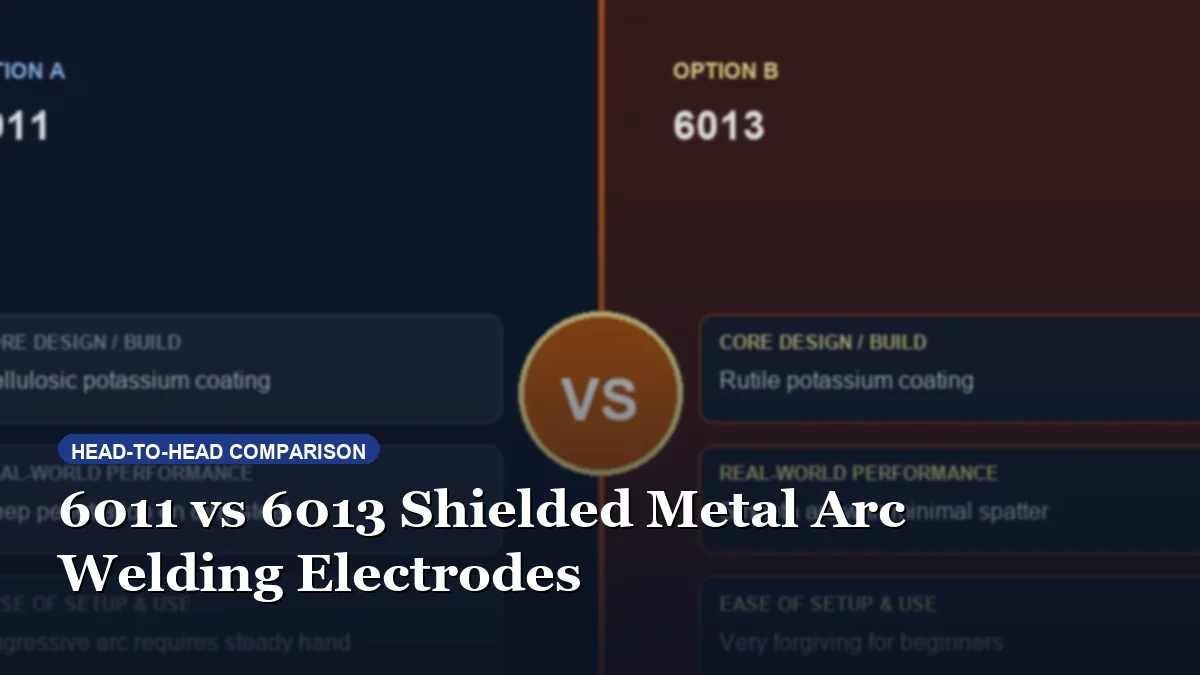
Choose the 6011 electrode for rusty, dirty steel requiring deep arc penetration and fast freezing. Select the 6013 rod for smooth aesthetics and thin sheet metal fabrication.
Compare all top models in our Best Welder: Top Home Shop & Jobsite Picks Tested.
Side-by-Side Breakdown
| Criteria | 6011 | 6013 | Edge |
|---|---|---|---|
| Core Design / Build | Cellulosic potassium coating | Rutile potassium coating | 6011 |
| Real-World Performance | Deep penetration on dirty steel | Smooth arc with minimal spatter | 6011 |
| Ease of Setup & Use | Aggressive arc requires steady hand | Very forgiving for beginners | 6013 |
| Durability & Reliability | High moisture tolerance in flux | Requires dry storage to prevent porosity | 6011 |
| Efficiency / Operating Footprint | Fast freezing slag for all positions | Fluid slag requiring careful manipulation | 6011 |
| Maintenance Requirements | Standard workshop rod storage | Strict baking protocols often needed | 6011 |
| Best Ideal Use Case | Farm equipment and structural repairs | Sheet metal and automotive fabrication | Split |
Core Design And Engineering Differences
When selecting an electrode for structural repairs, understanding the exact chemical composition of the flux coating prevents costly weld failures. Cellulosic potassium coatings drive deep arc force into contaminated base metals.
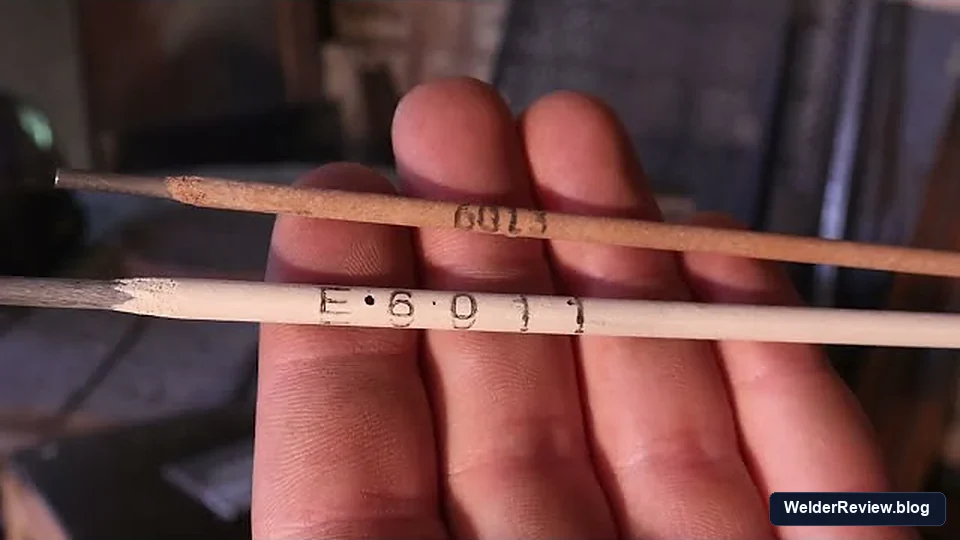
Conversely, rutile formulations prioritize smooth arc transfers and clean bead appearances. Engineers design these distinct consumable profiles for vastly different operational environments and material conditions.
- AWS A5.1 classification standard guidelines
- Cellulosic versus rutile flux formulas
- Alloy addition variations in core wire
Flux Coating Chemistry
The chemical makeup of the outer flux directly dictates how the electric arc behaves under load. Potassium silicate binders ensure stable performance across various alternating current welding machine outputs.
Cellulose elements create a protective gaseous shield when burned during the process, mirroring systems found in our best multi process welder reviews. This specific reaction keeps atmospheric contamination safely away from the molten puddle.
- Cellulose gas generation properties
- Rutile mineral stability traits
Core Design And Engineering Differences
The AWS 6011 electrode utilizes a cellulose-potassium coating designed for deep penetration on dirty steel. Its formulation creates a forceful arc that burns through rust, paint, and mill scale efficiently during structural fabrication.
Conversely, the AWS 6013 rod features a rutile-potassium flux that produces a smooth, soft arc with minimal spatter. This chemical composition prioritizes cosmetic bead appearance and easy restart capabilities on clean, prepared carbon steel plates.
Real-World Performance Comparison
Field testing reveals stark operational contrasts when joining structural steel plates in challenging field positions. Deep arc penetration allows the cellulosic rod to burn through light mill scale easily.
Meanwhile, the rutile alternative provides a soft touch that prevents burn-through on thin gauges, as detailed in our best welder guide. Fabricators must match these operational traits to precise project demands.
- Arc digging capability measurements
- Spatter generation and metal recovery
- Bead profile width and convexity
Penetration And Arc Force
Aggressive digging actions make the first consumable ideal for uncleaned, weathered outdoor structures. Kinetic arc force pushes slag aside to fuse directly with solid parent metal.
Softer arc characteristics produce flatter, more aesthetically pleasing weld profiles with minimal cleanup. Operators appreciate this smooth transfer when working on visible architectural joints.
- Base metal fusion depth
- Arc voltage drop tolerances
Real-World Performance Comparison
When running beads in the field, the 6011 provides aggressive arc force that stabilizes quickly on standard AC transformer welders. Welders rely on this aggressive digging action to achieve root pass integrity under challenging site conditions.
The 6013 operates better on DCEN polarity or constant voltage setups, delivering a fluid puddle that wets out smoothly. Operators notice less puddle turbulence, allowing precise control over fillet welds in shop environments.
Maintenance, Efficiency And Longevity
Proper consumable storage ensures consistent mechanical properties and prevents hydrogen-induced cracking in critical joints. Moisture absorption ruins the delicate balance of cellulosic and rutile electrode coatings.
Maintaining correct electrode inventories saves valuable production time, similar to equipping a garage using our best starter welder selections. Regular quality checks on stored inventory remain vital for workshop safety.
- Recommended oven baking temperatures
- Hermetically sealed container standards
- Shelf life monitoring protocols
Storage And Moisture Control
Cellulosic coatings require some ambient moisture to function properly during everyday welding tasks. Excessive humidity levels, however, cause erratic arc behavior and severe porosity issues.
Rutile rods demand strict moisture control to avoid starting porosity in high-integrity joints. Welders should always utilize designated rod ovens for moisture-sensitive inventory management.
- Relative humidity threshold limits
- Rebaking duration guidelines
Maintenance, Efficiency And Longevity
Cellulose coatings on 6011 rods require proper moisture content to maintain operational stability. Store these electrodes in a heated electrode oven if humidity levels rise to prevent porosity and unstable arc characteristics during structural repairs.
Rutile coatings on 6013 electrodes are less susceptible to ambient moisture but still demand dry storage. Keeping rods in sealed containers prevents flux degradation, ensuring consistent arc ignition and minimal spatter accumulation over extended periods.
Which Option Fits Your Setup
Evaluating your workshop power source dictates whether you can utilize these specific electrodes efficiently. Open circuit voltage requirements vary significantly between cellulosic and rutile consumable classifications.
Older tombstone transformer machines handle cellulosic rods exceptionally well due to high striking voltages. Modern inverter welders must feature adequate hot-start functions for smooth arc initiation.
- AC and DC output compatibility
- Minimum amperage operating thresholds
- Machine duty cycle considerations
Power Source Compatibility
Matching your machine capabilities to the electrode specification prevents frustrating arc outages mid-pass. Direct current electrode positive polarity delivers optimal penetration profiles for structural work.
Alternating current setups work exceptionally well when fighting arc blow on thick weldments. Always verify your machine manual before striking an arc with unfamiliar rods.
- Polarity selection guidelines
- Transformer versus inverter performance
Which Option Fits Your Setup
Select the 6011 rod when your workload involves heavy equipment repair, rusty farm machinery, or uncleaned structural steel. Its deep penetration profile guarantees fusion even when surface contaminants cannot be completely removed beforehand.
Choose the 6013 electrode for fabrication projects using new steel tubing or brackets, much like tools featured in our best welder for beginners guide. The smooth bead profile reduces post-weld grinding time.
Positional Welding Capabilities
Mastering all-position fabrication requires understanding how gravity affects different molten slag systems. Fast freezing properties allow operators to build solid weld pools during vertical up movements.
Fluid pools demand precise manipulation techniques to prevent slag inclusions in overhead joints. Professional welders practice specific whip-and-pause motions to control puddle fluidity.
- Vertical up manipulation techniques
- Overhead gravity resistance traits
- Horizontal fillet leg symmetry
Vertical And Overhead Techniques
Executing sound vertical welds depends heavily on the rapid solidification rate of the metal. Cellulosic slag freeze supports the molten puddle against gravitational pull effectively.
Rutile alternatives require tighter arc manipulation to avoid cascading molten metal during overhead passes. Proper travel speed ensures uniform reinforcement without excessive metal buildup.
- Puddle freeze time metrics
- Travel speed optimization tips
Positional Welding Capabilities
Mastering out-of-position welds with a 6011 requires aggressive whip-and-pause techniques. This manipulation controls the fast-freezing puddle, allowing welders to build sound joints in vertical up configurations without excessive metal sagging.
The 6013 excels in overhead and horizontal positions when using smaller diameters like three-thirty-seconds of an inch. Its stable arc lets operators maintain a tight arc length for reliable puddle control.
Slag Control And Cleanup Requirements
Post-weld cleanup efficiency directly impacts overall project turnaround times in commercial fabrication facilities. Self-peeling slag characteristics reduce chipping hammer fatigue during multi-pass weld sequences.
Heavy slag formations demand aggressive mechanical removal to expose clean metal before subsequent passes. Minimizing cleanup labor improves shop throughput and lowers overall production expenses.
- Slag detachment ease metrics
- Weld bead surface smoothness
- Post-cleaning abrasive requirements
Post-Weld Preparation Steps
Removing residual slag completely prevents corrosion and inclusions in multi-pass structural assemblies. Weld interface inspection ensures complete fusion before depositing the next layer.
Wire brushing and grinding operations finish the joint for final non-destructive testing evaluations. Clean working habits distinguish professional fabricators from casual hobbyist welders.
- Interpass cleaning standards
- Surface contamination removal
Slag Control And Cleanup Requirements
Slag produced by the 6011 electrode is thin, brittle, and fractures easily under mechanical impact. This self-peeling characteristic simplifies interpass cleaning on multi-pass welds where time savings directly impact operational efficiency.
The 6013 generates a heavier, glassier slag covering that blankets the weld bead entirely. Removing this dense residue requires a chipping hammer and wire brush, particularly inside narrow groove joints.
Material Thickness And Joint Design
Selecting the correct electrode diameter depends directly on the base metal thickness being joined. Heat input management prevents metallurgical distortion and cracking in sensitive alloy steels.
Thin sheet assemblies require low current parameters to avoid catastrophic melt-through defects. Heavy plate fabrications demand high energy inputs to achieve proper root fusion.
- Electrode diameter size charts
- Base metal thickness brackets
- Joint fit-up gap tolerances
Handling Fit-Up Gaps
Bridging poor fit-up gaps on site requires an electrode with aggressive digging capabilities. Fast freezing dynamics help builders close up challenging joint spaces without backing bars.
Smooth rutile rods struggle when forced to bridge excessive root openings in pipe joints. Experienced operators choose deep-penetrating alternatives for poorly prepared field repairs.
- Root opening bridging limits
- Tack weld strength factors
Material Thickness And Joint Design
When joining thick carbon steel plates, the 6011 delivers the necessary heat input for deep root penetration. Fabricators rely on this electrode for square groove butt joints requiring high tensile strength reserves.
For thinner sheet metals and lap joints, the 6013 prevents burn-through through lower heat concentration. It provides excellent bridging capabilities on wide gap tolerances, reducing scrap rates during custom fabrication work.
Frequently Asked Questions
Can I use these electrodes on alternating current power sources?
Yes, many modern formulations feature potassium-enhanced flux coatings designed specifically to stabilize alternating current arcs. Proper machine matching ensures you maintain a smooth, uninterrupted puddle throughout your welding session.
Which option works better for rusty, uncleaned farm equipment?
The cellulosic option excels at burning through heavy rust, paint, and mill scale without prior grinding. Aggressive arc penetration clears surface contaminants instantly to fuse directly with healthy base metal.
How should I store these flux-coated electrodes in humid workshops?
Store your consumables in heated electrode ovens or hermetically sealed containers to prevent moisture absorption. Strict temperature control stops hydrogen-induced cracking and eliminates troublesome arc porosity.
Why does my weld bead look so smooth with one rod and rough with the other?
Rutile coatings produce a fluid slag that naturally flows out to create flat, aesthetic bead finishes. Chemical composition differences dictate whether your finished weld looks smooth or heavily rippled.
What is the primary difference in slag cleanup between these two rods?
The rutile alternative usually offers a self-peeling slag that chips away with minimal mechanical effort. Efficient slag removal saves valuable fabrication time during multi-pass structural welding operations.