6011 vs 6013 vs 7018: Electrode Selection Guide
Master these three foundational arc welding electrodes. Choose the right rod for penetration, appearance, or structural integrity.

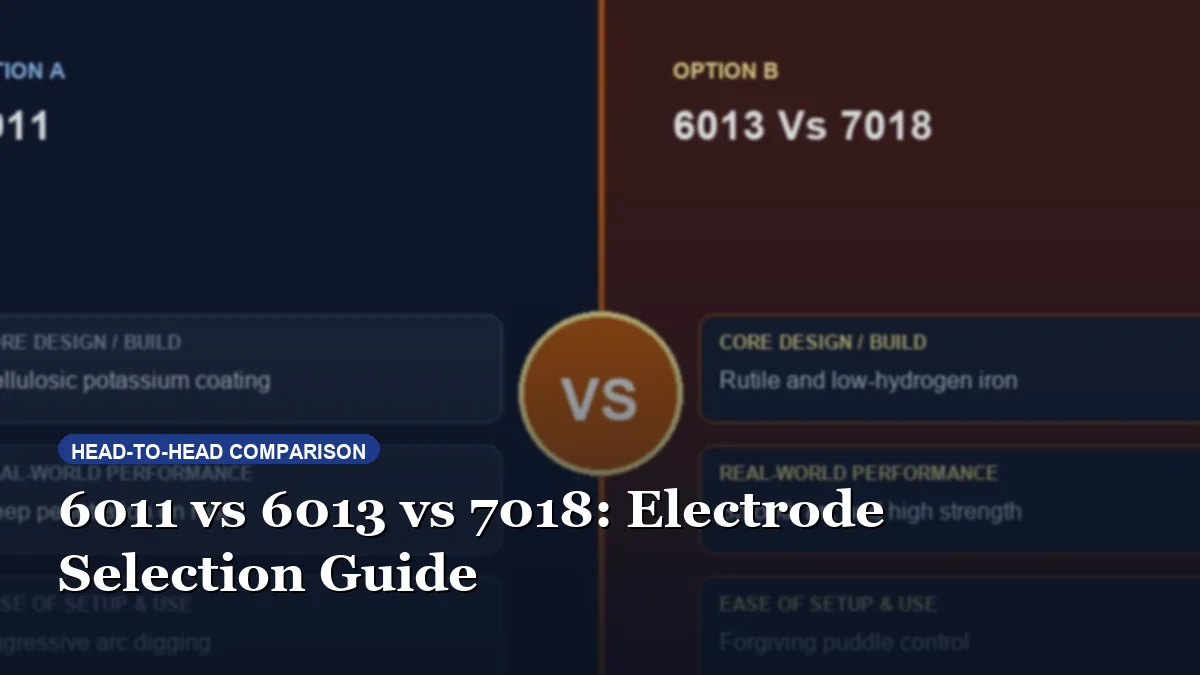
Select 6011 for dirty metal and deep penetration. Choose 7018 for maximum structural strength and code-quality welds.
Compare all top models in our Best Welder: Top Home Shop & Jobsite Picks Tested.
Side-by-Side Breakdown
| Criteria | 6011 | 6013 Vs 7018 | Edge |
|---|---|---|---|
| Core Design / Build | Cellulosic potassium coating | Rutile and low-hydrogen iron | Depends on code |
| Real-World Performance | Deep penetration on rust | Smooth arc and high strength | 7018 |
| Ease of Setup & Use | Aggressive arc digging | Forgiving puddle control | 6013 |
| Durability & Reliability | Resists cracking well | Requires dry storage ovens | 6011 |
| Efficiency / Operating Footprint | High spatter production | Low spatter and clean look | 7018 |
| Maintenance Requirements | Minimal electrode care needed | Strict moisture control rules | 6011 |
| Best Ideal Use Case | Farm repairs and pipe | Structural steel fabrication | 7018 |
Electrode Classifications and Chemical Makeup
Understanding American Welding Society designations helps fabricators select the ideal filler metal. The 6011 rod utilizes a high-cellulose potassium coating designed for rapid freezing and deep arc penetration.
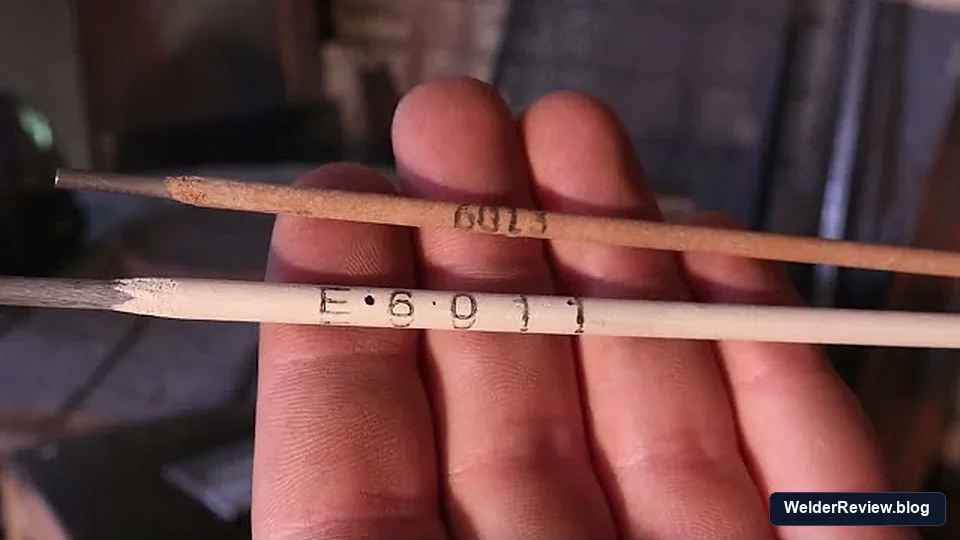
Conversely, the 6013 electrode features a rutile coating that creates a very smooth arc with minimal spatter. Operators can learn more via setting amperage for 7018 stick electrodes to prevent hydrogen cracking.
Each coating dictates how the electrode interacts with the base metal pool. Selecting the correct chemistry prevents porosity and ensures compliance with mechanical strength standards across diverse projects.
The AWS A5.1 specification classifies carbon steel electrodes using a four-digit numeric system where the prefix indicates minimum tensile strength. The digit 60 represents sixty thousand pounds per square inch of stress resistance.
Cellulose coatings on 6011 electrodes produce a gaseous shield with high hydrogen content that drives deep metal transfer. Rutile potassium coatings on 6013 rods stabilize the arc for exceptionally smooth deposition and minimal spatter.
Low-hydrogen iron powder matrices define 7018 low-hydrogen consumables, reducing cracking risks in thick structural sections. Operators must understand these distinct chemical formulations to select appropriate filler metals for demanding industrial fabrication environments.
- AWS A5.1 standard specifications govern these carbon steel electrodes.
- Coating chemistry directly dictates arc stability and slag fluidity.
- Iron powder additions in 7018 increase deposition efficiency rates.
Cellulosic Versus Low-Hydrogen Coatings
Cellulosic coatings produce a gas shield through organic decomposition. This aggressive action blasts through surface contaminants effortlessly.
Low-hydrogen coatings minimize moisture to prevent hydrogen-induced cracking in thick structural steels.
- Organic materials drive fast-freeze cellulosic arcs.
- Iron powder reduces moisture pickup risks during welding.
Penetration Depth and Joint Preparation
Weld penetration determines structural integrity under heavy loads. The 6011 electrode delivers a forceful, digging arc that chews through heavy rust, paint, and mill scale without prior grinding.
Meanwhile, the 6013 rod offers much lighter penetration, making it ideal for thin sheet metal where burn-through is a constant risk. Proper joint fit-up remains vital for success.
The 7018 electrode provides medium penetration paired with high deposition rates. Welders rely on this balance for structural fabrication where joint preparation follows strict engineering blueprints.
Deep arc penetration makes 6011 rods ideal for cutting through heavy rust, mill scale, and paint without extensive mechanical grinding. This aggressive digging action ensures root pass fusion on poorly fitted steel plates.
Moderate penetration profiles delivered by 6013 electrodes prevent burn-through on thin sheet metal joints. Welders should still bevel thicker sections to achieve proper root opening and complete joint penetration during structural assembly.
The medium-penetration characteristic of 7018 electrodes requires precise joint fit-up with minimal root gaps. Structural welding codes typically mandate rigorous bevel angles to ensure internal soundness under AWS D1.1 standards.
- Deep digging arcs eliminate the need for extensive joint cleaning.
- Shallow penetration protects thin gauge steel from thermal distortion.
- Medium penetration supports multi-pass groove welds effectively.
Handling Contaminated Base Metals
Dirty steel requires aggressive arc characteristics to ensure fusion. 6011 excels when cleaning time is limited on outdoor repair jobs.
Other rods demand pristine joint surfaces to avoid internal weld defects.
- Rust and scale disrupt standard rutile arc stability.
- Cellulosic shielding gases blast impurities out of the weld pool.
Arc Stability and Power Source Compatibility
Machine versatility influences everyday workshop productivity. The 6011 rod runs exceptionally well on older tombstone buzz-box alternating current welders as well as modern direct current machines.
The 6013 electrode also accommodates both AC and DC output seamlessly. It maintains a very smooth, soft arc that beginning welders find exceptionally easy to control.
Conversely, 7018 rods perform best on direct current electrode positive configurations. Using AC requires specialized low-voltage formulations to prevent frustrating arc outages during operation.
Operating on alternating current requires robust arc stabilizers built into the flux coating of 6011 electrodes. This compatibility helps field technicians using older engine-driven generators maintain a continuous, forceful welding arc.
The rutile coating on 6013 rods delivers exceptional arc stability on small transformer machines. Reviewing our best starter welder roundup ensures hobbyists select equipment featuring adequate open-circuit voltage for smooth restrike.
Direct current electrode positive polarity maximizes the performance of 7018 low-hydrogen consumables by concentrating heat on the base metal. Maintaining a tight arc length prevents porosity and preserves protective shielding gas envelopes.
- Alternating current compatibility keeps equipment costs relatively low.
- Direct current reverse polarity stabilizes low-hydrogen arc transfer.
- Open circuit voltage requirements vary across different power sources.
Running Electrodes on AC Versus DC
Alternating current causes the arc to cross zero frequently. 6011 handles this interruption gracefully due to its ionizing potassium content.
Direct current provides smoother droplet transfer and deeper overall puddle control.
- Zero crossing points challenge sensitive low-hydrogen electrode arcs.
- Inverter welders improve performance across all electrode types.
Mechanical Strength and Ductility Metrics
Tensile strength dictates whether a joint will withstand extreme operational stress. The 60-series rods guarantee a minimum tensile strength of sixty thousand pounds per square inch.
This makes 6011 and 6013 suitable for general repairs, brackets, and non-critical frames. However, high-stress applications demand superior mechanical properties.
The 7018 electrode delivers seventy thousand pounds of tensile strength along with remarkable impact toughness. This high ductility prevents catastrophic failure under heavy seismic loads.
Minimum tensile strength requirements reach sixty thousand psi for both 6011 and 6013 weld deposits, matching standard mild steel plates. However, their yield strength and impact toughness values differ significantly across various thermal cycles.
Upgraded 7018 electrodes provide seventy thousand psi tensile strength combined with superior Charpy V-notch impact resistance at freezing temperatures. This enhanced ductility prevents catastrophic brittle fracture in heavy-duty bridges and pressure vessels.
High elongation percentages allow 7018 welds to absorb dynamic structural loads without permanent deformation or cracking. Engineers specify these consumables for critical applications where joint failure poses severe safety and operational hazards.
- Tensile ratings reflect ultimate breaking strength under tension.
- Ductility allows welded structures to absorb sudden mechanical shocks.
- Low-hydrogen weld metal resists microscopic cracking under pressure.
Evaluating Yield and Tensile Limits
Engineering calculations rely on guaranteed minimum yield strengths. 7018 exceeds standard requirements for critical bridge and building construction.
Lower strength rods suffice for light-duty agricultural implements.
- Yield strength marks the onset of permanent structural deformation.
- Safety factors dictate filler metal selection for heavy machinery.
Positional Welding and Operator Technique
Different welding positions demand distinct manipulation techniques from the operator. The 6011 rod freezes quickly, allowing welders to build sound welds in vertical and overhead configurations.
The 6013 electrode produces a fluid slag that can run away from the arc in vertical-down progressions. Welders often use a whipping motion or stringer beads for control.
Mastering 7018 requires maintaining a tight arc length to prevent porosity. Weaving must remain constrained to avoid trapping slag inside thick multi-pass joint structures.
Rapid-freezing slag systems allow 6011 electrodes to excel in vertical-up and overhead positions during pipe repair work. Welders manipulate the rod using a tight whip-and-pause motion to control molten puddle fluidity.
Fluid slag characteristics of 6013 rods demand careful travel speed adjustments to avoid trapping inclusions in flat fillets. Consulting the best welder for beginners helps novices master horizontal tracking and molten pool control.
Dragging technique combined with a very short arc length ensures optimal puddle control when running 7018 electrodes vertically or overhead. Master welders rely on steady hand movements to deposit uniform, crack-resistant stringer beads.
- Fast-freezing puddles simplify out-of-position structural welding tasks.
- Fluid slag pools require careful torch angle manipulation.
- Tight arc control prevents atmospheric contamination during deposition.
Mastering Vertical and Overhead Passes
Gravity constantly threatens to pull molten metal out of position. 6011 simplifies vertical-up climbing through rapid freeze characteristics.
Skilled operators achieve flat profiles with 7018 using calculated weaving.
- Vertical-up progression builds necessary root penetration depth.
- Overhead manipulation demands proper body positioning and safety gear.
Slag Control and Post-Weld Cleanup Demands
Post-weld cleanup directly impacts project timelines and labor costs. Choosing the best welder helps streamline preparation, while the 6011 electrode leaves a heavy slag layer requiring wire brushes.
Meanwhile, 6013 rods produce a thin, brittle slag that often peels off automatically as the metal cools. This feature speeds up multi-pass fabrication significantly.
The 7018 electrode generates a moderate slag covering that chips away cleanly from concave fillets. Minimal grinding is needed before applying protective industrial coatings.
Heavy, friable slag produced by 6011 electrodes flakes off easily after cooling, reducing post-weld cleanup time on rough construction sites. Operators still need chipping hammers to clear slag from tight joint corners.
Thin, glass-like slag layers generated by 6013 rods often detach spontaneously or require minimal brushing with a wire wheel. This clean finish makes them popular for decorative metalwork and light manufacturing projects.
Dense, self-peeling slag coatings characteristic of 7018 consumables lift cleanly away from concave weld profiles under proper amperage settings. Thorough interpass cleaning remains mandatory before depositing subsequent layers in multi-pass welds.
- Brittle slag layers reduce total fabrication cleanup times.
- Heavy slag requires mechanical chipping hammers for complete removal.
- Clean weld profiles minimize preparation for final painting.
Minimizing Spatter and Grinding Time
Excessive spatter increases finishing labor across large metal projects. 6013 minimizes molten droplet loss for cleaner finished surfaces.
Aggressive cellulosic arcs produce more spatter requiring cleanup.
- Smooth arc transfer reduces post-weld grinding requirements.
- Anti-spatter sprays protect surrounding base metal effectively.
Storage, Moisture Sensitivity, and Field Durability
Filler metal storage conditions dictate weld integrity in professional environments. 6011 and 6013 rods tolerate ambient humidity quite well without suffering immediate structural degradation.
Conversely, 7018 electrodes are extremely sensitive to atmospheric moisture absorption. Wet flux coatings introduce hydrogen into the molten pool, causing brittle micro-cracks.
Professional shops store 7018 in specialized electrode holding ovens maintained at high temperatures. Field technicians utilize portable rod ovens to keep moisture levels strictly controlled.
Moisture absorption severely degrades 7018 low-hydrogen electrodes, causing weld porosity, underbead cracking, and hydrogen embrittlement. Welders must store these rods in heated ovens maintained at temperatures exceeding two hundred fifty degrees Fahrenheit.
Exposure to ambient humidity requires hermetically sealed packaging or portable electrode rod ovens on heavy industrial job sites. Strict adherence to AWS storage guidelines prevents moisture contamination before welding structural components.
Cellulosic coatings on 6011 electrodes tolerate moisture much better than low-hydrogen variants, operating reliably after minor dampness exposure. Field service trucks frequently carry these versatile rods for emergency repairs in remote outdoor environments.
- Cellulosic and rutile coatings resist environmental moisture absorption.
- Low-hydrogen electrodes demand heated storage to prevent cracking.
- Portable rod canisters protect consumables on remote job sites.
Using Portable Ovens on Job Sites
Field construction requires strict adherence to welding code specifications. Portable heated quivers keep 7018 dry during long outdoor shifts.
Exposed electrodes must be rebaked according to strict standards.
- Heated quivers prevent moisture accumulation in humid weather.
- Code compliance audits frequently inspect electrode storage procedures.
Frequently Asked Questions
Can you use a 6011 electrode on thin sheet metal without burning holes?
Using 6011 on thin metal is difficult because its deep digging arc easily burns through light sheet steel. Welders should choose a 6013 rod instead for better control on thin gauges.
Why do 7018 welding electrodes require heated storage ovens?
Low-hydrogen coatings readily absorb atmospheric moisture that causes destructive micro-cracking in the weld. Storing them in specialized ovens keeps the flux dry and ensures structural integrity.
Is it possible to run a 7018 welding rod on an older AC buzz box?
Standard 7018 electrodes struggle to maintain stability on alternating current power sources. Welders must purchase specifically formulated AC-compatible low-hydrogen rods for older transformer machines.
What makes 6013 the preferred choice for beginner welding students?
The 6013 electrode provides a very smooth, forgiving arc with minimal spatter and easy slag removal. Beginners find these characteristics ideal for learning puddle manipulation safely.
How do I know if my stored welding electrodes have absorbed too much moisture?
Excessive moisture often causes the electrode coating to flake off or burn unevenly during striking. You may also notice increased porosity and cracking within the completed weld bead.