308L vs 308Lsi Stainless Steel Filler Metals
Choosing the right austenitic stainless steel filler metal prevents intergranular corrosion. Understanding chemistry variations ensures superior weld bead profiles.

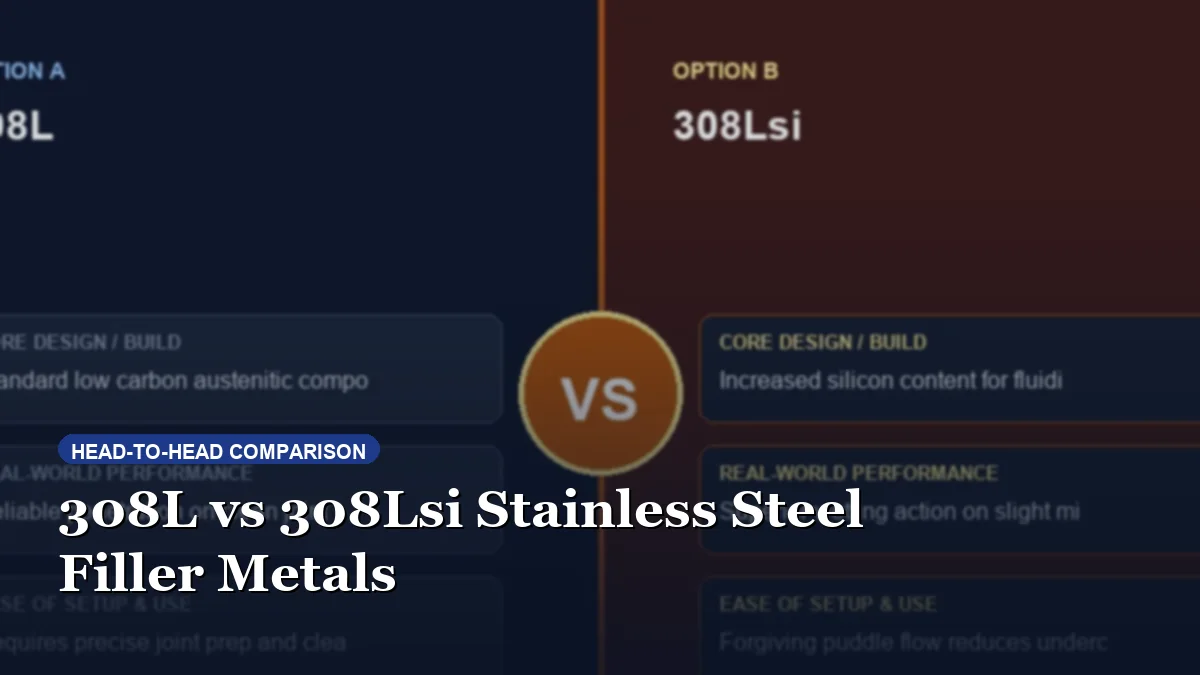
Choose standard 308L for general fabrication with standard cleaning protocols. Select 308Lsi when you need enhanced bead wetting and smoother puddle flow on thin gauges.
Compare all top models in our Best Welder: Top Home Shop & Jobsite Picks Tested.
Side-by-Side Breakdown
| Criteria | 308L | 308Lsi | Edge |
|---|---|---|---|
| Core Design / Build | Standard low carbon austenitic composition. | Increased silicon content for fluidity. | 308Lsi |
| Real-World Performance | Reliable penetration on clean joint setups. | Superior wetting action on slight mill scale. | 308Lsi |
| Ease of Setup & Use | Requires precise joint prep and cleaning. | Forgiving puddle flow reduces undercut risks. | 308Lsi |
| Durability & Reliability | Excellent resistance to intergranular corrosion. | Identical corrosion resistance with better profiles. | Tie |
| Efficiency / Operating Footprint | Standard wire feed and arc stability. | Smoother arc transfer limits spatter levels. | 308Lsi |
| Maintenance Requirements | Standard interpass cleaning and grinding. | Reduced post-weld cleanup due to wetting. | 308Lsi |
| Best Ideal Use Case | Heavy plate and strict structural codes. | Sheet metal and automated orbital welding. | 308Lsi |
Metallurgy and Chemical Composition Fundamentals
Evaluating stainless steel consumables requires analyzing exact elemental percentages. Both filler metals contain low carbon to prevent carbide precipitation during thermal cycles.
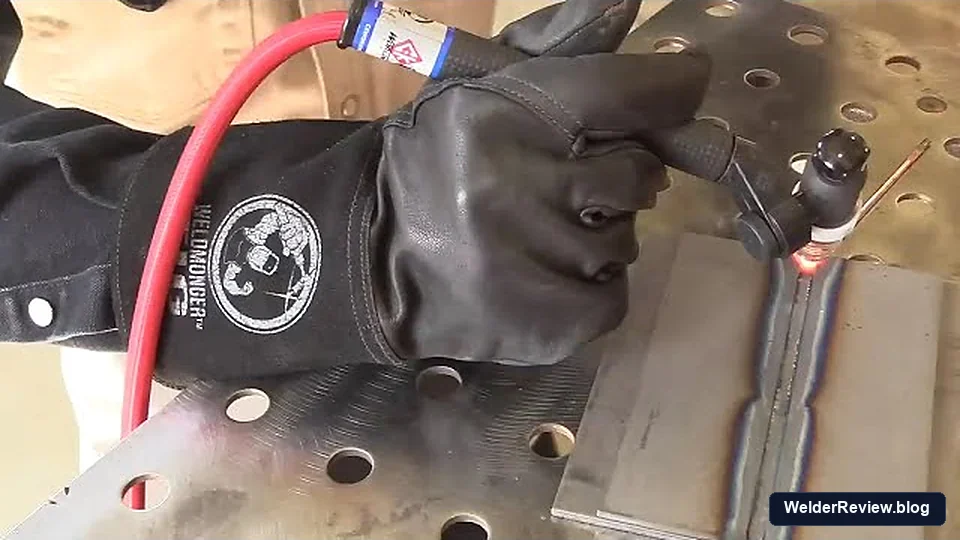
The primary chemical distinction involves silicon percentages. Choosing the best starter welder for learning helps fabricators master how modified grades incorporate higher silicon levels to improve fluidity.
Standard 308L wire contains a maximum of 0.03% carbon to minimize carbide precipitation during high-heat thermal cycles. This exact composition prevents intergranular corrosion in critical austenitic stainless steel weldments across heavy industrial environments.
The primary distinction lies in silicon content, where 308LSi ranges from 0.65% to 1.00% silicon. This elevated silicon concentration alters the puddle dynamics significantly, improving overall fluidity without sacrificing the fundamental corrosion resistance of the weld.
- Carbon levels stay strictly below zero point zero three percent.
- Silicon acts as a powerful deoxidizer in the molten puddle.
- Chromium and nickel ratios remain optimized for austenitic structures.
The Role of Silicon in Alloy Flow
Silicon significantly lowers surface tension of the molten weld pool. This physical change allows the liquid metal to wet joint sidewalls much more effectively.
Welders notice a flatter bead crown when utilizing high silicon wires. Such modifications directly eliminate high toe angles and reduce potential stress concentration points.
- Enhanced puddle fluidity aids automatic and semi-automatic processes.
- Lower surface tension prevents excessive crowning on joint centers.
Wetting Action and Bead Profile Characteristics
Weld bead geometry dictates structural integrity and finish requirements. Practicing with the best welder for beginners helps operators select correct wire chemistry to eliminate profile defects like undercut.
Standard compositions produce slightly convex beads that demand additional grinding. Enhanced wetting variants create smooth transitions into the base metal automatically.
Enhanced silicon levels in 308LSi drastically reduce surface tension within the molten puddle. Welders immediately notice superior toe wetting action on joint edges, creating smoother transitions that minimize the risk of dangerous undercut defects.
Standard 308L produces a slightly convex bead profile requiring more mechanical manipulation. In contrast, 308LSi flows out flatter, yielding a uniform ripple pattern that reduces grinding time and preparation effort prior to final finishing operations.
- Convex profiles require more extensive post-weld machining operations.
- Wetting agents eliminate sharp interfacial angles prone to cracking.
- Operator skill levels dictate success with standard wire types.
Managing Joint Fit-Up Tolerances
Imperfect joint fit-up challenges even experienced structural fabricators. Higher silicon variations bridge minor root gaps more reliably due to increased puddle mobility.
Standard variants demand tight machining tolerances to prevent burn-through. Fabricators dealing with thermal distortion benefit greatly from enhanced wetting characteristics.
- Bridging gaps reduces the need for expensive rework passes.
- Thermal distortion creates fit-up gaps requiring fluid puddles.
Mechanical Properties and Tensile Strength
Structural engineers must verify that filler metal strengths match base materials. Both consumable types deliver exceptional tensile performance exceeding standard austenitic requirements.
Yield strength remains comparable across both designations due to matching alloy bases. Ductility metrics also satisfy stringent ASME and AWS structural welding codes.
Both filler metals deliver exceptional mechanical performance, routinely exceeding 75,000 psi tensile strength in as-welded conditions. The controlled ferrite numbers ensure adequate ductility, preventing cracking under severe mechanical stress or cyclical loading applications.
Minor variations in silicon do not drastically alter yield strength or elongation percentages. Structural integrity remains identical, meaning your choice between these alloys depends strictly on fabrication efficiency rather than baseline load-bearing capacity constraints.
- Tensile strength ratings consistently exceed seventy thousand psi limits.
- Elongation percentages support dynamic load applications safely.
- Impact toughness remains stable across cryogenic operational temperatures.
Impact of Silicon on Toughness
Excessive silicon additions can sometimes embrittle certain high alloy welds. However, the moderate increases in these specific filler wires maintain proper impact values.
Laboratory charpy V-notch testing confirms robust energy absorption capabilities. Welders can trust structural integrity under severe mechanical shock loading conditions.
- Charpy testing verifies resistance to sudden impact forces.
- Microstructure control prevents brittle intermetallic phase formation.
Corrosion Resistance and Intergranular Integrity
Stainless steel depends on a passive chromium oxide surface film. Low carbon designs prevent chromium carbide precipitation during prolonged exposure to elevated temperatures.
Chemical resistance properties remain virtually identical between standard and modified wires. Both options perform exceptionally well in chemical processing and marine environments.
Low carbon limits in both 308L and 308LSi prevent chromium carbide precipitation at grain boundaries. This maintains superior pitting resistance equivalent values, protecting welded structures exposed to aggressive chemical processing environments or moisture-rich atmospheres.
The slight increase in silicon for 308LSi does not compromise ASTM corrosion testing standards. Fabricators can safely deploy both alloys in ASME code vessels without sacrificing long-term durability against environmental degradation or intergranular attack.
- Chromium depletion is prevented by limiting total carbon content.
- Pitting resistance equivalent numbers stay consistent across choices.
- Passive film regeneration occurs rapidly in oxidizing atmospheres.
Stress Corrosion Cracking Considerations
Aggressive industrial environments demand careful evaluation of residual stress. Filler metal chemistry influences how welded assemblies react to chloride-rich atmospheres.
Both consumables offer reliable baseline protection against localized corrosive attacks. Proper shielding gas selection remains vital for preserving overall corrosion resistance.
- Chloride stress cracking requires proper post-weld heat treatment.
- Shielding gas purity protects the molten chromium transfer.
Application Suitability Across Industry Sectors
Industrial manufacturing sectors dictate specific filler metal requirements. Food processing equipment demands smooth contours to prevent bacterial growth in crevices.
Pressure vessel fabrication strictly follows ASME codes governing allowable chemistry. Choosing the right wire ensures compliance with regulatory inspection standards worldwide.
Food processing and pharmaceutical piping systems frequently utilize 308LSi due to smoother weld profiles. Minimizing crevices helps satisfy strict sanitary fabrication codes, preventing bacterial growth and simplifying routine clean-in-place sterilization procedures across stainless networks.
Heavy structural framework and general sheet metal fabrication often rely on standard 308L electrodes. These alloys perform reliably when welding Type 304 stainless steel, balancing cost-effectiveness with robust mechanical performance in commercial manufacturing.
- Sanitary tubing relies on smooth internal bead profiles.
- Pressure vessels require certified material test reports.
- Architectural fabrications prioritize clean aesthetic finishes.
Automated Versus Manual Welding Operations
Robotic orbital welding systems demand consistent wire feeding behavior. Enhanced puddle fluidity prevents arc instability during high-speed automated production runs.
Manual TIG operators appreciate the forgiving nature of modified wires. Reduced surface tension helps prevent frustrating tungsten inclusions during manual torch manipulation.
- Robotic cells require predictable wire feed characteristics.
- Manual operators benefit from forgiving puddle dynamics.
Feeding Performance in MIG and TIG Processes
Consumable delivery systems directly impact daily shop productivity levels. Utilizing the best multi process welder for your shop ensures rigid wire columns prevent frustrating bird-nesting issues.
Gas tungsten arc welding relies on clean cut lengths free of surface contaminants. Both wire types undergo rigorous manufacturing quality checks for optimal feeding.
Smoother wire feeding in GMAW applications is a hallmark of 308LSi electrodes. The added silicon acts as a mild lubricant, reducing friction through contact tips and liners to eliminate birdnesting during high-speed automated welding runs.
TIG welding applications experience less pronounced feeding differences, but puddle fluidity remains noticeably enhanced. Welders utilizing GTAW processes appreciate the predictable flow when adding filler rod manually into intricate joint configurations.
- Copper coating quality prevents premature contact tip wear.
- Spool winding precision ensures tangle-free automatic feeding.
- Straight cut rods eliminate erratic filler feeding behavior.
Arc Stability and Spatter Control
Electrical resistance characteristics dictate how smoothly the arc transfers metal. Modified alloy formulations stabilize the arc column across varying voltage parameters.
Minimizing spatter generation saves valuable time during secondary cleanup operations. Fabricators achieve cleaner weldments with minimal post-processing labor investment.
- Stable arcs reduce troublesome micro-spatter accumulation.
- Voltage windows remain broad for easy machine tuning.
Post-Weld Cleanup and Finishing Requirements
Secondary fabrication steps consume significant operational labor budgets. Upgrading to the best welder for your shop accelerates project turnaround times and minimizes scale formation.
Standard wire deposits often require aggressive grinding to achieve flush surfaces. Enhanced wetting options reduce bead height discrepancies significantly across joints.
Slag coverage is minimal for both solid wires, but silicate islands frequently form on 308LSi welds. Removing these glassy deposits requires mechanical scaling, yet the smoother bead profile greatly accelerates abrasive disc grinding steps.
Electrolytic weld cleaning or pickling pastes neutralize heat tint effectively on both alloy types. Shops focused on minimizing labor hours often choose 308LSi to reduce total post-processing time before final passivation and delivery.
- Grinding labor decreases when bead profiles sit flatter.
- Pickling pastes remove residual heat tint effectively.
- Mechanical polishing achieves mirror finishes faster.
Minimizing Grinding and Mechanical Prep
Excessive weld reinforcement acts as a stress riser under load. Flatter weld profiles achieved through modified chemistry eliminate unnecessary grinding steps.
Fabricators save abrasive discs and labor hours on every assembly. Efficiency gains compound rapidly across large-scale commercial production contracts.
- Eliminating grinding passes lowers consumable operating costs.
- Smooth toes prevent fatigue failures in dynamic structures.
Frequently Asked Questions
What is the primary difference between standard and modified filler wires?
The main distinction lies in silicon content. Higher silicon levels improve molten puddle fluidity for smoother bead profiles.
Does enhanced silicon reduce overall corrosion resistance?
No, standard corrosion performance remains identical. Both choices provide excellent protection against intergranular attack.
Which wire option works better for automated orbital welding?
Modified wires perform exceptionally well in automated systems. Their superior wetting action ensures consistent bead geometry without defects.
Are mechanical strength properties affected by the chemistry change?
Tensile and yield strengths remain nearly identical. Both options easily exceed standard structural engineering code requirements.
How does joint fit-up influence your selection decision?
Tight machined joints accommodate standard wires easily. Minor gaps and misalignments benefit greatly from enhanced puddle wetting.